What Does the “Z” Mean on a Bearing? A Guide to Suffixes for Sealing, Clearance, and Precision
What do the suffixes in a bearing designation mean? Z and 2RS for sealing, C2/C3/C4 for clearance, P0/P6 for precision, and M/N/E for cage and design. The complete reference guide for proper specification.
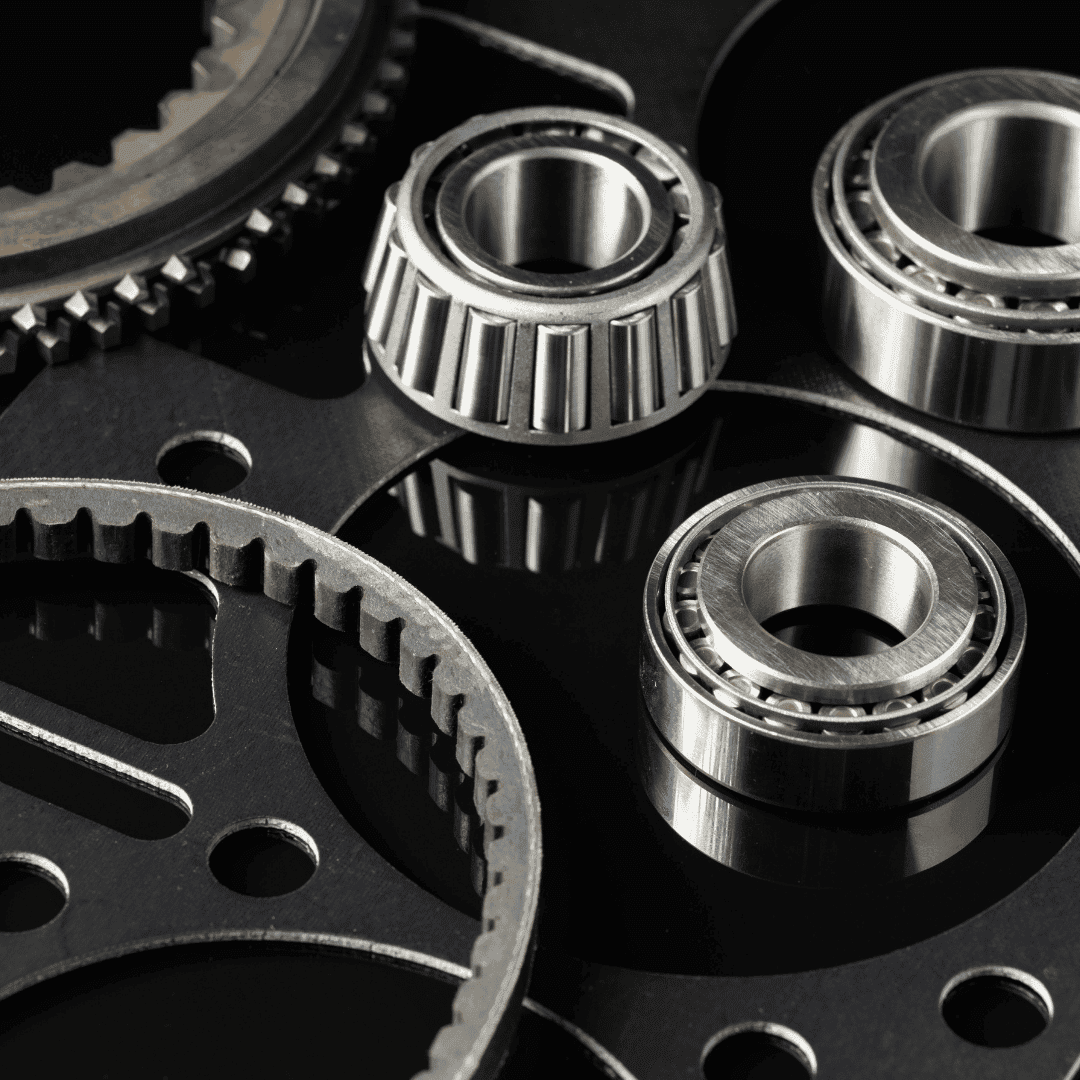
When a technician orders a 6205 and receives a 6205-2RS C3, sometimes they accept it without knowing what those letters mean, and sometimes they reject it because “the part number isn’t the same”—even though it’s equivalent. Both situations stem from the same thing: not knowing what the suffixes mean. Suffixes aren’t just for show: they determine whether the bearing is suitable for your application. Incorrect clearance leads to failure due to overheating; insufficient sealing, to contamination; and incorrect precision, to vibration. Here is the complete reference guide.
Group 1: Sealing — the Z and its variants
Open (no suffix). No side protection; for external lubrication (oil bath or mist) or high temperatures where the elastomer would degrade. Allows for higher speeds. Z — a metal shield. Non-contact steel plate on one side; barrier against coarse particles, not airtight. ZZ (or 2Z) — two shields. Moderate protection on both sides; partially retains lubricant; allows for high speeds due to the absence of contact friction. RS — one contact seal. An elastomer lip that contacts the inner ring; airtight; retains lubricant and excludes liquids and solids, with slightly higher friction. 2RS — two contact seals. The most widely used seal in the industry; fully sealed, factory-prelubricated, no relubrication required in standard applications. It is the standard for motors, pumps, and fans.
Z vs. 2RS: The Practical Difference
ZZ seals are non-contact metal seals: less friction, higher speed, moderate protection, and they allow fine dust and liquids to pass through. 2RS seals are contact rubber seals: maximum protection and grease retention, slightly more friction, and a lower speed limit. For most industrial equipment in Mexico, unless otherwise specified, the 2RS is almost always the right choice.
Group 2: Internal Clearance — C and Its Numbers
Internal clearance is the free play between rolling elements and raceways when the bearing is neither mounted nor loaded. It compensates for thermal expansion and deformation caused by press fit. C2: Less than normal (high rigidity, very stable thermal conditions; risk of losing clearance if the fit on the shaft is too tight). Normal (no suffix) for most applications. C3 (greater than normal): This is the most commonly used in electric motors in Mexico because the tight fit on the shaft and the heating of the inner ring reduce the operating clearance, and C3 compensates for this; it also better handles vibrations in motors with variable-speed drives. C4 and C5 (very large clearances), for furnaces, dryers, or very tight fits on both rings.
Rule of thumb for motor clearance
If the bearing is used in an electric motor and you don't know the exact specification, C3 is the correct choice for the vast majority of WEG, MARATHON, and similar motors on the market. The inner ring is mounted with a tight fit and heats up more than the outer ring, reducing the clearance; the C3 compensates for this.
Group 3: Precision Class
It defines dimensional accuracy (tolerances for bore, outside diameter, width, and runout). In the ISO system, the standard class is P0 (Normal / PN); this is followed by P6, P5, P4, and P2, in ascending order of precision. For motors, pumps, gearboxes, and fans, P0 covers the vast majority of applications. P6 is appropriate for CNC spindles and inspection applications; P5 and higher are niche applications (high speed, metrology).
Group 4: Cage and Others
M — machined brass cage: greater strength, better thermal conductivity, and compatibility with aggressive or high-temperature lubricants. N — Retaining ring groove on the outer ring (NR includes the ring); facilitates axial positioning without machined shoulders. E — High-capacity design (especially for spherical rollers): more rollers or larger rollers for greater dynamic capacity within the same dimensions. W and others: manufacturer-specific design variants; consult the specific catalog.
Suffixes determine whether a bearing is suitable for your application: Z and ZZ provide moderate protection, while 2RS provides complete protection; C3 is the standard for electric motors in Mexico; and P0 precision covers most applications. Understanding these suffixes provides the criteria for unambiguous specification and helps prevent failures due to incorrect selection. At BIOSA MOTION TECHNOLOGIES, we carry all variants from Timken, NACHI, Fersa, RBC, IBC, and ITA, and we’ll help you choose the correct suffix.
Contact us on WhatsApp
Do you need bearings for your plant that are available immediately? Our engineers will help you select the right ones at no cost. We carry Timken, NACHI, Fersa, RBC, IBC, and ITA bearings in stock in Guadalajara, Aguascalientes, León, Querétaro, Monterrey, Hermosillo, and Puebla.