

What happens if you don't replace the bearings in time? Consequences and actual costs
What happens if you delay replacing a bearing that's showing signs of wear: the 4 stages of deterioration, secondary damage to the shaft and housing, and the actual cost, which can be many times the price of the bearing.
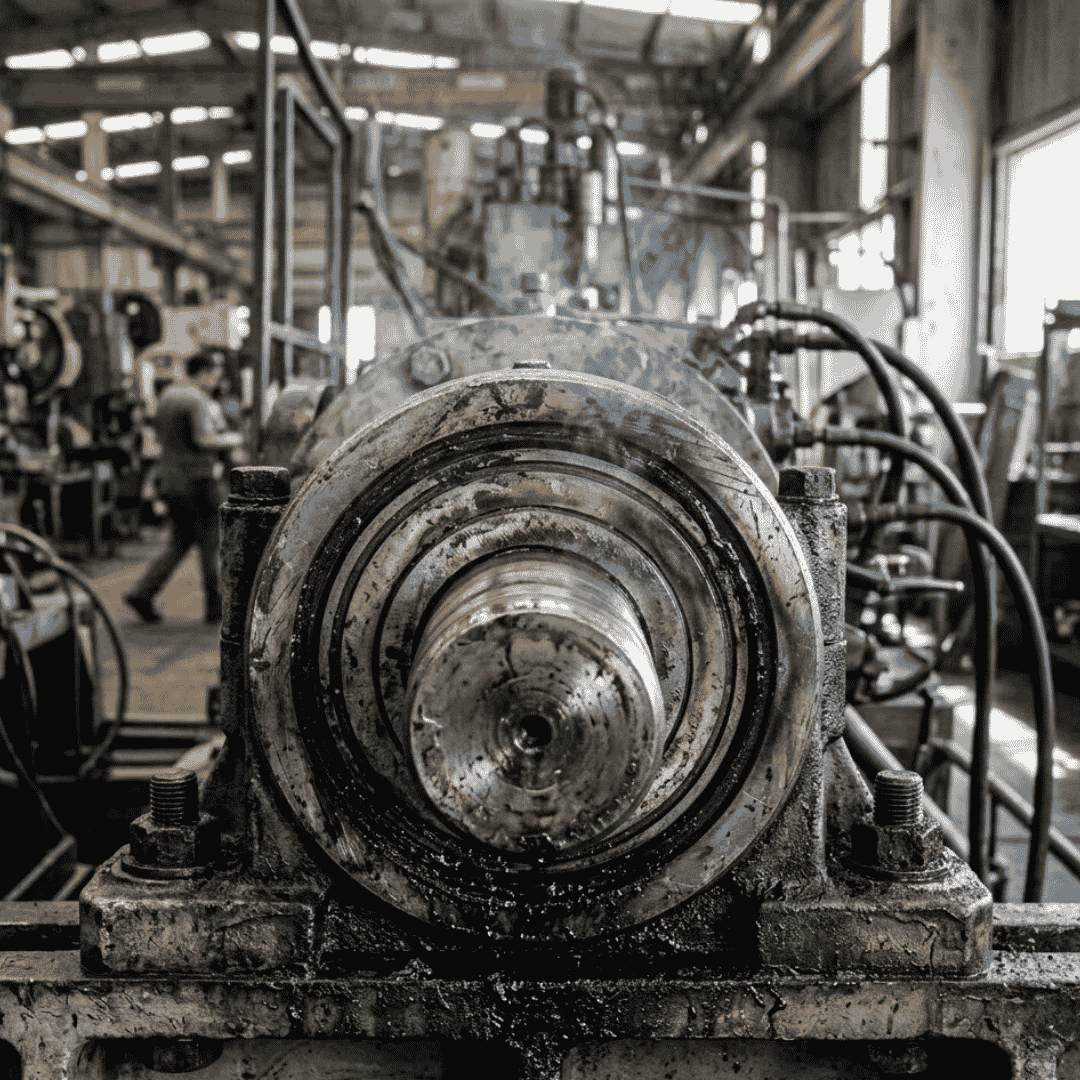
It’s a common scenario: a technician notices that a bearing is making noise, reports it, and the response is, “Hold off until the next maintenance check.” Sometimes it holds up. Often, it doesn’t. Postponing the replacement of a bearing showing signs of trouble is usually the most expensive maintenance decision. Here, we explain using the sequence of damage and specific figures exactly what happens when a bearing with symptoms continues to operate.
The 4-stage degradation process
A bearing that is deteriorating rarely fails suddenly: it goes through four stages, each with detectable signs if monitored.
Stage 1: subsurface (invisible) damage
The first fatigue cracks form beneath the road surface, at a depth of a few tenths of a millimeter. The bearing appears to be operating normally: there is no change in vibration, temperature, or noise. Only an oil analysis (for oil-bath bearings) detects a slight increase in particles. Duration: this may be 80–90% of the total service life.
Stage 2: Early-stage damage — ultrasonic signals
Cracks reach the surface and generate micro-impacts that can be detected by ultrasound (SPM/UE techniques). There is still no noticeable change in standard vibration or temperature, although an experienced operator may notice a slight change in sound. Duration: approximately 10–15% of the total service life. This is the ideal time to plan for replacement.
Stage 3: Progressive damage — signs of vibration
The damage generates particles that contaminate the lubricant and accelerate wear. Vibration increases measurably, the temperature rises several degrees above normal, and noise is clearly audible. Vibration analysis reveals characteristic failure frequencies (BPFI, BPFO, BSF). Duration: approximately 3–7% of total service life. Emergency window: immediate replacement.
Stage 4: Imminent and Catastrophic Failure
Very high vibration, elevated temperature (may rise to 30 °C or higher), and intense noise. A catastrophic failure can occur at any moment: component fracture, shaft seizure, and damage to the housing and shaft. Duration: approximately 1–2% of the total service life, ranging from hours to a few days. If the bearing reaches this stage without being replaced, secondary damage is almost inevitable.
Secondary damage: the most underestimated factor
A bearing experiencing catastrophic failure does not fail on its own: it takes neighboring components down with it. Shaft damage: When the inner ring rotates on the shaft (creep) or the rolling elements fracture, the shaft seat wears out; grinding or replacing it costs 5 to 20 times the price of the bearing, plus the machining time. Damage to the housing or cover: The outer ring can rotate within its housing and machine it, requiring the housing to be ground, sleeved, or replaced. Damage to other components: Seals, adjacent gears, or the rotor can be damaged by imbalance and heat.
The Real Cost That No One Calculates
The cost of the bearing is the smallest part of it. The true cost of waiting includes unscheduled production downtime (which in many plants is measured in thousands of pesos per hour), secondary damage to the shaft and housing, emergency labor hours, and the safety risk of a sudden failure. Replacing the bearing at Stage 2 (ultrasonic window) costs a fraction of what it costs to reach Stage 4.
Delaying the replacement of a bearing that is showing symptoms turns a cost-effective replacement into a costly event: degradation progresses in stages, and catastrophic failure can damage the shaft, the housing, and disrupt production. Detecting the problem early (ideally during the ultrasonic window) and replacing the bearing as planned is always less expensive. At BIOSA MOTION TECHNOLOGIES, we keep replacement parts in stock and help you determine the right time for replacement.
Contact us on WhatsApp
Do you need bearings for your plant that are available immediately? Our engineers will help you select the right ones at no cost. We carry Timken, NACHI, Fersa, RBC, IBC, and ITA bearings in Guadalajara, Aguascalientes, León, Querétaro, Monterrey, Hermosillo, and Puebla.