
What Is a Bearing System? Configurations, Components, and Selection
What is a bearing system: the fixed-floating configuration, its components (shaft, housing, seals, lubrication), and the criteria for designing it correctly.
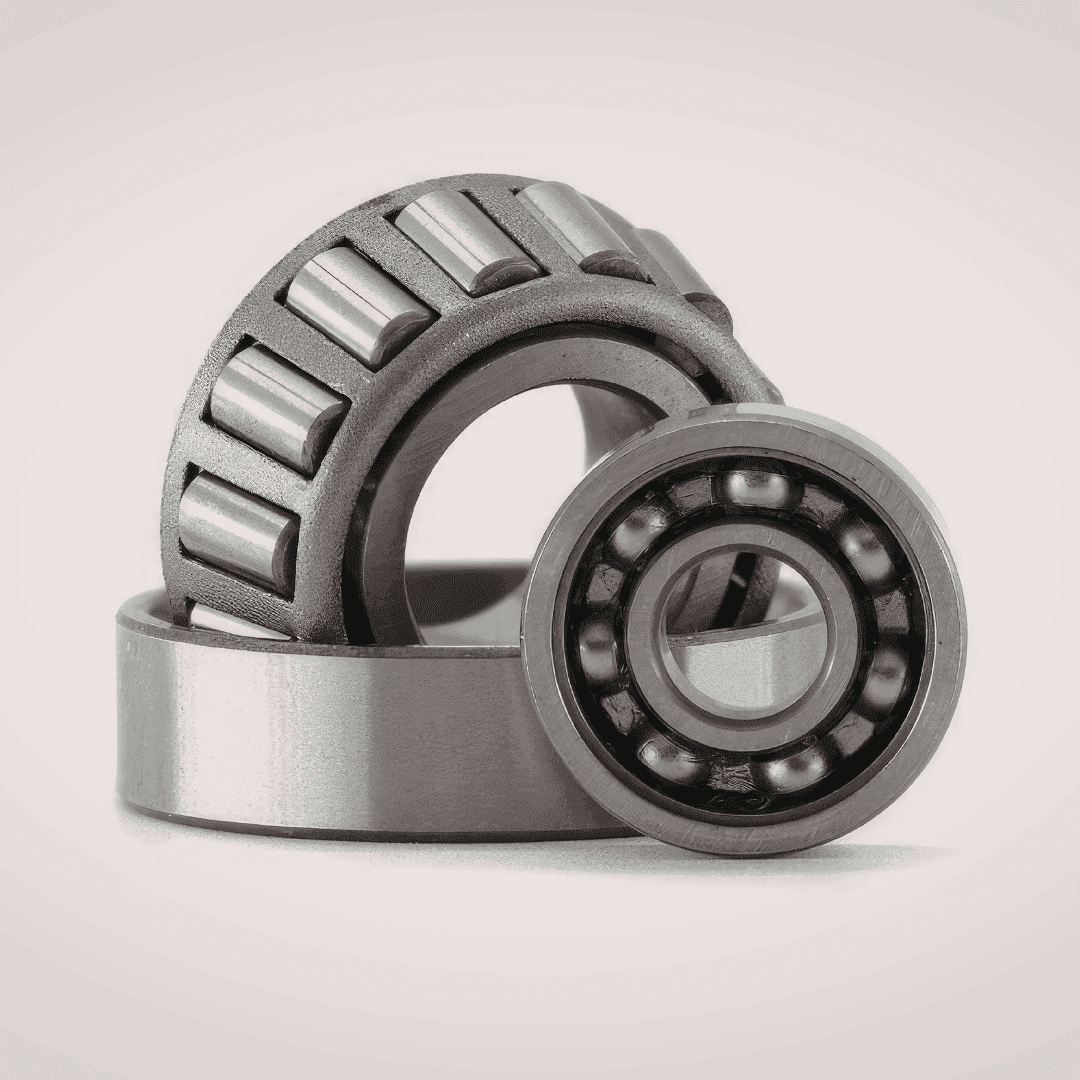
A bearing rarely operates on its own: it is part of a system that includes the shaft, the two (or more) supports, the housings, the seals, and the lubrication—all designed together. Thinking about “the bearing system” rather than just “the bearing” is what distinguishes a reliable design from one that fails due to a configuration detail. Here we explain what a bearing system is, the fixed-floating configuration that governs it, and how to select its components.
What Is a Bearing System?
It is the set of components that support a rotating shaft: typically two supports (each with its own bearing and housing), the shaft, the seals, the lubricant, and the axial fasteners. The key point is that the two supports do not serve the same purpose: one controls the axial position, and the other allows for movement to accommodate thermal expansion.
The fixed-floating configuration
This is the central principle. In a shaft with two bearings, one is designed as a fixed (locating) bearing and the other as a floating (non-locating) bearing. The fixed bearing controls the axial position of the shaft in both directions: it immobilizes both the inner ring (on the shaft) and the outer ring (in the housing). It typically uses bearings that support axial loads (rigid ball bearings fixed on both sides, matched angular contact ball bearings, or tapered roller bearings). The non-locating support allows the shaft to move axially to accommodate thermal expansion: this is achieved by allowing the outer ring to slide in the housing, or by using a cylindrical roller bearing that allows for internal axial displacement.
Why It Matters: Thermal Expansion
Every shaft expands when heated. Steel expands at a rate of about 0.012 mm per meter per degree; a 2-meter shaft that heats up by 50 °C will lengthen by more than 1 mm. If both supports are fixed, that expansion has nowhere to go and generates axial forces that exceed the bearings’ capacity several times over, destroying them as they heat up. That is why one of the supports must be floating.
The components that come with the bearing
The shaft: Its tolerances and finish at the seating surfaces determine the fit; a seating surface that is out of tolerance compromises the entire system. The housing: Its tolerances determine whether the outer ring is fixed or can slide (on the floating side). The seals: They retain lubricant and keep contaminants out; their selection depends on the environment. Lubrication: grease or oil, manual or centralized, determined by speed, temperature, and load. Axial retention: nuts, retaining rings, or plates that secure the fixed side.
System Selection Criteria
Define the roles: which support is fixed (usually the drive side, where position control is important) and which is floating. Select the bearings: based on the radial and axial loads at each support. Define clearances: interference fit on the rotating ring (usually the inner ring on the shaft), and clearance or sliding fit on the floating side. Select seals and lubrication based on the environment. Check the internal clearance (e.g., C3 if there is heat) to ensure that thermal expansion does not eliminate it.
Common Configuration Errors
Secure both supports “to make it more stable” (this destroys the bearings due to thermal expansion); leave both floating (the shaft moves uncontrollably); use standard clearance where C3 is required (thermal expansion eliminates the clearance and preloads the bearing); and install the floating side with the outer ring tightened, preventing the sliding that would otherwise allow for expansion.
A bearing system is more than just two bearings: it is a fixed-floating configuration with shafts, housings, seals, and lubrication designed together to support the shaft while allowing for thermal expansion. Getting the configuration right prevents failures that no high-quality bearing can compensate for on its own. At BIOSA MOTION TECHNOLOGIES, we help you design the complete system using Timken, NACHI, Fersa, RBC, IBC, and ITA.
Contact us on WhatsApp
Do you need bearings for your plant that are available immediately? Our engineers will help you select the right ones at no cost. We carry Timken, NACHI, Fersa, RBC, IBC, and ITA bearings in GDL, MTY, QRO, and León.