

What happens when a bearing fails? Failure diagnosis and root causes
Bearing failure modes: fatigue, abrasive wear, corrosion, brinelling, electrical damage (fluting), and improper installation. How to identify each one, its root cause, and how to prevent it.
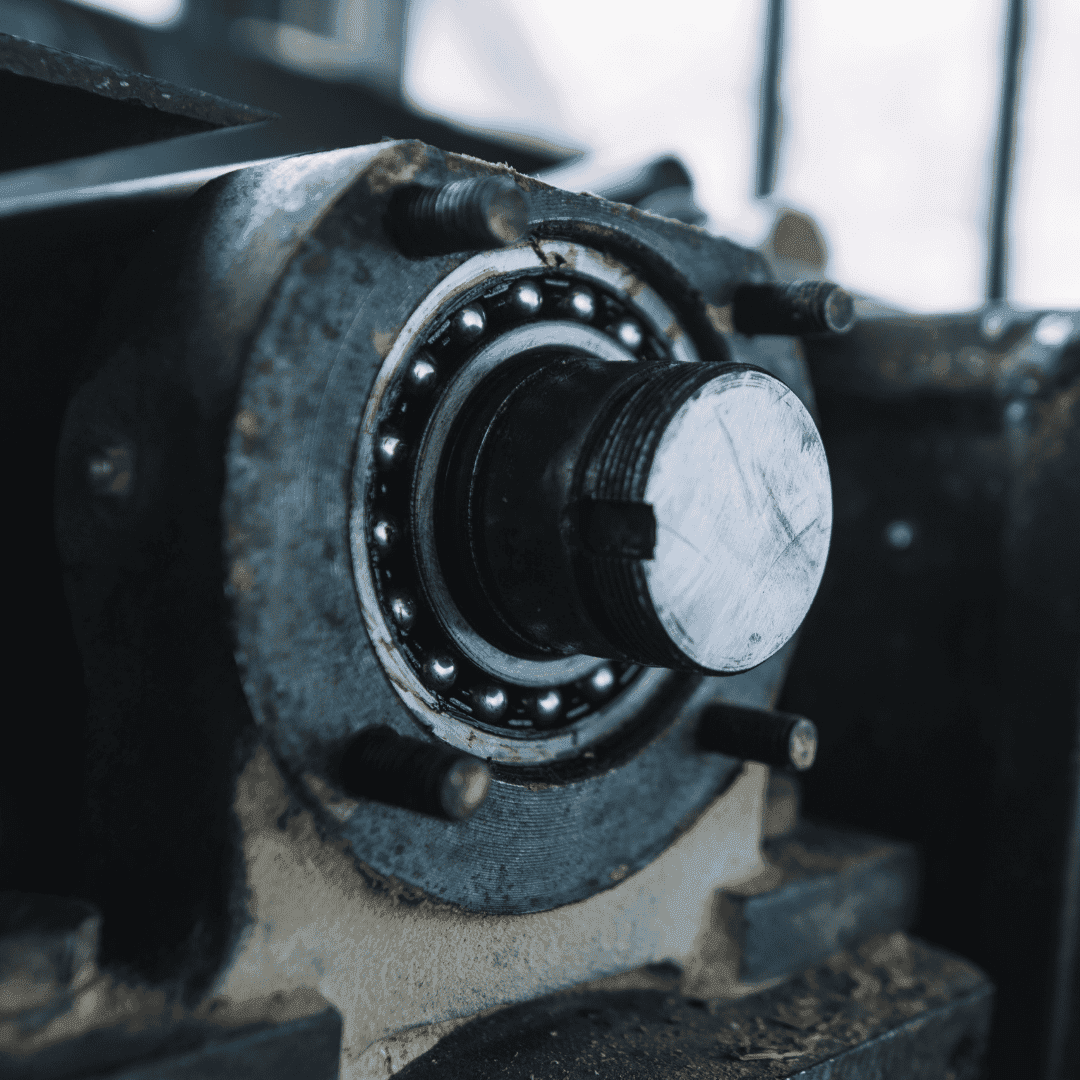
When a bearing fails, there is always an identifiable root cause, and that cause is the most valuable information about the event. Diagnosing the failure mode allows you not only to replace the component but also to correct the condition that caused it to fail, preventing the next one from failing in the same way. Here are the most common failure modes, how to recognize them by their telltale signs, their root causes, and the corrective actions to take. Reactive maintenance without root cause diagnosis is the most expensive cycle in a plant.
Mode 1: Surface fatigue (spalling/pitting)
This is how a bearing “should” fail at the end of its service life: after millions of cycles, accumulated subsurface stress causes cracks that progress to the surface and cause material to flake off or form craters. Recognize: pitting and flaking on the raceways, increasing vibration and noise. Root cause: If it occurs after the L10 life, it is normal fatigue; if it occurs before, it is usually due to overload, insufficient lubrication, contamination by hard particles, or low-quality material. Corrective action: Check the actual load, lubrication, and cleanliness; use a high-quality bearing.
Mode 2: Abrasive Wear
Recognize: Opaque or scratched surfaces, increased internal clearance (more play than original), grease containing particles. Root cause: Contamination from dust or abrasive particles entering through damaged seals or dirty lubricant; insufficient lubrication. Corrective action: Improve sealing, use clean lubricant of the correct type, review maintenance intervals, and filter the environment.
Mode 3: Corrosion
Due to moisture: reddish rust spots on tracks and components, which lead to pitting. Due to friction (fretting): reddish-brown rust in the fitting areas (between the ring and shaft or housing) caused by micro-movements. Root cause: water ingress or condensation, lubricant without corrosion protection, or a loose fit that allows for micro-movement. Correction: proper sealing, grease with corrosion inhibitors, correct fit, and, in humid environments, stainless steel or coated materials.
Mode 4: Brinelling (indentations)
True brinelling: indentations in the raceways caused by mounting impacts (direct hammering), shock loads exceeding the static capacity (C0), or pressing without the correct tool. False brinelling: marks at the element positions caused by vibration in equipment on standby without rotation. Correction: Use appropriate mounting tools (mounting tool, induction heater); never strike the bearing. For standby, rotate the shaft periodically or use grease with more EP additives.
Mode 5: Damage caused by electric currents (fluting)
This is becoming increasingly common due to variable frequency drives (VFDs). Eddy currents are discharged through the bearing, generating micro-arcs that erode the material. Recognition: fine, regular circumferential grooves or channels on the raceway (hence “fluting,” due to its resemblance to a flute), dark color due to localized melting, black grease with a burnt odor, and progressive noise and vibration. Root cause: motor with VFD without mitigation measures (no output filters, poor grounding, no insulated bearing). Correction: hybrid ceramic bearing (non-conductive Si₃N₄ balls) or bearing with an insulating coating; common-mode filters on the VFD; verify grounding. Fersa, via NKE, offers electrically insulated bearings for this purpose.
Mode 6: Incorrect installation
This is the most common cause of failure in new bearings: a bearing that fails within the first few days was almost always installed incorrectly. Types of damage: direct impact (applying force through the rolling elements causes immediate indentations); loose fit (the ring rotates on the shaft, causing creep and wear on both surfaces); overly tight fit (eliminates internal clearance, creates preload, and causes overheating); and misalignment (load concentrated in one area). Correction: Provide training on proper installation; use a bearing installer or induction heater; apply force only to the ring that is being fitted; verify the shaft-bearing fit and bearing housing alignment before installation.
When a bearing fails, the marks tell the story: fatigue, wear, corrosion, brinelling, electrical damage, or improper installation. Analyzing these marks allows you to address the root cause, rather than just replacing the part. At BIOSA MOTION TECHNOLOGIES, we can help you interpret these failure marks and propose the right solution, drawing on our expertise and experience to prevent the problem from recurring.
Contact us on WhatsApp
Do you need bearings for your plant that are available immediately? Our engineers will help you select the right ones at no cost. We carry Timken, NACHI, Fersa, RBC, IBC, and ITA bearings in Guadalajara, Aguascalientes, León, Querétaro, Monterrey, Hermosillo, and Puebla.