

What components are included in each axis of a CNC machine?
What components make up a CNC linear axis: linear guides, ball screw, servomotor, coupling, support bearings, and encoder. The complete anatomy of a precision axis.
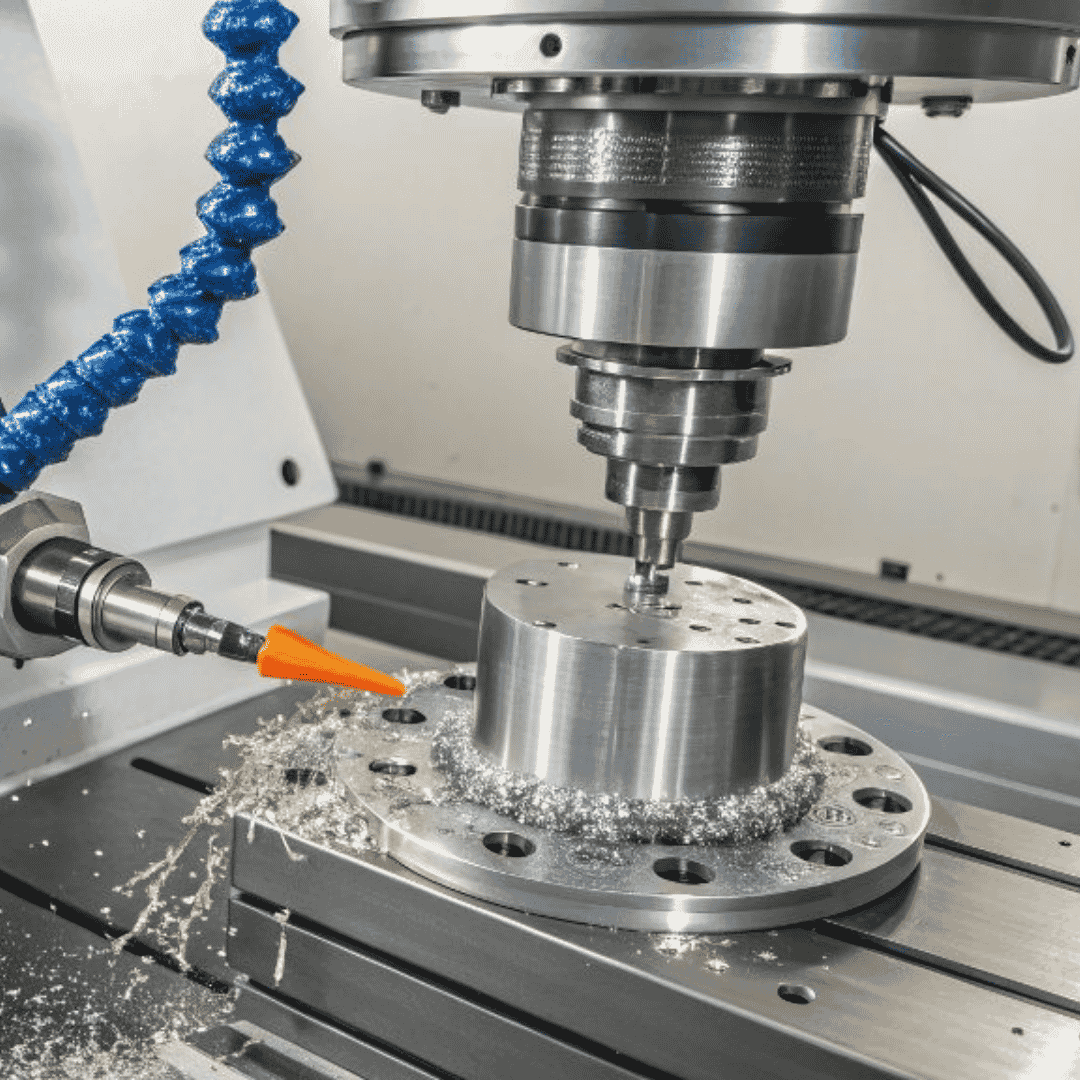
A CNC machine axis may seem like a single entity the moving table but in reality, it is a set of components that work in coordination: guides that guide, a spindle that drives, a motor that controls, and various support elements. Understanding each of these components allows you to understand, specify, and maintain a precision linear axis. Here, we break down the components of a CNC linear axis and the function of each one.
Overview of the axis
A precision linear axis converts the rotation of a servomotor into precise linear motion of a table or head. To achieve this, it incorporates three subsystems: the guidance system (the guides), the transmission system (the lead screw), and the control system (the motor and its feedback), plus the support elements that connect them. All of these components must be properly sized and aligned with one another.
Component 1: Linear Guides
They form the basis of the guide system. Two parallel rails with their carriages define the straight path and support the table load and cutting forces. Their precision class and preload determine the accuracy and rigidity of the axis. In precision CNC machines, ball-screw guides (HG) or roller guides (RG from HIWIN) are used for maximum rigidity. Without high-quality guides, the rest of the axis cannot be precise.
Component 2: the ball screw
It is the heart of the drive system. It converts the rotation of the servomotor into precise linear motion: as the spindle rotates, the nut attached to the table moves forward. The spindle pitch (feed per revolution) and its precision class determine the resolution and accuracy of positioning. It is mounted parallel to the guides. HIWIN manufactures ball screws that are rolled and ground to the required precision.
Component 3: the servomotor
It generates and controls the rotational force that drives the spindle. Unlike a standard motor, a servomotor precisely controls its position, speed, and torque in response to commands from the CNC controller. Its size is determined by the load, acceleration, and inertia of the shaft.
Component 4: Coupling
It connects the servomotor shaft to the spindle, transmitting torque while absorbing minor misalignments. Flexible couplings with high torsional rigidity are used (to maintain positioning accuracy) to accommodate residual misalignment during assembly. A coupling with backlash introduces positioning error.
Component 5: Spindle Support Bearings
The spindle is supported at both ends by bearings that keep it aligned and absorb the axial load it generates when pushing the table. Typically, precision angular contact bearings are used at the fixed end, and a support that allows for expansion is used at the other end. These bearings determine the axial rigidity of the system.
Component 6: The feedback system (encoder)
To position accurately, the controller needs to know where the table is. The rotary encoder on the motor, or the linear encoder (scale) mounted next to the guide for maximum precision, feeds the position data back to the CNC controller, which makes corrections in real time. The linear encoder, although more expensive, eliminates cumulative spindle error and provides maximum accuracy.
Why Integration Matters
A precision shaft is not simply the sum of its good components, but rather the result of their integration: the guides and the lead screw must be parallel and aligned, the bearings must be properly preloaded, and the coupling must be free of play. A single misaligned component compromises the entire shaft. That is why it is important to specify compatible components HIWIN offers guides, lead screws, and support bearings from the same brand and to ensure proper assembly.
A CNC axis consists of guideways, a lead screw, a servomotor, a coupling, support bearings, and feedback components, each with its own function, all working in alignment and sized to fit together. Understanding the anatomy of the axis allows you to specify and maintain it effectively. At BIOSA MOTION TECHNOLOGIES, we offer HIWIN guides, leadscrews, and bearings to assemble complete precision axes. To see how the guide and leadscrew work together, check out our article on linear guides and leadscrews in CNC systems.