

Linear Motion in Industry: A Technical Guide and Its Role in CNC
What is linear motion, what types exist, what components generate it, and what role do linear guides play in a CNC machine? A comprehensive technical guide with links to each topic.
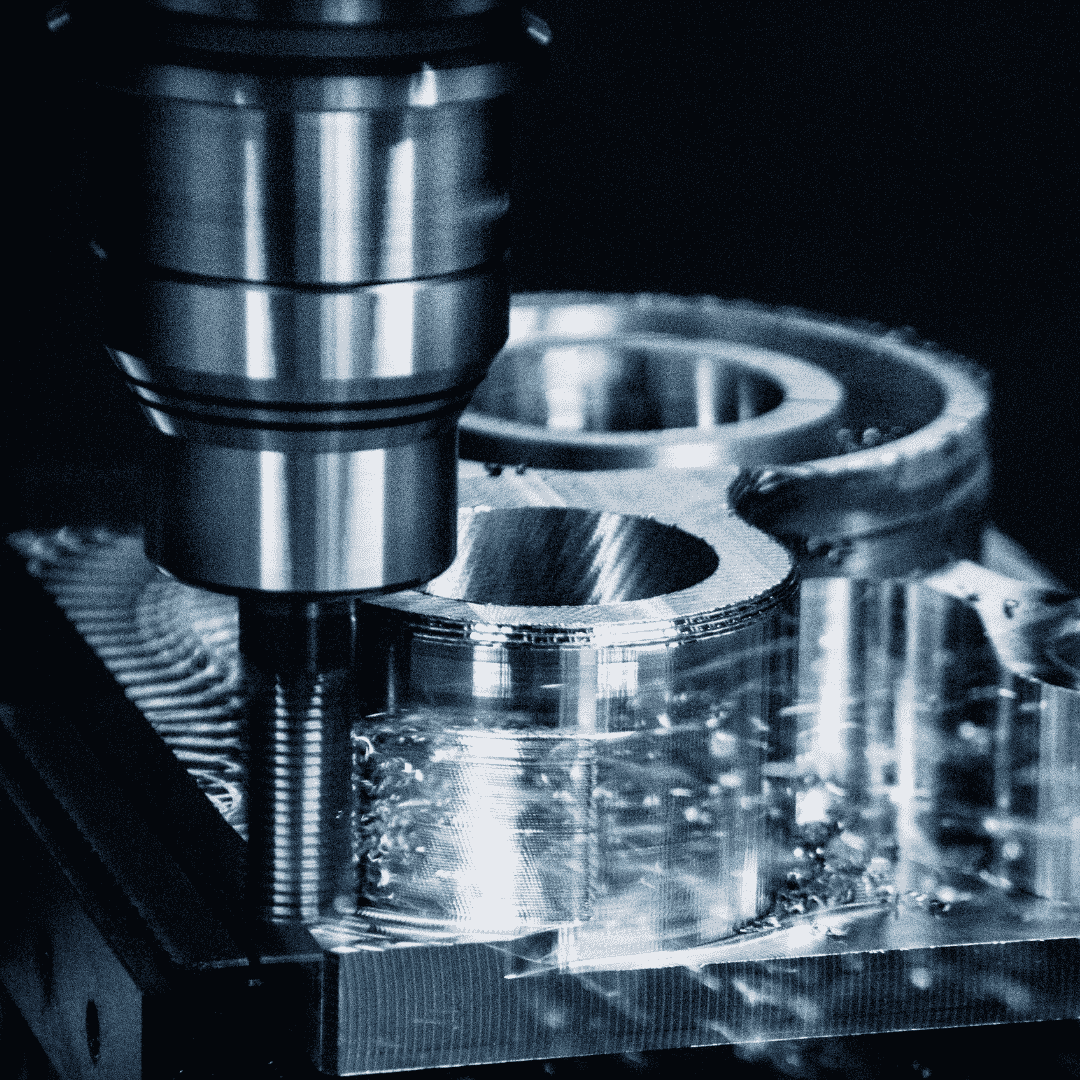
Everything that moves precisely in a straight line in a factory—a CNC spindle, a robot’s axis, or an industrial printer’s table—relies on a linear motion system. It’s a concept that seems simple but involves several components working together: guides that define the path, screws or belts that generate the force, and motors that control it. This is BIOSA MOTION TECHNOLOGIES’ reference guide on linear motion and its role in CNC systems. Here you’ll find what it is, the different types, the components that generate it, and how it’s integrated into a machine, with links to articles that delve deeper into each topic. We partner with HIWIN as our go-to supplier for guides and leadscrews, and with ROLLON for actuators and specialized solutions.
What is linear motion?
Linear motion is the movement of an object along a straight path, as opposed to rotational motion (rotation about an axis). In industry, almost no machine operates solely through rotation: most convert the rotational motion of a motor into linear motion to precisely position tools, parts, or heads. That conversion and guidance are at the heart of automation.
The Four Types of Movement
Before discussing linear motion, it is helpful to classify it among the types of mechanical motion: linear (straight), rotary (rotation), oscillatory (angular back-and-forth), and reciprocating (linear back-and-forth). Many machines combine several of these types. We explore this further in the article on the four types of linear motion and their relationship to the others.
The Components of Linear Motion
A linear motion system combines three functions: guidance (the linear guides, which define the path and support the load); transmission (the ball screw, belt, or rack-and-pinion, which generate force and motion); and control (the motor and its positioning system). No single component does the work on its own: the guide does not drive, the spindle does not guide, and the motor does not support the load.
The Role of the Linear Guide
Within the system, the linear guide is responsible for guiding the movement: it ensures that the movement is straight, precise, and rigid, while supporting the load and lateral forces. Without a high-quality guide, the precision of the spindle and motor is lost due to deflection or vibration. The guide is what converts the force from the drive into useful and precise motion. HIWIN’s HG and RG series are the standard in precision applications.
Linear Motion in a CNC Machine
The most iconic application of linear motion is the CNC machine. A machining center is defined by its X, Y, and Z linear axes and, in advanced machines, additional axes—each with its own guideways, spindle, and motor. The precision of the final part depends directly on the quality of these linear axes. We go into more detail in the article on the 5 axes of a CNC machine.
Guideways and lead screws: the CNC axis duo
In every CNC axis, the guide and ball screw work together: the guide defines the path and supports the load; the ball screw converts the rotation of the servomotor into precise linear motion. This is the standard configuration for a precision axis. HIWIN manufactures both components, allowing you to specify the entire axis from a single brand. We cover this in our CNC linear guides and ball screws.
How a Complete Linear Axis Is Assembled?
A precision linear axis typically consists of: two parallel guide rails with their carriages; a ball screw parallel to the guide rails; a lead screw nut attached to the moving table; a servomotor with its coupling; ball screw support bearings; and the structure that holds everything together. Each component must be properly sized and aligned with the others. We go into detail about this in the article on CNC axis components.
When is each type of transmission used?
The drive system is selected based on the application: the ball screw provides the highest precision and rigidity for short and medium travel distances (CNC, precision screws); the belt drive allows for high speed over long travel distances with lower precision (handling, gantries); the rack-and-pinion system covers very long travel distances with good rigidity (large gantries); and the integrated linear actuator (such as those from ROLLON) combines the guide and drive in a single, ready-to-install product. The linear guide is included with all of them.
The drive system is selected based on the application: the ball screw provides the highest precision and rigidity for short and medium travel distances (CNC, precision screws); the belt drive allows for high speed over long travel distances with lower precision (handling, gantries); the rack-and-pinion system covers very long travel distances with good rigidity (large gantries); and the integrated linear actuator (such as those from ROLLON) combines the guide and drive in a single, ready-to-install product. The linear guide is included with all of them.
Linear Motion in a CNC Machine
The most iconic application of linear motion is the CNC machine. A machining center is defined by its X, Y, and Z linear axes and, in advanced machines, additional axes—each with its own guideways, spindle, and motor. The precision of the final part depends directly on the quality of these linear axes. We go into more detail in the article on the 5 axes of a CNC machine.
Guideways and lead screws: the CNC axis duo
In every CNC axis, the guide and ball screw work together: the guide defines the path and supports the load; the ball screw converts the rotation of the servomotor into precise linear motion. This is the standard configuration for a precision axis. HIWIN manufactures both components, allowing you to specify the entire axis from a single brand. We cover this in our CNC linear guides and ball screws.
How a Complete Linear Axis Is Assembled
A precision linear axis typically consists of: two parallel guide rails with their carriages; a ball screw parallel to the guide rails; a lead screw nut attached to the moving table; a servomotor with its coupling; ball screw support bearings; and the structure that holds everything together. Each component must be properly sized and aligned with the others. We go into detail about this in the article on CNC axis components.
When to Use Each Type of Transmission
The drive system is selected based on the application: the ball screw provides the highest precision and rigidity for short and medium travel distances (CNC, precision screws); the belt allows for high speed over long travel distances with lower precision (handling, gantries); the rack-and-pinion system covers very long travel distances with good rigidity (large gantries); and the integrated linear actuator (such as those from ROLLON) combines the guide and drive in a single, ready-to-install product. The linear guide is included with all of them.
Linear motion is the foundation of precision automation: a system in which the guides define the path, the drive generates the feed, and the motor controls it all integrated into each axis of a CNC machine. Understanding how it is constructed allows you to specify and maintain complete linear axes. At BIOSA MOTION TECHNOLOGIES, we offer HIWIN guides and leadscrews and ROLLON actuators to assemble the complete axis. Explore the linked articles, or contact us via WhatsApp for advice.