

Linear guides for industrial robotics: dynamic rigidity and low maintenance
Linear Guides for Industrial Robotics: Why Dynamic Stiffness and Low Maintenance Matter, Which HIWIN Series to Use, and When a ROLLON Actuator Is the Best Solution.
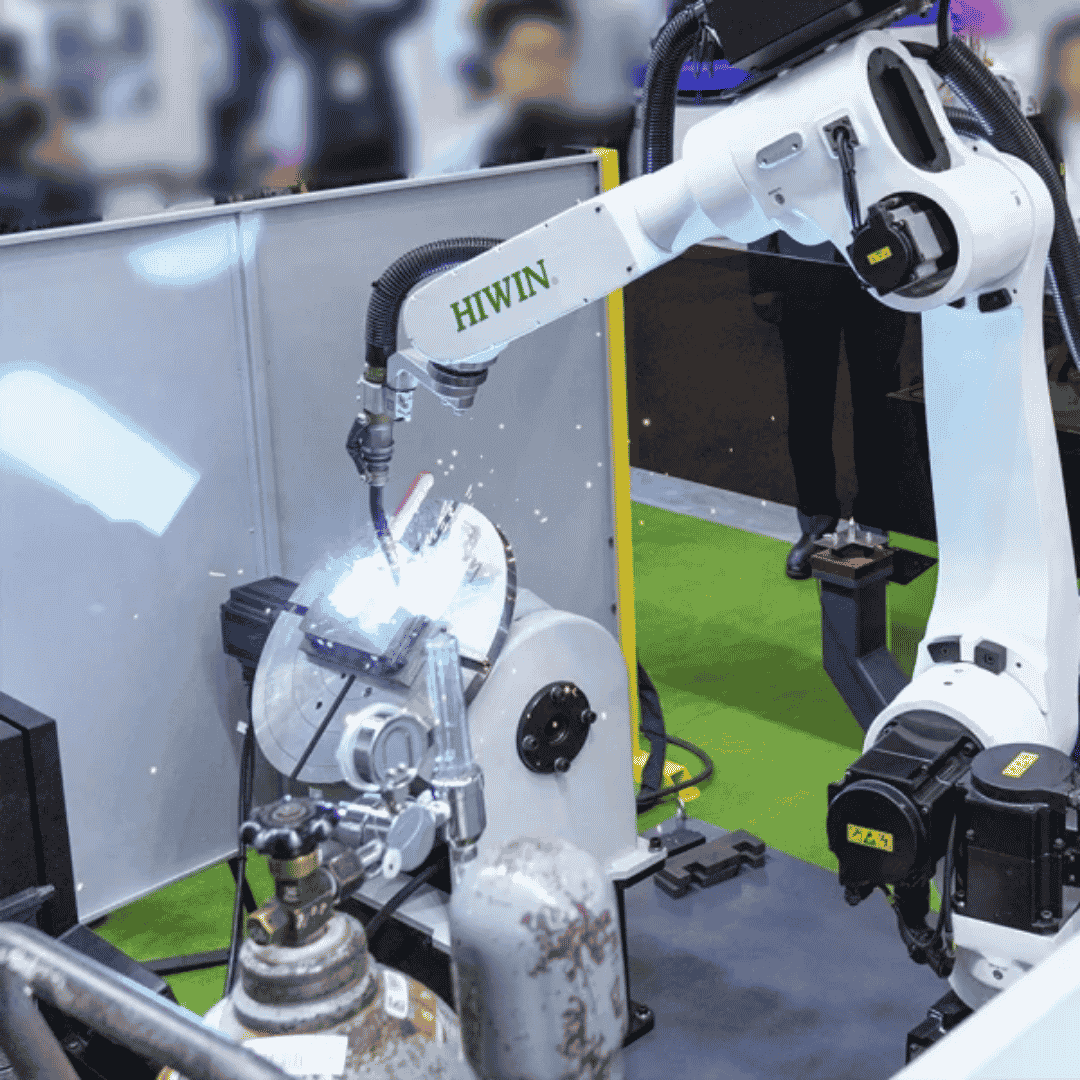
Industrial robotics relies on precise, repeatable motion, and linear guides are the components that make this possible in Cartesian robots, gantry robots, and manipulator axes. In this sector, dynamic stiffness and low maintenance are not just desirable they are critical to the robot’s cycle time and uptime. Here, we explain what robotics demands from its guides and which solution is best suited for each application.
What does robotics require?
Four requirements: dynamic stiffness (so the robot can accelerate and stop without residual vibration that limits cycle time); precision and repeatability (for accurate positioning cycle after cycle); low maintenance (a robot stopped for lubrication means lost production); and often long travel distances (in gantries and transfer axes). The precision profile guide meets the first three requirements and is combined with long-travel solutions to address the fourth.
Dynamic stiffness determines the cadence
This is the key point in robotics. When an axis accelerates and decelerates rapidly, a guide with play or low rigidity generates residual vibration that takes time to dampen, and the robot must wait for it to stabilize before operating, which reduces the cycle time. A rigid guide, with proper preload, minimizes that vibration and allows for faster cycles. That is why preload and stiffness are selected with dynamics in mind, not just static load.
Application 1: Cartesian and gantry robots
X-Y-Z (Cartesian) robots and gantries use profile guides on each axis. The HIWIN HG series stands out for its rigidity in all four directions, while the compact EG series is ideal for high-speed, low-profile axes. Medium- to high-preload provides the dynamic rigidity required for robotics. For the long horizontal axis of a gantry, spliced rails or long-travel solutions are used.
Application 2: Manipulation and Pick-and-Place Axes
High-throughput pick-and-place axes prioritize speed and precision with low moving mass. The EG series (compact and lightweight) is ideal, with preload that balances stiffness and friction. The low mass of the carriage allows for high accelerations without compromising precision.
Application 3: Transfer Axes and Seventh Axis
When an articulated robot is mounted on a linear axis to extend its reach (the so-called “seventh axis”), a robust system capable of long travel and high load capacity is required. Here, ROLLON’s linear actuators and systems are a leading solution: they integrate the guide, drive, and structure into a system designed to move robots something that a profile guide alone cannot achieve. This is a clear example of how ROLLON complements HIWIN.
Low maintenance as a priority
In robotics, every maintenance stop costs cycle time. HIWIN’s E2 self-lubrication kit reduces the frequency of maintenance, keeping the guide lubricated for months. Combined with its calculable L10 life, it allows you to plan replacements without any surprises. A robot that doesn’t stop for lubrication is a more productive robot.
Robotics requires dynamic stiffness for cycle time, precision for repeatability, and low maintenance for uptime. HIWIN’s HG and EG series cover precision axes, while ROLLON’s systems and actuators address transfer axes and long-stroke seventh axes. At BIOSA MOTION TECHNOLOGIES, we equip robotic cells with the full range of HIWIN and ROLLON products. To explore other industries, check out our guide to linear guides by industry.