

Stainless Steel Linear Guides: When They Are Essential
When to Use a Stainless Steel Linear Guide: Humidity, Washing, Corrosion, and Sanitary Requirements. Why HIWIN's MG Series Is Stainless Steel Right Out of the Box and How to Choose It.
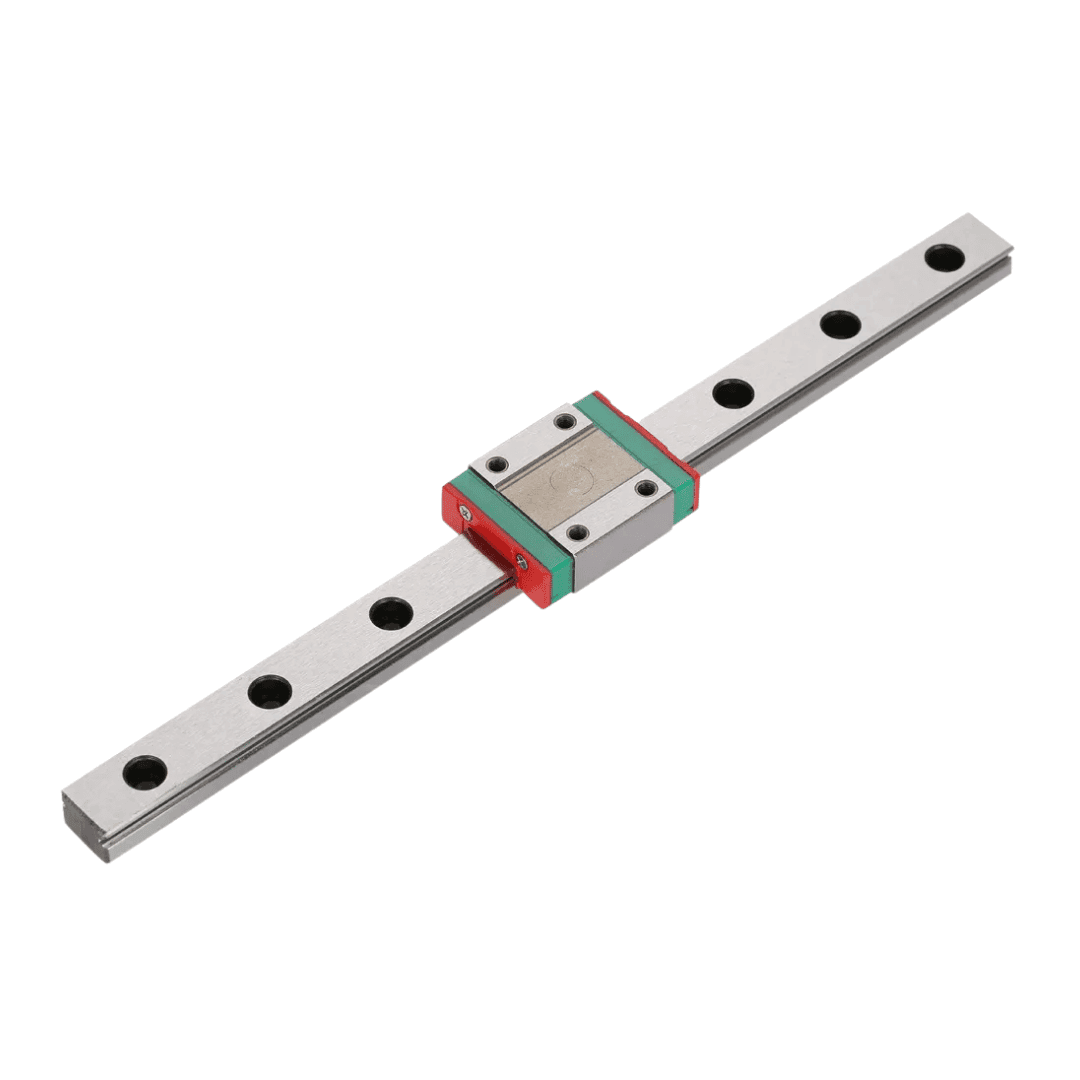
A stainless steel linear guide is not a “premium” version of the standard guide: it is an essential requirement in certain environments where a chrome steel guide simply corrodes and fails. Knowing when its use is justified prevents both premature corrosion and unnecessary expenses in applications that do not require it. Here we explain when a stainless steel guide is essential, when it is not, and why HIWIN’s MG series is the industry standard.
Why Does Standard Steel Corrode?
Standard linear guides are made of chrome steel (type 52100), which offers excellent hardness and wear resistance but is not corrosion-resistant. In the presence of moisture, water, chemicals, or saline environments, this steel rusts: pitting appears on the raceways, which impairs movement and, over time, renders the guide unusable. Therefore, in corrosive environments, a different material must be used.
When is stainless steel essential?
Stainless steel is justified and is often mandatory in the following situations: contact with food or pharmaceuticals (for hygiene and to prevent migration); frequent washing with water or chemicals (CIP/COP); constant humidity (paper, water treatment, outdoor environments); corrosive or saline environments (chemical, marine, coastal); and cleanrooms where rust is unacceptable. In these cases, trying to save money by using standard steel ends up being costly: the guide fails due to corrosion long before the end of its mechanical life.
When is it NOT needed?
In a dry, clean environment at normal temperatures, standard chrome steel is the right choice for most general manufacturing, CNC machining in workshops, and indoor automation: it offers greater hardness and load-bearing capacity than stainless steel, at a lower cost. Paying for stainless steel where there is no corrosion is an unnecessary expense that also sacrifices some load-bearing capacity.
HIWIN's MG Series: Stainless Steel Right from the Factory
HIWIN's MG (miniature) series is manufactured entirely from special stainless steel: rail, block, balls, and retainers. The advantage of factory-finished stainless steel over an applied coating is clear: there is no layer that can be scratched or peel off, leaving the steel exposed. This makes it ideal for sanitary and corrosive environments where material integrity must be guaranteed. HIWIN also offers anti-corrosion coatings (such as zinc) for standard series when protection is needed without resorting to all-stainless steel.
Stainless Steel vs. Coated: Which to Choose
There are two ways to resist corrosion: factory-finished stainless steel (stainless steel throughout the entire guide; maximum integrity, ideal for sanitary applications and severe corrosion) and an anti-corrosion coating (a protective layer over standard steel; lower cost, good protection against moderate corrosion, but the coating can be damaged). The rule of thumb: for sanitary requirements or severe corrosion, choose factory-finished stainless steel; for moderate humidity without product contact, a coating may suffice.
Considerations When Specifying Stainless Steel
When choosing stainless steel, keep in mind that its load capacity is slightly lower than that of chrome steel of the same size, so a larger size may be needed for the same load. It is also advisable to use a compatible lubricant (food-grade, if applicable) and a seal suitable for the environment. Corrosion resistance applies to the entire system, not just the rail.
Stainless steel guides are essential in environments with moisture, washing, corrosion, or sanitary requirements, but unnecessary in dry, clean environments where standard steel performs better and is more cost-effective. HIWIN’s MG series, which is factory-finished in stainless steel, is the benchmark for demanding environments, with coatings available as an alternative for moderate corrosion. At BIOSA MOTION TECHNOLOGIES, we help you determine whether your application requires stainless steel and specify the right solution. To see the industries where it’s most commonly used, check out our guide to linear guides by industry.