

Tightening Torque for HIWIN Linear Guides: Why It Matters and How to Apply It
Why tightening torque determines the precision of a HIWIN guide, how it depends on the size and grade of the screw, and the correct sequence for tightening without deforming the rail.
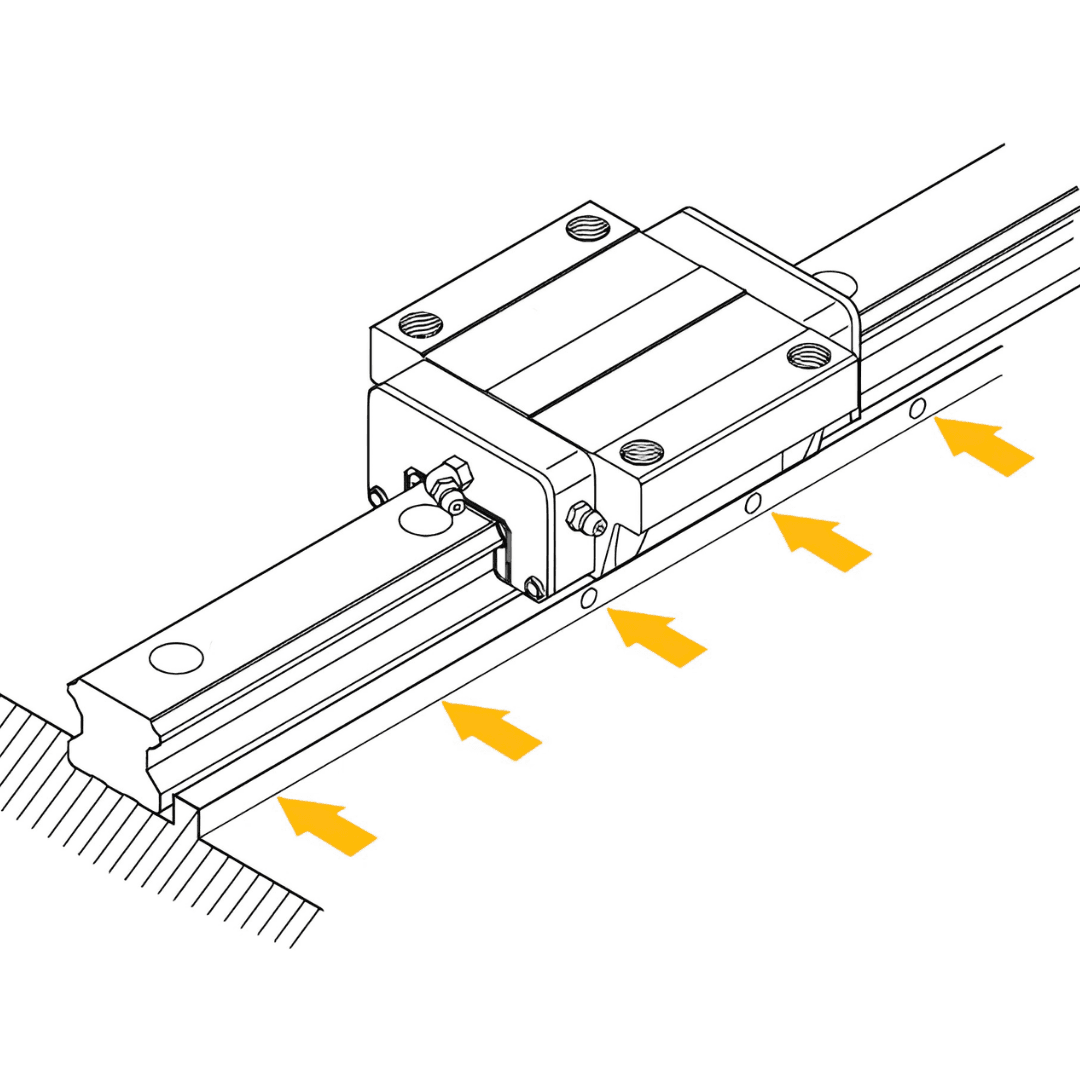
The tightening torque for mounting screws may seem like a minor detail, but it is one of the factors that most significantly affects the precision and service life of a linear guide. Tightening “by feel” whether too much or too little compromises the straightness of the rail and the performance of the entire machine. Here, we explain why torque is so important, what determines its value, and how to apply it correctly to HIWIN guides.
Why Torque Determines Accuracy
The rail transfers its straightness to the machine through the mounting screws. Insufficient torque leaves the rail loose: under load and vibration, it moves, loses alignment, and creates play. Excessive torque can deform the rail, distort the tracks, and over-preload the carriage. The correct torque secures the rail firmly against the surface without deforming it: that balance is what preserves precision.
What determines the torque value?
The correct torque is not a universal number: it depends on the screw size (M4, M5, M6, M8...) and its strength class (8.8, 10.9, 12.9). The larger the size and strength class, the higher the allowable torque. HIWIN publishes the recommended torque values for each guide size and its corresponding screw in its catalog. Using that value rather than an estimate is the correct approach.
The tightening sequence is just as important as the torque value
Applying the correct torque in the wrong order also causes misalignment. The rule: tighten in a progressive sequence from one end to the other, or from the center toward the ends, as specified by the manufacturer, in several passes, gradually increasing the torque (for example, 50% and then 100%). While tightening, the rail must be held pressed against its reference surface. Never tighten to the final value all at once or in a random order.
Always use a torque wrench
Torque cannot be applied accurately “by hand.” A calibrated torque wrench is essential to ensure that each screw is tightened to the correct and consistent torque value. Uneven tightening among screws creates stress points that cause localized deformation of the rail. The investment in a torque wrench pays off in terms of precision and the guide’s service life.
The material of the base also matters
The allowable torque also depends on the material being fastened: on steel, you can apply the full torque; on aluminum or cast iron, it is sometimes advisable to reduce it to avoid damaging the thread. If the base is made of a softer material, check the adjusted value or use steel threaded inserts. Ignoring this can strip the thread and ruin the assembly.
Tightening torque is a critical factor, not a minor detail: it determines whether the rail maintains its straightness in the machine or whether it loosens or becomes distorted. Using the HIWIN catalog value specified for the screw and material, following a progressive sequence, and using a torque wrench ensures a precise and durable installation. At BIOSA MOTION TECHNOLOGIES, we provide you with the torque values for your HIWIN guide. For the complete procedure, check out our article on how to install a linear guide.