
Linear Guides: What They Are, Types, Uses, and How to Choose the Right One
What are linear guides, how do they work, what types are available, and how to choose the right one for your machine. A comprehensive guide with links to everything you need to know.
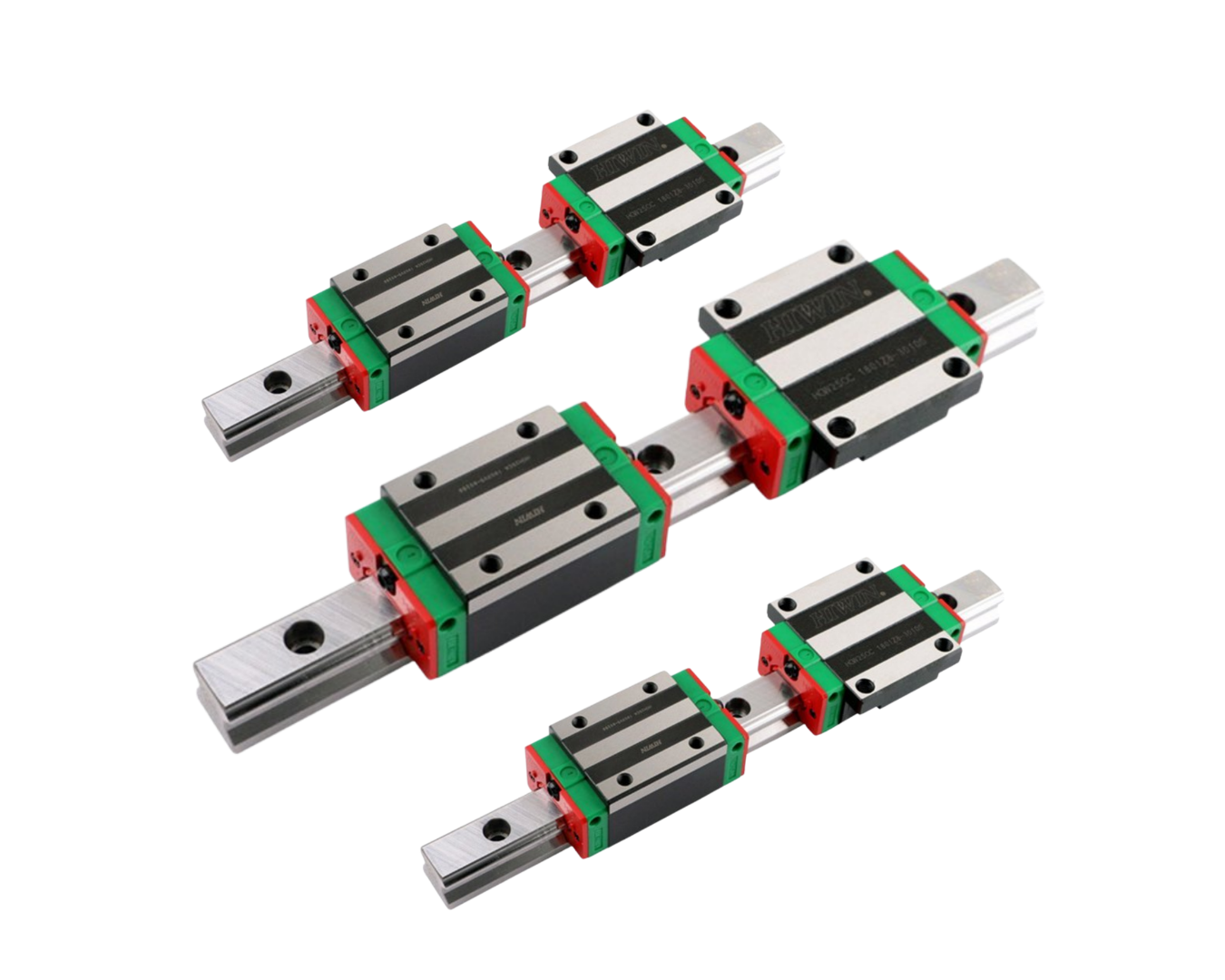
Linear guides are the components that enable a load to move in a straight line with precision, low friction, and repeatability over millions of cycles. They are found in nearly every machine that cuts, assembles, packages, or inspects from a CNC machining center to a Cartesian robot, from an industrial printer to medical diagnostic equipment. This is BIOSA MOTION TECHNOLOGIES’ reference guide on the subject. Here you’ll find a comprehensive overview of what they are, how they work, the different types available, where they’re used, and how to choose the right one with links to articles that delve deeper into each topic. As a Master Distributor for HIWIN, a global leader in profile linear guides, and with the ROLLON range for telescopic and special applications, BIOSA covers the entire spectrum of linear motion.

What is a linear guide?
A linear guide is a precision system consisting of a fixed rail and one or more carriages (blocks) that move along it in a straight line. Between the rail and the carriage, rolling elements, balls or rollers, circulate, replacing sliding with rolling, thereby drastically reducing friction: in a ball recirculation guide, the coefficient of friction is approximately 1/50th that of a traditional sliding guide. This reduction in friction is what allows large loads to be moved at high speeds, with micrometer-level precision and without premature wear. In profile guides, the balls circulate in a closed loop inside the block, so the travel distance is unlimited. We explore the mechanism in more detail in the article “What Is a Linear Guide and How Does It Work?” It’s important to clarify a point that often causes confusion: a “linear guide” is not the same as a “linear bearing.” The linear bearing is the rolling element; the linear guide is the complete system consisting of the rail and the carriage. In shop floor terminology, they are sometimes used interchangeably, but when providing a quote, it’s best to be precise.
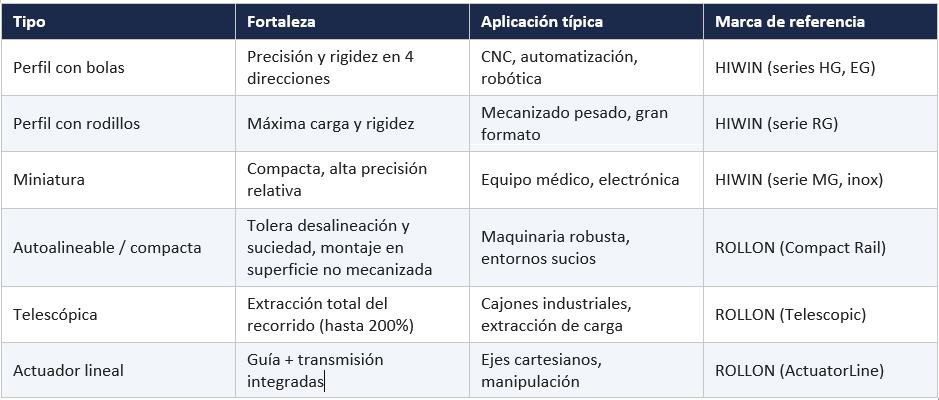
What is it for?
A linear guide meets four requirements at once: precise movement along a straight axis, rigidity against lateral and overturning loads, extended service life under repetitive cycles, and controlled speed and acceleration. Without a component that meets all four requirements, it would be impossible to achieve the repeatability demanded by CNC machines, robots, or high-speed packaging lines. In the article “What Is a Linear Guide Used For?”, we illustrate this with real-world examples from manufacturing facilities where a linear guide solved a specific problem related to precision or vibration.
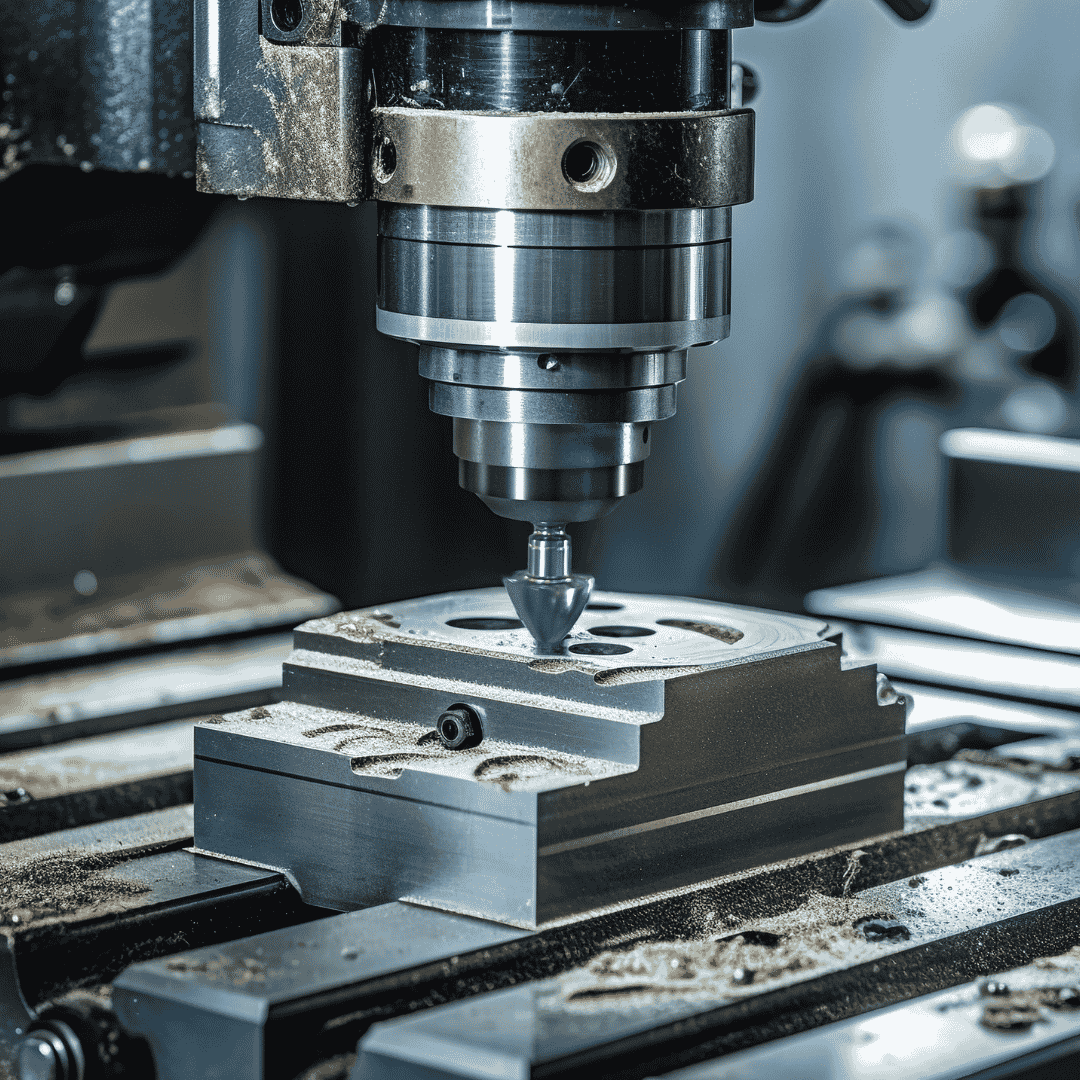
Applications by Industry
Linear guides are critical in a wide range of industries, each with its own specific requirements: automotive (welding and inspection robots), food and beverage (stainless steel and food-grade lubricants), pharmaceutical (certified materials and validation), paper and cardboard (reinforced sealing against fibers and moisture), and robotics (dynamic rigidity and low maintenance). Each sector has its own article in this cluster.
Frequently Asked Questions
Is a linear guide the same as a linear bearing? They are related: the linear bearing is the rolling element; the linear guide is the complete system consisting of the rail and carriage. What does the code HGH25CA mean? It is the HIWIN nomenclature: series, block type, size, load, mounting, preload, and precision; we break it down in the article on the code. How often should they be lubricated? HIWIN recommends checking every 100 km of travel or every 3–6 months under normal conditions.