
What is a linear guide, and how does it work?
What is a linear guide, how does it work internally, and why does it reduce friction to 1/50th that of a slide? A clear explanation of its basic anatomy
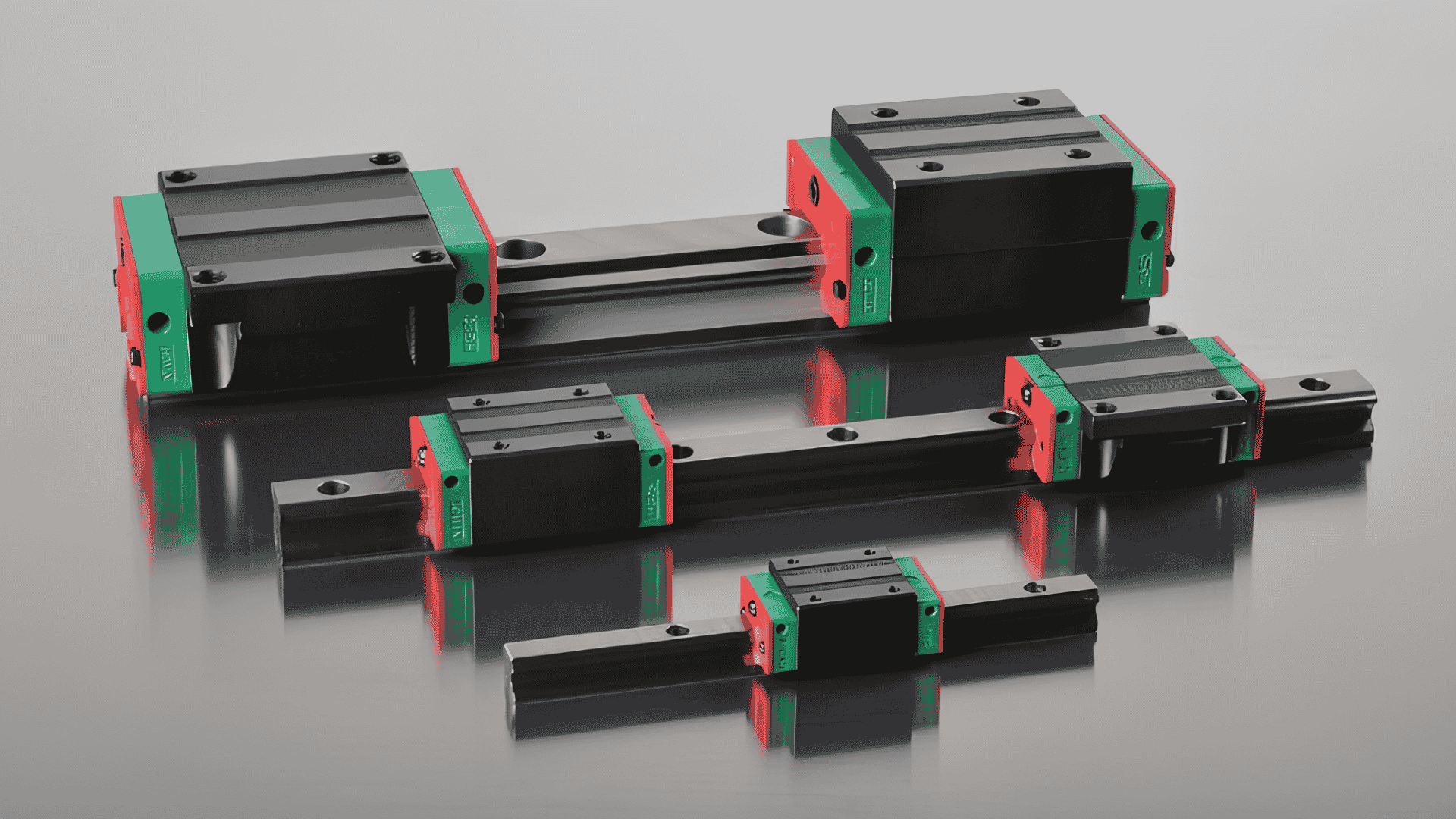
If you work in manufacturing, automation, or maintenance, you’re probably familiar with the term “linear guide.” What isn’t always clear is why a seemingly simple component a rail and a block that slides along it determines the performance of machines that cost hundreds of thousands of pesos. Here, we explain it in simple terms: exactly what a linear guide is and how it works on the inside.
Definition: What Is a Linear Guide?
A linear guide is a precision component that allows a load to be moved in a straight line with minimal friction and controlled deviation. The moving element the carriage or block travels along a fixed base, the rail, always maintaining the same path, without any lateral play or noticeable pitch. It is part of the family of linear motion systems, along with ball screws and linear bearings on shafts. It has a single purpose: to ensure that something moves in a straight line, precisely and repeatably, thousands or millions of times.
How It Works: Rolling Instead of Sliding
The principle is a physical fact: rolling friction is much lower than sliding friction. Instead of the carriage dragging along the rail, rolling elements balls or rollers circulate between them, causing the carriage to roll. This drastically reduces friction. To put the difference into perspective: in a ball recirculation guide, the coefficient of friction is approximately 1/50th that of a traditional sliding guide. It is this reduction that makes it possible to move large masses at high speeds without premature wear or loss of accuracy. In profile guides, the balls circulate in a closed loop within the block: upon exiting the load zone, they pass through a return channel and return to the starting point. This is why there is no limit to the travel distance.
Why Quality Matters
Two guide rails may look identical but perform very differently. The differences lie in the tolerances (controlled to the micrometer), the finish of the raceways (mirror-like versus rough surfaces that wear out quickly), and uniform heat treatment. That is why a guide from a leading brand like HIWIN, with certified manufacturing, offers a predictable service life and controlled tolerances, while a cheap guide may fail within weeks in a high-cycle application. That is why CNC and robotics manufacturers specify high-precision profile guides on their main axes: the guide is not a secondary component; it defines the machine’s capabilities.
A linear guide is, essentially, the component that converts linear motion into repeatable precision by replacing sliding with rolling to achieve this with minimal friction. Understanding how it works is the first step toward selecting and maintaining it properly. If you want to see the big picture—types, uses, and how to choose—check out our reference guide on linear guides, and if you need advice for your application, BIOSA MOTION TECHNOLOGIES is here to help you at no cost.