

Types of Linear Guides and How to Choose the Right One for Your Application
All types of linear guides: ball, roller, profile, round shaft, miniature, and telescopic. Differences, advantages, and how to choose the right one based on load and precision.
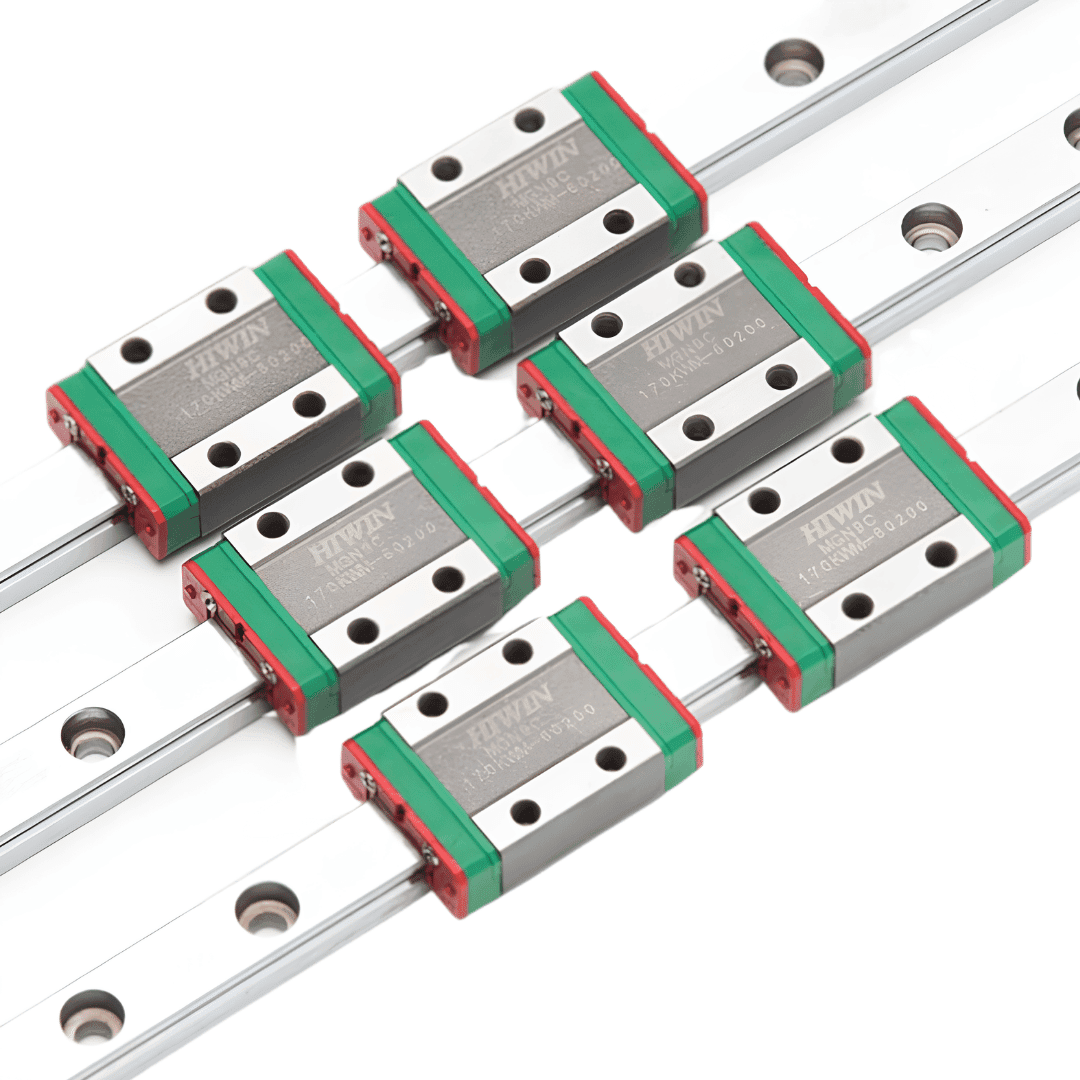
There is no universal, one-size-fits-all guide. Each type offers a different balance of load capacity, precision, speed, operating environment, and budget, and choosing the wrong one can result in early failures, cost overruns, or a loss of precision. The good news: with clear criteria, the right choice can be identified without ambiguity. This is BIOSA MOTION TECHNOLOGIES’ reference guide on types and selection. Here you’ll find a complete overview of the available types, their differences, and the method for choosing, with links to articles that delve deeper into each comparison. We partner with HIWIN as our go-to supplier for precision profile guides and with ROLLON for telescopic, self-aligning, and actuator systems.
The criteria for selecting the right type of linear guide
Before looking at the different types, make sure you understand the seven criteria that determine your choice: static and dynamic load; overturning moment (whether the load is centered or cantilevered); speed and acceleration; required precision; travel distance; environment (dust, metal shavings, humidity, temperature); and budget. With those answers, the right type practically chooses itself.
Classification by rolling element: balls vs. rollers
The first major distinction is what moves inside the carriage. Ball screws offer point contact, low friction, and high speed, with an excellent precision-to-cost ratio: they are the standard for mid-range automation and CNC systems (HIWIN’s HG series). Roller guides replace balls with cylindrical rollers, using linear contact that multiplies rigidity and load capacity, making them ideal for heavy-duty and large-format machining (HIWIN’s RG series). We compare them in depth in the article “Ball Guides vs. Roller Guides.”
Classification by construction: profile vs. round shaft
The second distinction is the rail geometry. The profile guide (square rail with recirculating carriage) provides rigidity in all four directions and high precision; it is the choice for CNC, robotics, and any demanding application. The round-shaft guide (linear bearing on a cylindrical shaft) is more economical and tolerant of misalignment, but it deflects under load if it is not properly supported. We discuss this in detail in “Profile Guide vs. Round-Shaft Guide.”
HIWIN Series Within the Profile Guide
Within its profile guide series, HIWIN offers several series for different needs: HG (heavy-duty, the most versatile), EG (compact and low-profile for high speeds and limited space), RG (rollers for maximum rigidity), MG (miniature stainless steel), and QH/QE with SynchMotion technology for lower noise and better lubrication. Choosing the right series is a key part of the selection process; we cover this in the article on HIWIN series.
When to Use HIWIN and When to Use ROLLON
The rule of thumb: if your priority is precision, rigidity, and speed in a profile rail, HIWIN is the benchmark. If your application requires features that a classic profile cannot provide such as self-alignment on unmachined surfaces, dirt tolerance, telescoping travel, lightweight aluminum, or an integrated actuator ROLLON (part of the Timken Group) is the solution. They aren’t competitors; they cover the entire spectrum of linear motion.
The 4-Step Selection Method
Step 1: Define the load and overturning moment (specify the size and whether balls or rollers are appropriate). Step 2: Define the required precision (specify the class). Step 3: Define the speed, travel distance, and operating environment (which determine the series, sealing type, and material). Step 4: Define the budget and criticality (which determine the brand and level). With these four steps, the correct guide is specified unambiguously. We detail the load calculation in a separate article.
The Most Costly Mistake: Choosing Based on Price
The most common mistake is choosing based on the initial price rather than on the application. An underspecified guide fails quickly and leads to scrap; an overspecified one wastes budget. The right guide is the one that meets all seven criteria at the lowest total cost taking into account service life and avoided downtime not the cheapest one in the catalog.
Ball or roller linear guides whether profile or round-shaft, miniature, telescopic, or actuator types are not interchangeable: each is designed to meet a specific need. Identifying the load, precision, environment, and budget will help you choose the right type without having to guess. At BIOSA MOTION TECHNOLOGIES, we’ll help you make that selection with the HIWIN and ROLLON product lines. Explore the linked articles for each comparison, or contact us via WhatsApp with your specifications.