

Signs of Wear on Linear Guides: When to Replace Them
How to detect wear in a linear guide: loss of precision, noise, play, vibration, and contaminated grease. When to repair, when to replace, and how to avoid a costly shutdown.
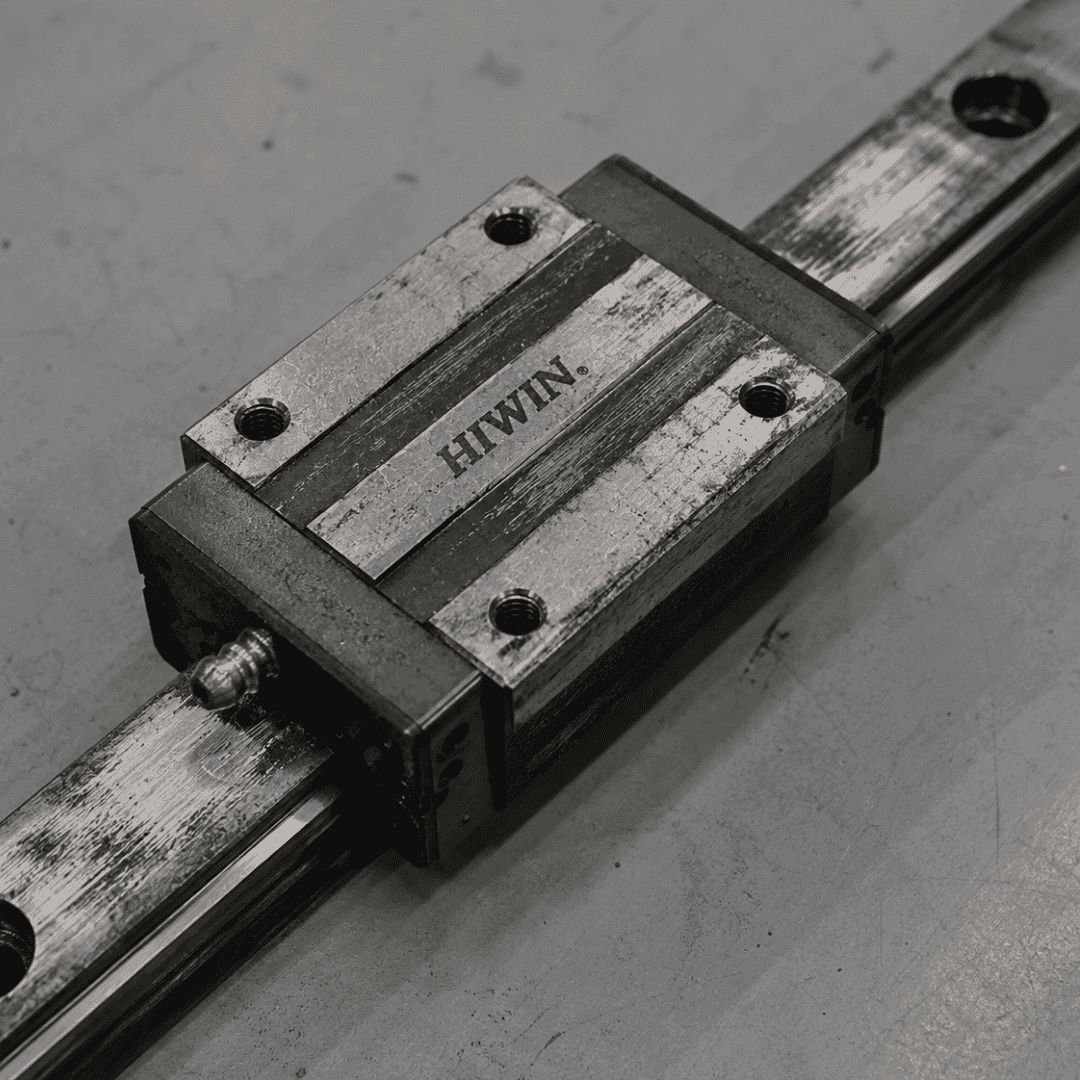
Linear guides wear out gradually, and learning to recognize the signs of wear allows you to replace them proactively rather than suffering a shutdown due to failure. The key is to distinguish between normal wear and wear that requires action, and to know when a guide can be repaired and when it needs to be replaced. Here are the signs of wear, how to interpret them, and the criteria for deciding when to replace them.
Sign 1: Loss of accuracy
If parts start to fall outside tolerance without any changes to the program, tools, or material, suspect wear on the guides. Wear on the guideways increases play, and the path loses accuracy. This is the most costly sign to ignore, because it first appears in your product as scrap before it becomes evident on the machine.
Sign 2: Abnormal noise
A well-maintained guide is almost silent. Squeaking indicates a lack of lubrication; a rhythmic tapping suggests damage to the tracks or balls; a harsh humming sound suggests contamination. A change in the usual sound is an early warning sign that should be investigated before the damage worsens.
Sign 3: Movement of the cart
With the machine stopped and secured, move the carriage by hand: there should be no noticeable lateral or vertical play. If you notice any play or wobble, the preload has been lost due to wear, and accuracy is already compromised. This is a simple test for routine inspection.
Sign 4: Increasing vibration
A vibration that increases over time indicates play or damage to the rolling elements. In addition to compromising precision, it accelerates wear on the rest of the machine. Vibration analysis confirms the source; without an instrument, placing a hand on the carriage allows one to detect changes from normal operation.
Sign 5: Contaminated grease
Check the grease leaking from the seals. If it is dark, dry, or contains shiny metal particles, there is active internal wear: those particles are material that has broken off from the balls or raceways, acting as an abrasive and accelerating failure. Clean grease is a good sign; grease with metal particles is a warning sign.
Repair or replace?
It depends on what is worn out. If the problem is with lubrication or sealing, it can be fixed by lubricating or replacing the seal. If the carriage has lost its preload but the rail is in good condition, in some series you can replace just the carriage with a new one of the same series, size, and precision (thanks to HIWIN’s interchangeability). If the rail grooves are worn or damaged, the rail must be replaced, and it’s best to replace the entire assembly. The rule of thumb: seal and lubricate first; if the grooves are worn, replace them.
When should you take action?
If you notice even a single mild sign, lubricate and inspect more frequently. If you notice several signs at once such as a loss of precision, increased noise, and increased play schedule a replacement before a catastrophic failure occurs, which could damage the table, the spindle, or the structure and halt production without warning. Replacing parts in a timely manner during a planned shutdown always costs less than waiting.
If you notice even a single mild sign, lubricate and inspect more frequently. If you notice several signs at once such as a loss of precision, increased noise, and increased play schedule a replacement before a catastrophic failure occurs, which could damage the table, the spindle, or the structure and halt production without warning. Replacing parts in a timely manner during a planned shutdown always costs less than waiting.