
Bearings for WEG and MARATHON Electric Motors: Specifications, Installation, and Maintenance
What type of bearing is used in each WEG and MARATHON motor, why C3 clearance is used, the case of motors with variable frequency drives (VFDs), and the correct step-by-step replacement procedure.
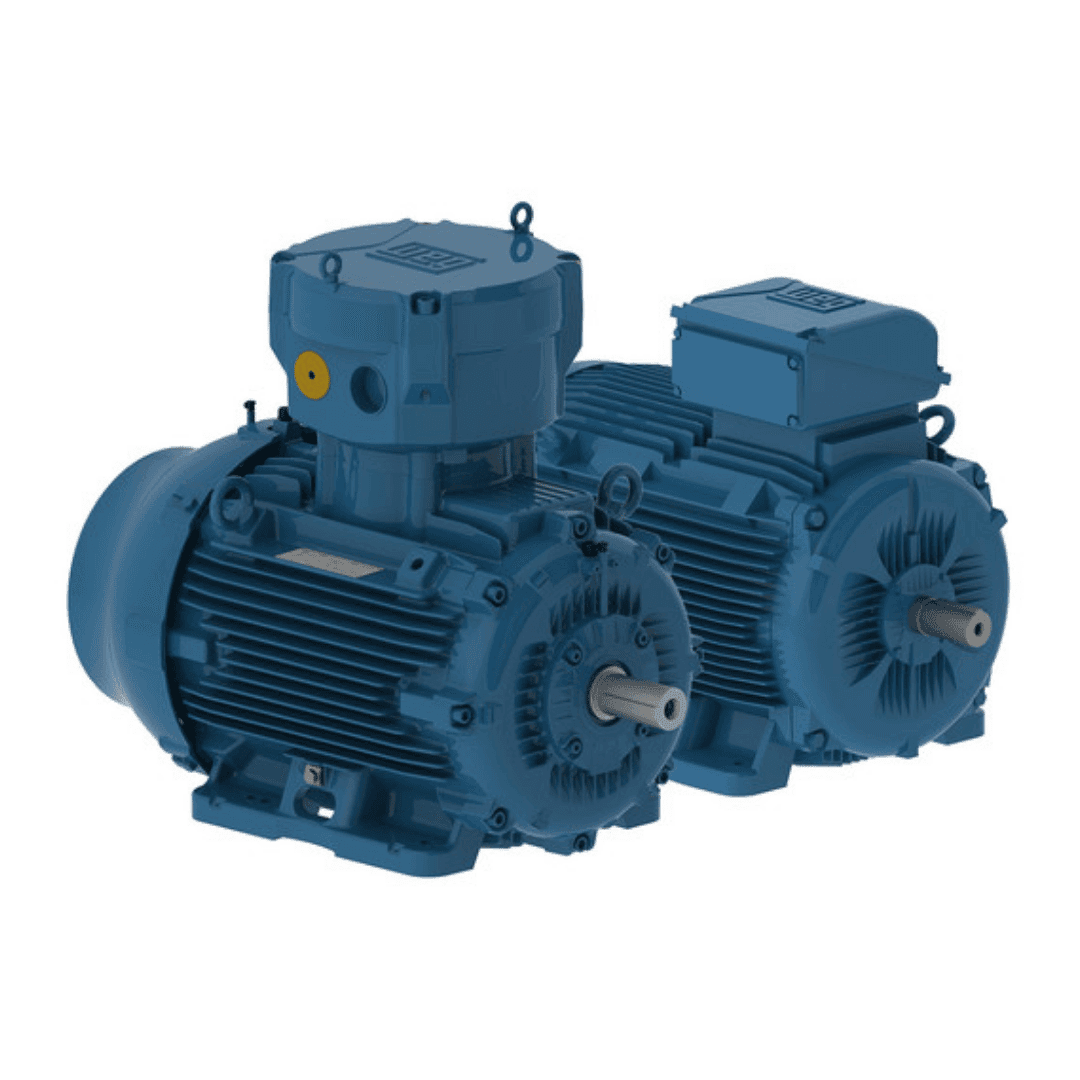
The electric motor is the heart of the plant and the component that uses the most bearings. BIOSA distributes WEG and MARATHON motors, and the most frequently asked maintenance question is: What type of bearing does it use, and how do I replace it properly? Here, we provide the typical specifications by size, explain why C3 clearance is used, discuss the special case of motors with variable-frequency drives, and outline the step-by-step replacement procedure.
Why Engine Bearings Are So Critical
A motor has two bearings: the drive-side bearing (DE), which supports the radial load from the drive train (pulley, coupling, chain), and the non-drive-side bearing (NDE), which supports the rotor with little additional load. Failure of either one stops the motor. Since they are usually different in size and specifications, mixing them up during replacement is a common cause of failure.
What type of bearing does each motor use?
The general rule: IEC (WEG) and NEMA (MARATHON) frame motors use deep-groove ball bearings from the 6200 and 6300 series, with sizes depending on the frame, and almost always with C3 clearance. The larger the motor, the higher the bearing number (ranging from 6205 in small motors to 6315 or higher in large ones). The exact value is listed on the motor nameplate or technical data sheet; if in doubt, BIOSA can identify it based on the motor model.
Why Always C3 in Engines?
The inner ring is mounted tightly on the shaft (which reduces the internal clearance) and, during operation, heats up more than the outer ring due to heat conduction from the shaft (further reducing the clearance). The C3 clearance, which is greater than normal, compensates for both effects and ensures the correct operating clearance. It also better handles vibrations in motors with variable-speed drives. That is why it is practically the standard for electric motors.
The Case of Motors with Variable Frequency Drives (VFDs)
Variable frequency drives generate eddy currents that can discharge through the bearing, eroding the raceways (fluting damage). Signs: fine grooves in the raceway, blackened grease, increasing noise. Solutions: electrically insulated bearings (alumina coating on the outer ring) or hybrid ceramic bearings (non-conductive balls) on the free side, common-mode filters in the VFD, and proper grounding of the motor and load. Fersa, via NKE, offers electrically insulated bearings for this application.
Step-by-Step Change Procedure
Before: Identify the exact bearing (nameplate or data sheet), obtain the correct replacement with the proper clearance, and have a bearing puller and induction heater on hand. Disassembly: Disconnect and secure the motor, remove the covers, and extract the bearing using a bearing puller, applying force to the inner ring—never strike it. Installation: Clean the shaft seat, heat the new bearing with an induction heater (not with a flame) to install it without forcing it, seat it all the way against the shoulder, and apply force only to the inner ring. Lubrication: If the bearing is open or relubricatable, apply the correct grease in the correct amount. Closure and testing: Reassemble, rotate by hand to check for smoothness, and start the engine while monitoring temperature and vibration.
Mistakes to Avoid
Tapping the bearing into place (causes immediate brinelling), installing it cold by forcing the fit (damages the seat), using standard clearance instead of C3, mixing incompatible greases when relubricating, and ignoring the root cause if the previous bearing failed (a motor with a VFD and no mitigation will also destroy the new one).
WEG and MARATHON motors use 6200/6300 series ball bearings with C3 clearance, due to the tight fit and heating of the inner ring. In motors with variable-speed drives, mitigating eddy currents (insulated or hybrid bearings) is key. And the induction heating replacement procedure applies heat only to the correct ring—never to the adjacent one—which determines whether the new bearing will last. At BIOSA MOTION TECHNOLOGIES, we have the right bearings for your motors and can provide installation guidance.
Contact us on WhatsApp
Do you need bearings for your plant that are available immediately? Our engineers will help you select the right ones at no cost. We carry Timken, NACHI, Fersa, RBC, IBC, and ITA bearings in stock in Guadalajara, Aguascalientes, León, Querétaro, Monterrey, Hermosillo, and Puebla.