

The Coefficient of Friction of a Linear Guide: Why 1/50 Changes Everything
What the coefficient of friction of a linear guide is, why it is about 1/50 of a sliding way, and how it impacts the energy, precision, and service life of your machine.
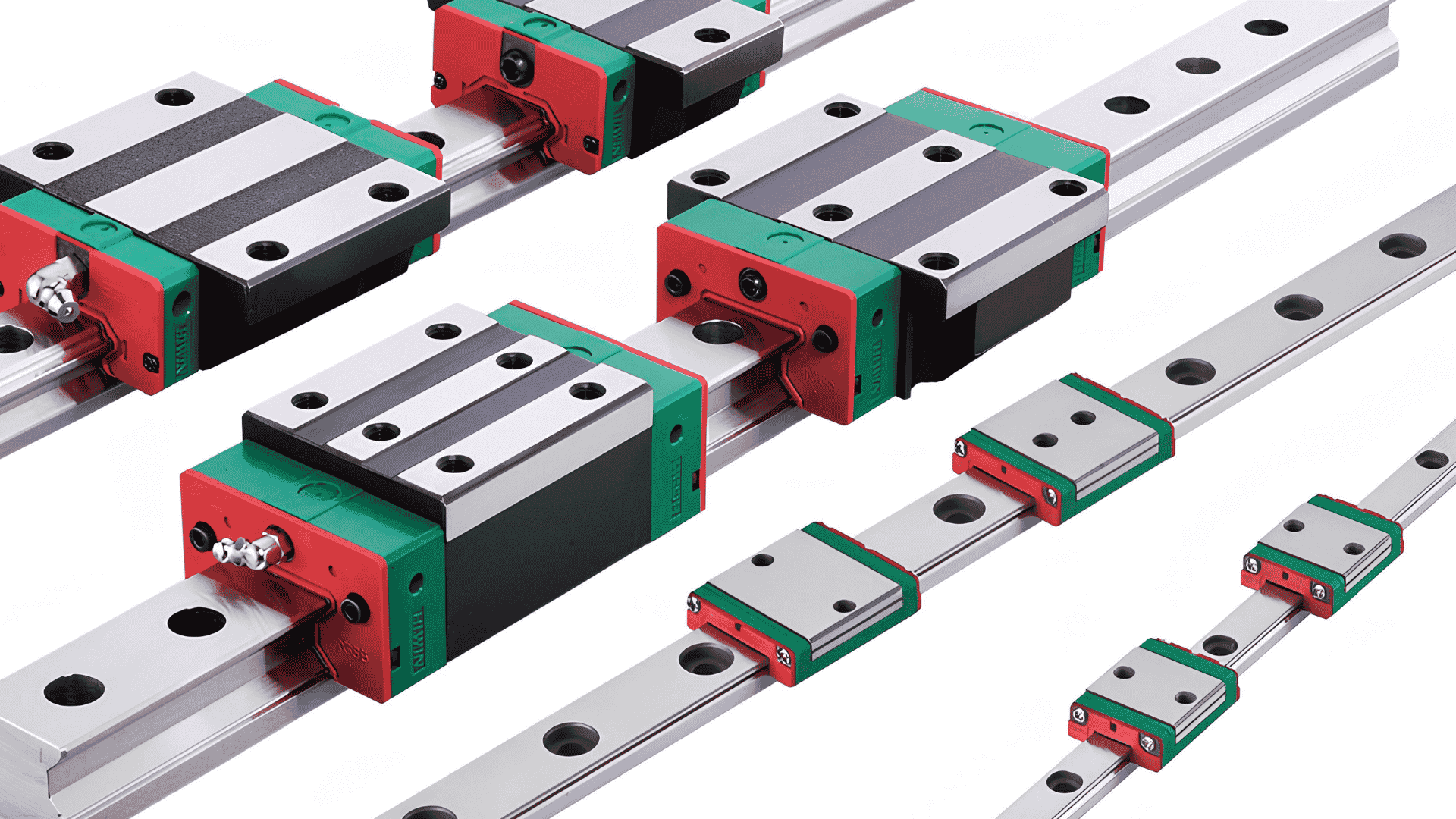
When the advantages of a linear guide are explained, one figure always comes up: the coefficient of friction is roughly 1/50 of that of a sliding way. It is a number repeated often and understood little. What does it really mean, where does it come from, and why does it matter so much in your machine? Here we explain it clearly, without unnecessary formulas, and connect that number to what really interests you: energy, precision, and service life.
What the coefficient of friction is
The coefficient of friction is a number that expresses how much force you need to move an object relative to the force pressing it against the surface. The lower it is, the less effort it takes to move it. In linear motion, it defines how much force your system loses just overcoming friction, before it even moves the payload.
Where 1/50 comes from
The difference lies in the type of contact. In a sliding way, two surfaces slide over one another: the friction is sliding friction, which is high. In a linear guide, balls or rollers roll between rail and carriage: the friction is rolling friction, which is much lower. Rolling friction is inherently a fraction of sliding friction, and in recirculating ball guides that ratio is around 1/50. In other words, moving the same load costs about one fiftieth of the friction effort.
What it means in practice
That number is not a catalog figure to show off: it translates into three concrete benefits you actually notice on the plant floor. 1. Less energy Less friction is less power spent on friction and less heat generated. It allows smaller motors for the same task and reduces electricity use, something that adds up noticeably in machines with several axes running continuously. 2. More precision and smoothness Low, uniform friction makes motion start and stop predictably, without the stick-slip jump typical of sliding, where the way grabs and releases. That smoothness is key for fine positioning and for quality surface finishes. 3. Longer service life Less friction is less heat and less wear on the contact surfaces. The system stays within its tolerances longer, and the service life is calculable and predictable, not a guess.
An important nuance: friction is not zero
1/50 is very little, but it is not nothing. The linear guide still needs lubrication to maintain the film that separates the rolling surfaces; without it, metal-to-metal contact appears and friction spikes. That is why the right lubricant at the right interval is what preserves that 1/50 over time. We cover it in the maintenance article.
Preload also influences friction
A factor many overlook: preload, the adjustment that eliminates play to gain rigidity, slightly increases friction. A high preload (ZB) gives more rigidity and precision, but requires a bit more force to move the carriage; a light preload (Z0) reduces friction at the cost of less rigidity. Choosing the right level is balancing rigidity and friction according to what your application demands: high rigidity for precision machining, low friction for high speed and low energy use.
The coefficient of friction of about 1/50 is the physical reason behind almost all the advantages of a linear guide: less energy, more precision, longer life. It is what makes it possible to move large loads, fast, and with accuracy. Keeping that number over time depends on good lubrication. At BIOSA MOTION TECHNOLOGIES we advise you on the right HIWIN guide and its maintenance so that performance lasts. For the full picture, see our guide on linear guides.
1. HIWIN, Linear Guideways (official product page) https://hiwin.com/products/linear-guideways/ 2. HIWIN, Linear Guideway technical catalog (official PDF) https://www.hiwin.com/wp-content/uploads/Linear_Guideway-E-1.pdf