

Linear Bearing vs. Conventional Bearing: How They Differ
What is a linear bearing? How does it differ from a conventional (rotary) bearing, and when is each one used? The difference between linear and rotary motion, explained.
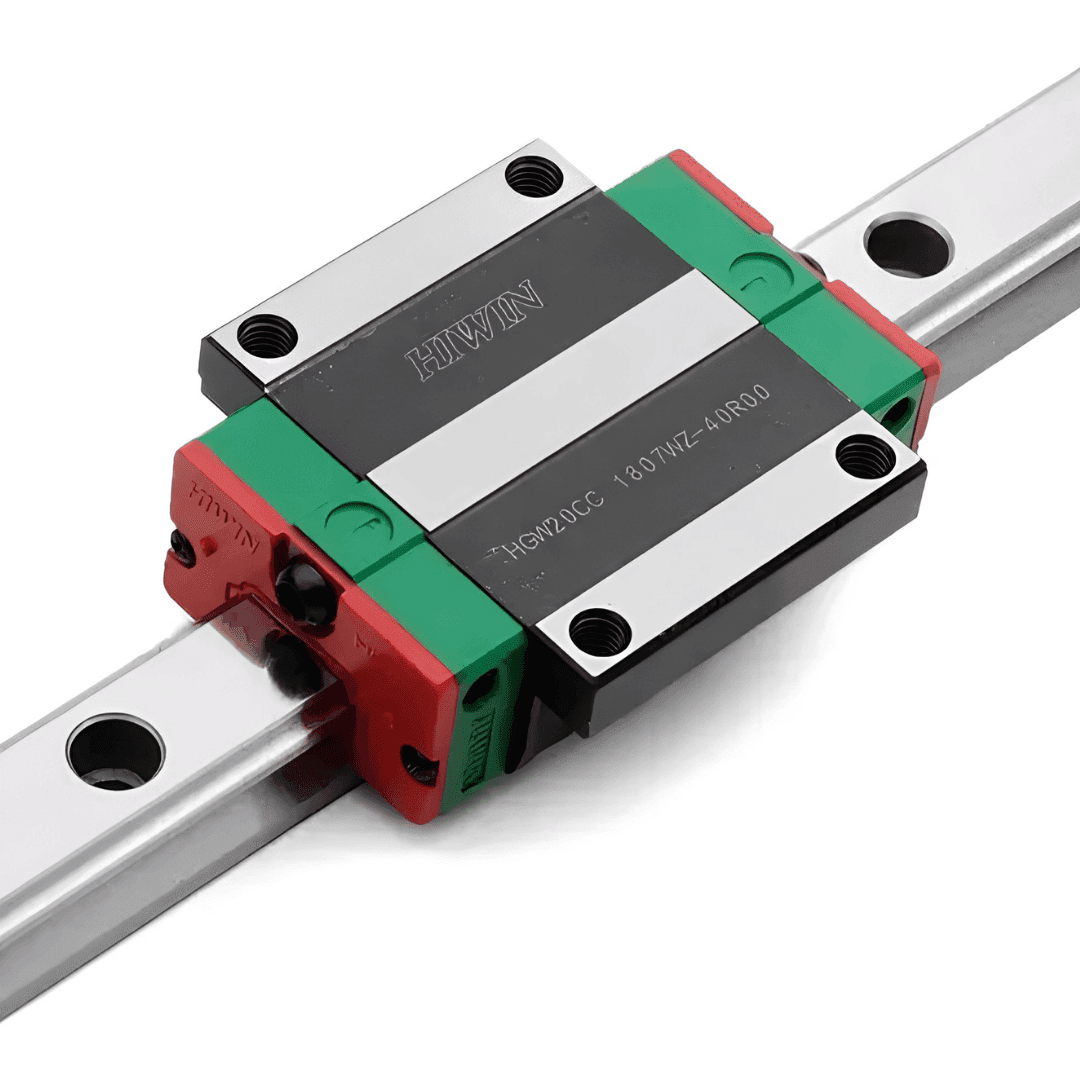
The term “linear bearing” causes confusion because it combines two concepts: that of a bearing (which in common parlance refers to a rotating ball bearing) and that of “linear” (straight-line motion). Is it a regular bearing? Is it a guide? Are they the same thing? Clarifying this prevents purchasing and design errors. Here we explain what a linear ball bearing is, how it differs from a conventional bearing, and when each is used.
The Fundamental Difference: Linear vs. Rotary
A conventional bearing allows for rotation: it supports a shaft that rotates around its own center. A linear bearing (or linear guide) allows for linear motion: it supports an element that moves along a path. Both use the same principle balls that roll to reduce friction but apply it to different types of motion: rotation in one, linear motion in the other.
What Is a Linear Bearing?
A linear ball bearing is a bearing that allows for linear motion. In its most common form, it is a cylindrical bushing with recirculating balls, mounted on a polished round shaft: the bushing slides along the shaft with low friction. It is also called a “linear bearing” or “ball bushing.” It is the rolling element in round-shaft guides.
Linear bearing vs. linear guide
Here, another clarification is in order. The linear bearing is the component that rolls; the linear guide is the complete system. In a round-shaft guide, the linear bearing is the bushing that slides on the shaft. In a profile guide, the equivalent is the carriage with its recirculating balls. Simply put: every linear guide system contains some type of bearing or linear rolling element, but “linear bearing” usually refers specifically to the round-shaft bushing.
When to Use Each One?
Use a conventional bearing whenever there is a rotating shaft: motors, transmissions, pulleys, fans. Use a linear bearing when you need cost-effective, misalignment-tolerant straight-line guidance on a round shaft, for light to medium loads. For precision guidance with high rigidity, however, the profile guide (with its recirculating carriage) outperforms the linear bearing on a round shaft.
Linear bearings and conventional bearings share the same rolling principle but serve opposite functions: one is used for linear motion, the other for rotational motion. And a linear bearing is not the same as a complete linear guide it is the rolling element in round-shaft systems. Clarifying these terms helps prevent errors when specifying components. At BIOSA MOTION TECHNOLOGIES, we carry both HIWIN linear guides and bearings, and we’ll help you order exactly what your application needs. For more information, check out our guide to types of linear guides.