

5 Signs You Need to Replace Your Linear Guides
5 clear signs your linear guides need replacement: loss of precision, noise, play, vibration, and contaminated grease. How to catch them before a costly stop
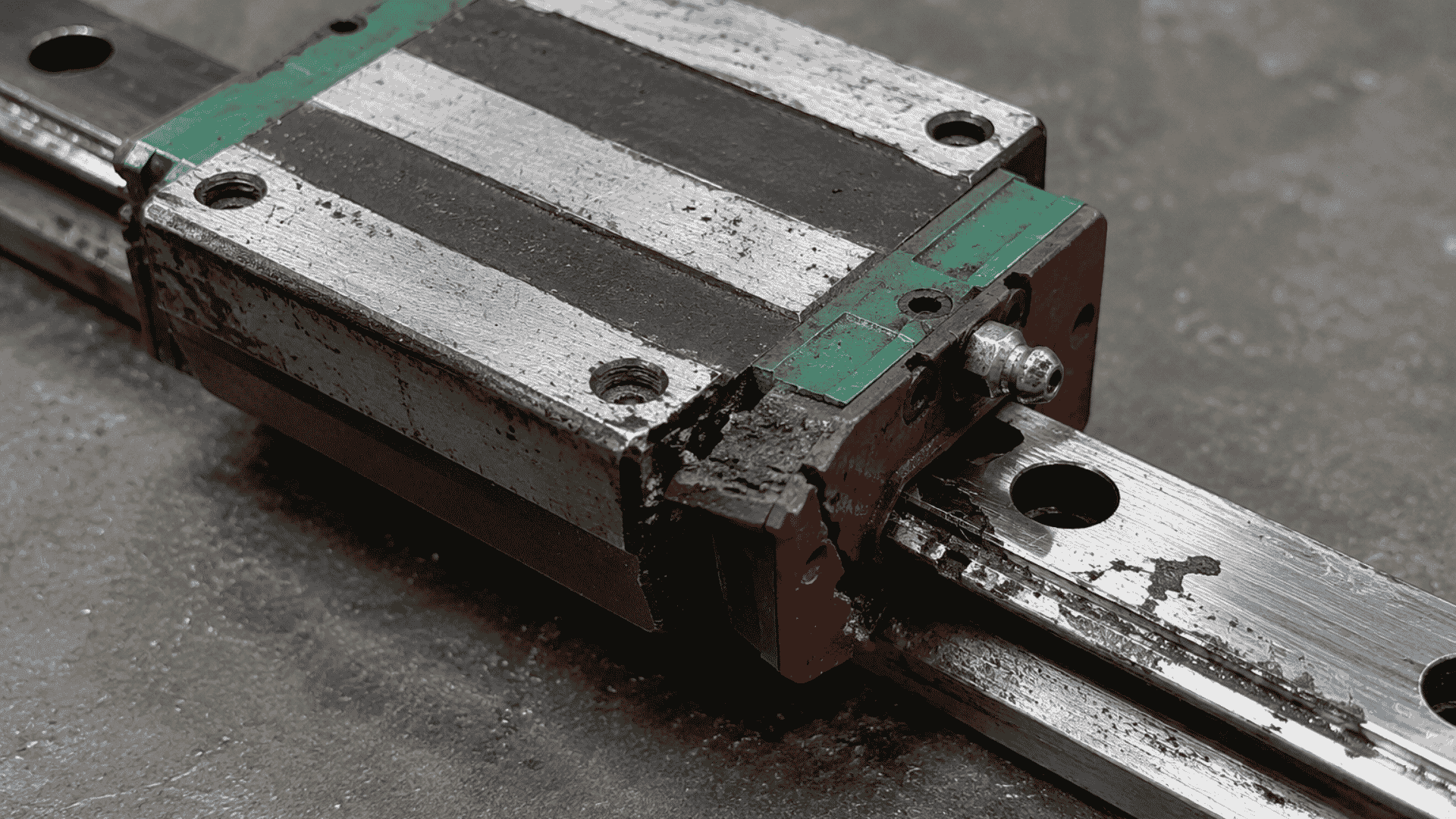
Linear guides do not fail all at once: they give signals weeks in advance. Learning to read them lets you replace them in a planned way instead of suffering an unplanned production stop, which almost always costs much more than the component. Here are the five clearest signs that your guides need attention, how to recognize them, and what to do with each one.
Sign 1: loss of precision with no apparent cause
If parts start coming out of tolerance without a change to the program, tooling, or material, suspect the guides. Raceway wear increases play and the trajectory stops being exact. It is the most costly sign to ignore, because the problem shows up first in your product, in the form of scrap, before it is obvious in the machine.
Sign 2: abnormal noise when moving the axis
A healthy guide is nearly silent. Squeals indicate lack of lubrication; rhythmic knocking points to raceway or ball damage; a harsh hum suggests internal contamination. If the noise appears or changes, check it before the damage advances.
Sign 3: perceptible play when moving the carriage by hand
With the machine stopped and safe, move the carriage by hand. It should have no perceptible side or vertical play. If you feel looseness or wobble, the preload was lost through wear and precision is already compromised. It is a simple test any technician can do during routine inspection.
Sign 4: increasing vibration during operation
Vibration that increases over time signals play, wear, or damage to the rolling elements. Besides degrading precision, vibration accelerates wear on the rest of the machine. If you have vibration analysis, the frequency signature confirms the source; without an instrument, a hand on the carriage detects changes versus normal operation.
Sign 5: dark grease or grease with metal particles
Check the grease that comes out of the seals. If it is dark, dry, or has shiny metal particles, there is internal wear in progress: those particles are material shed from balls or raceways, and they act as an abrasive that accelerates failure. Clean grease is a good sign; grease with metallic glitter is an alert.
Replace in time vs wait
Replacing a guide with symptoms during a planned stop costs a fraction of what it costs to wait for catastrophic failure, which can damage the table, the screw, or the structure and halt production with no warning. When two or more of these signs appear together, schedule the replacement.
The five signs (loss of precision, noise, play, vibration, and contaminated grease) warn you in time if you know how to read them. Catching them during routine inspection turns a catastrophic failure into a planned, inexpensive replacement. At BIOSA MOTION TECHNOLOGIES we have HIWIN and ROLLON guides in stock for replacement, and we help you diagnose when it is time. To care for your guides and extend their life, also see our maintenance article.
1. HIWIN, Linear Guideway technical catalog (official PDF) https://www.hiwin.com/wp-content/uploads/Linear_Guideway-E-1.pdf 2. HIWIN, Linear Guideways (official product page) https://hiwin.com/products/linear-guideways/