

Advantages of a Flexible Coupling Over a Rigid Coupling
The flexible coupling is the most commonly used choice in industrial applications. These are the practical advantages that explain why it is preferred over a rigid coupling in the majority of power transmission systems.
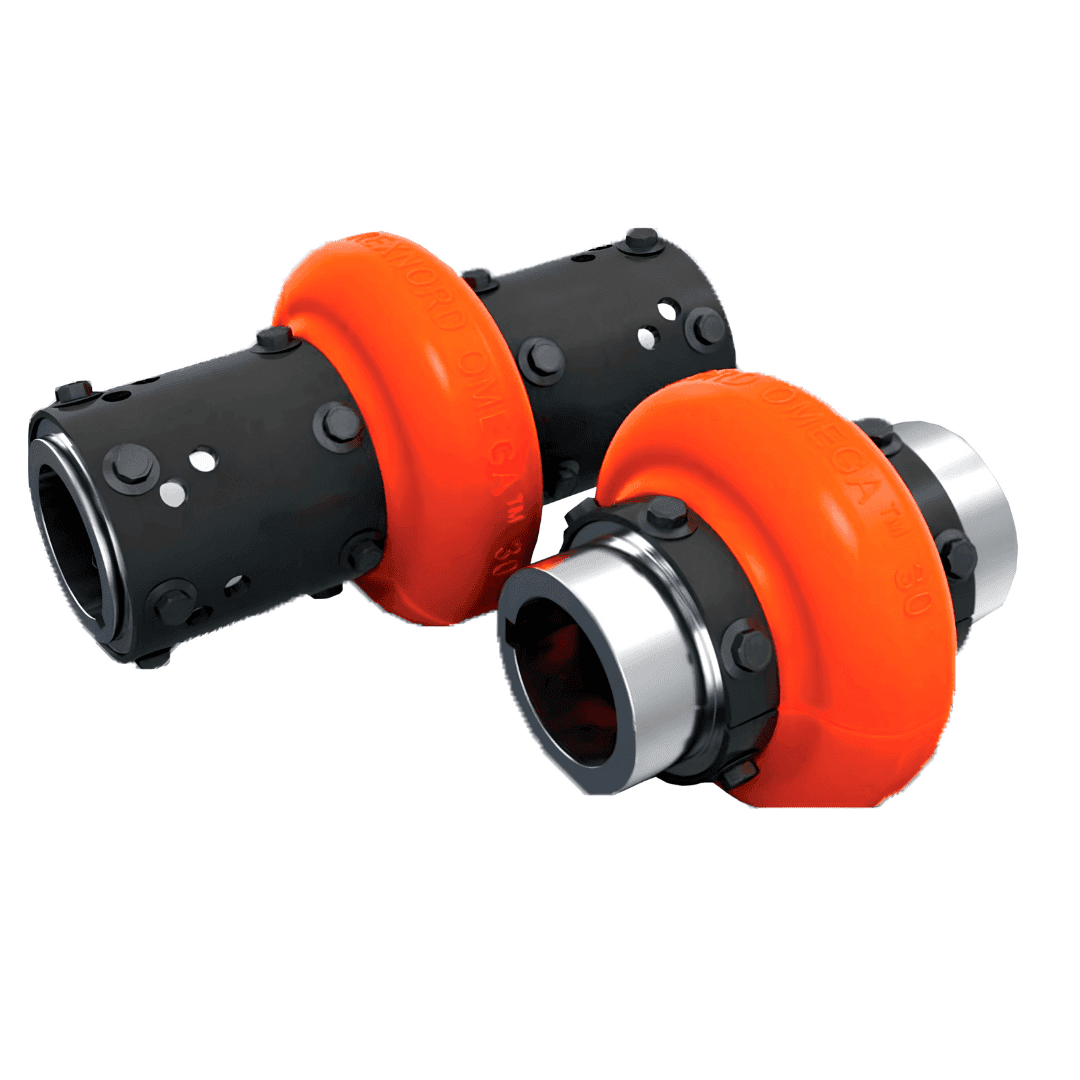
Reduced Stress on Bearings and Seals
The primary advantage of a flexible coupling is its ability to compensate for the natural misalignment between shafts without transferring those forces to the motor bearings or the driven equipment bearings. This directly results in fewer premature bearing failures and longer mechanical seal life, particularly in pumping systems.
Reduced Vibration and Noise
The flexible element of the coupling—whether an elastomer insert, metal grid, or disc pack—helps dampen vibrations generated during motor startup and normal operation. In facilities where multiple machines operate in close proximity, this reduction in vibration also helps protect nearby equipment from unnecessary mechanical stress.
Real-World Tolerance for Installation Misalignment
No industrial installation can maintain perfect shaft alignment indefinitely—not even when using laser alignment equipment. A flexible coupling provides a practical margin of misalignment tolerance that a rigid coupling simply cannot offer, reducing both the time and cost associated with equipment alignment during installation and maintenance.
Simpler Maintenance
A jaw-type flexible coupling allows the worn elastomer insert (spider) to be replaced without removing the hubs or disturbing the system's alignment. This significantly reduces plant downtime during preventive maintenance compared to a rigid coupling, which typically requires the shaft alignment to be rechecked and corrected after any disassembly.
Protection Against Temporary Overloads
During loaded starts or sudden shock loads, a flexible coupling deforms slightly to absorb the torque spike before it reaches the motor or the driven equipment. A rigid coupling transmits these shock loads directly, increasing the risk of damage to gears, bearings, or even the shaft itself.