

Types of Industrial Power Transmission Chains: Which One Should You Choose for Your Application?
The different types of industrial power transmission chains are defined by their mechanical design, the dimensional standard they follow, and the application they were developed for. Selecting the right chain from the beginning has a direct impact on system service life, maintenance costs, and overall process reliability.
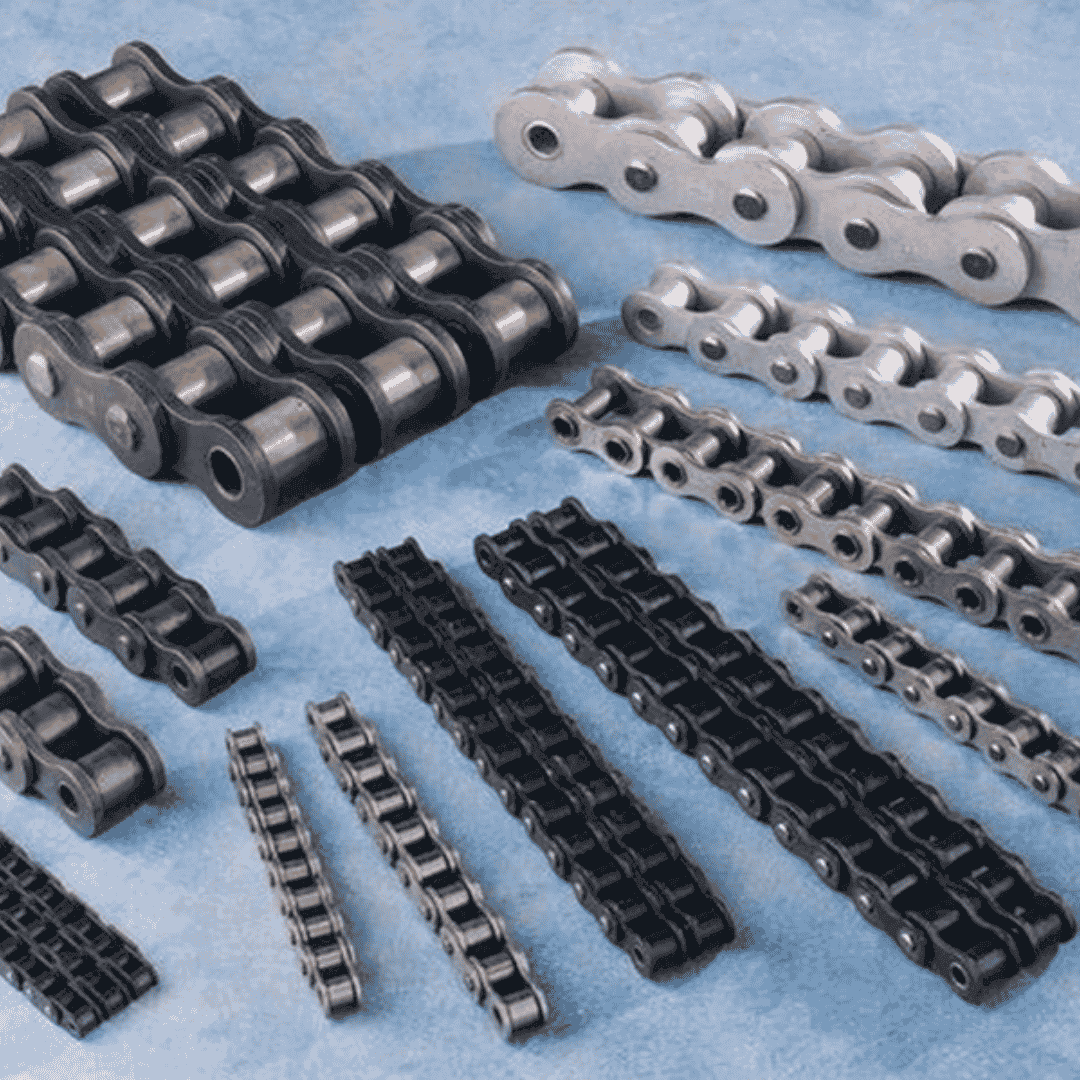
Roller Chain: The Industry Standard
The roller chain is the most widely used type of industrial power transmission chain worldwide. Its design consists of four main components: plates, pins, bushings, and rollers. As the chain engages the sprocket, the roller rotates over each tooth, reducing friction and distributing wear evenly across the component. Roller chains are manufactured in standard ANSI (simplex, duplex, and triplex) and ISO sizes, ensuring interchangeability between manufacturers as long as the same standard is followed. They are the preferred choice for most manufacturing equipment, general mechanical power transmission systems, and industrial process machinery.
Silent Chain: For High-Speed, Low-Noise Applications
The silent chain, also known as an inverted tooth chain, replaces rollers with toothed link plates that engage directly with the sprocket. The result is significantly quieter and smoother operation at high speeds, although it comes with a higher manufacturing cost. Silent chains are commonly used in precision machinery, industrial printing equipment, compressors, and any system where noise and vibration must be minimized. However, they are not the best choice for high-load, low-speed applications, where roller chains provide a better balance of performance, durability, and cost-effectiveness.
Conveyor Chain: For Material Handling Applications
Unlike power transmission chains, conveyor chains are designed to transport materials, not to transmit power between shafts. Their design includes configurations with extended pins, steel slats, side attachments, and specialized mounting accessories, allowing them to be customized for different conveying applications. They are commonly used in bottling lines, food packaging systems, automotive assembly, and industrial processing equipment. Selecting the right conveyor chain depends on factors such as the type of product being conveyed, line speed, load per meter, and the hygiene requirements of the operating environment. Common conveyor chain configurations include: Steel Slat Chains: Designed for transporting heavy or irregularly shaped products. Chains with Side Attachments (Flights): Ideal for inclined conveying or product separation along the production line. Stainless Steel Chains: Recommended for washdown environments and food processing applications where corrosion resistance and hygienic performance are essential.
Engineering Chain: For Extreme Load Applications
Engineering chains are built with a heavy-duty construction, featuring components with a much larger cross-sectional area than those of standard roller chains. They are specifically designed for low-speed, extremely high-load applications, such as mining equipment, dredgers, industrial cranes, and heavy agricultural machinery. Their pitch is larger than that of conventional roller chains, and they do not always conform to standard ANSI or ISO specifications. For this reason, engineering chains should be specified directly with the manufacturer or an authorized distributor to ensure the correct design and performance for the application.
How to Choose the Right Type of Industrial Chain
Three key questions determine the correct chain type before considering any other selection criteria: Operating Speed: High-speed applications typically favor silent chains; roller chains are best suited for medium- to low-speed applications; and engineering chains are designed for very low-speed, extremely high-load conditions. System Function: Determine whether the chain is intended for power transmission between shafts or material conveying. These chain types are designed for different purposes and are not interchangeable. Operating Environment: Temperature, moisture, exposure to chemicals, and hygiene requirements may eliminate certain chain types or materials from consideration. If the system already has a chain installed, the replacement should match the same standard and pitch. Changing to a different chain type without verifying sprocket compatibility can lead to accelerated wear, poor performance, or immediate system failure.