

Types of Industrial Couplings and How to Choose the Right One
Every industrial coupling is designed for a specific range of torque, speed, and shaft misalignment. This guide summarizes the most common coupling types and helps you determine which one is best suited for your application.
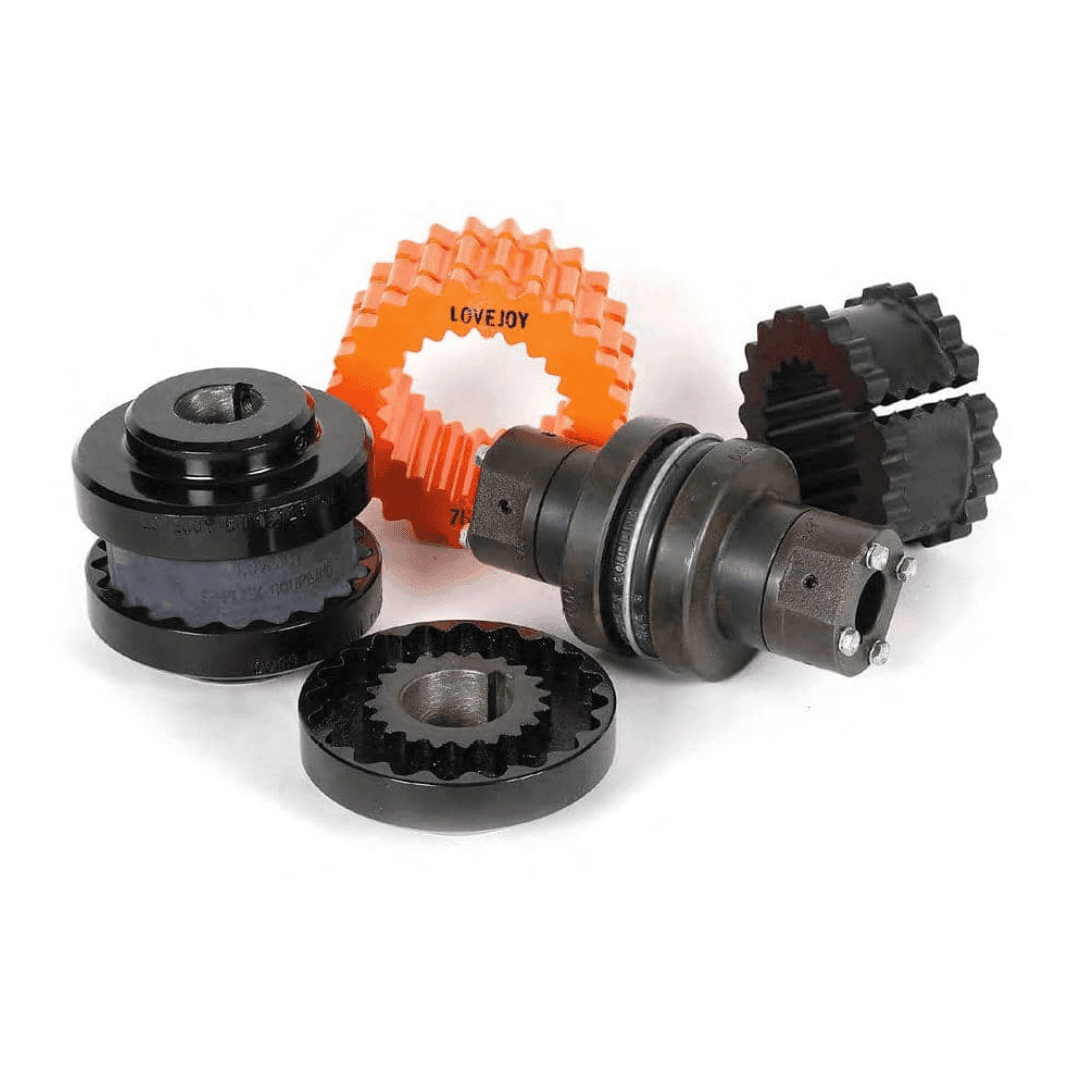
Summary of the Most Common Industrial Coupling Types
Jaw coupling: A cost-effective, easy-to-maintain solution, ideal for electric motors, pumps, and fans operating under low to medium torque. Grid coupling: Offers higher torque and temperature capacity than jaw couplings, making it a common choice for mining, material handling, and heavy industrial applications. Disc coupling: A maintenance-free, lubrication-free coupling that delivers high torsional precision, commonly used in high-speed equipment and critical applications. Gear coupling: Designed to transmit very high torque while accommodating shaft misalignment, making it ideal for heavy-duty continuous-process equipment. Aluminum coupling: A lightweight, lubrication-free, and cost-effective option for gearmotors, automation equipment, and general industrial machinery, such as the GABB IP aluminum coupling line. Zero-backlash coupling: Engineered for servo motors and motion control systems, where precise positioning and zero rotational play are essential.
How to Choose the Right Coupling
The starting point is always your equipment's torque and operating speed. These two parameters immediately eliminate several coupling options. For example, a low-speed, high-torque gearmotor is not well suited to a small jaw coupling, while a high-precision servo motor should not be paired with a gear coupling, since its inherent backlash can compromise positioning accuracy. The second consideration is the operating environment. If the application involves oil, chemicals, or elevated temperatures, a metal disc coupling is often a more reliable choice than an elastomeric coupling, as rubber elements can deteriorate over time when exposed to these conditions.