

Sprockets in the Automotive and Manufacturing Industries: Real-World Applications
Sprockets are power transmission components found in virtually every sector of the manufacturing and processing industries. Their role extends far beyond simply connecting a motor to a driven load. They determine process speed, synchronize operations between shafts, and enable specific transmission ratios without requiring changes to the motor or gearbox.
Automotive Industry: Precision and Throughput
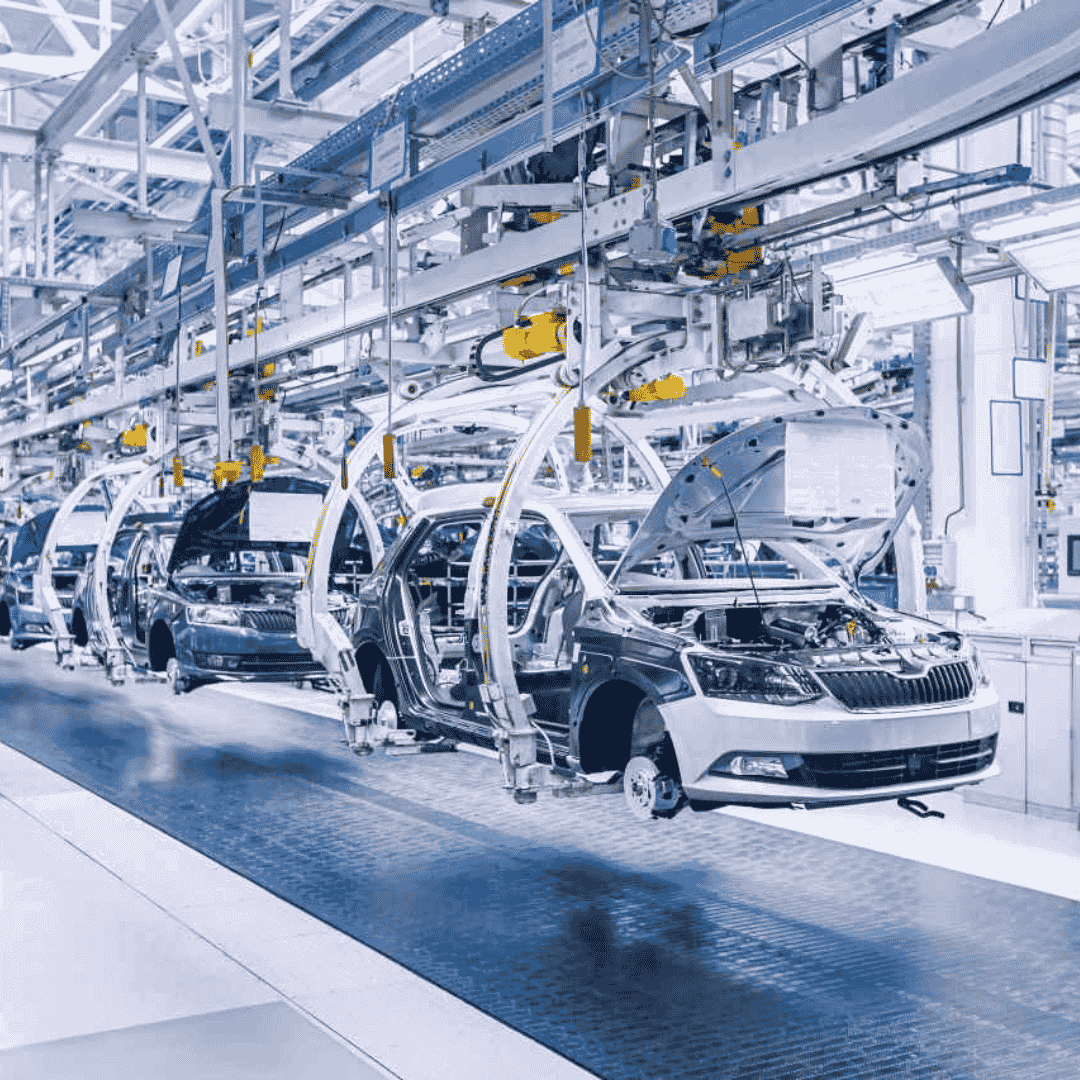
In the automotive industry, sprockets are primarily used in three types of applications: Vehicle Body Conveyor Systems Automotive assembly lines use conveyor chains driven by sprockets to move vehicle bodies between workstations. The drive sprocket must maintain a constant linear speed, as it determines the takt time of the entire production line. Speed variations caused by sprocket wear can disrupt synchronization and create production bottlenecks. Component Machining Equipment High-production lathes, milling machines, and machining centers used to manufacture engine blocks, cylinder heads, crankshafts, and transmission components rely on sprockets to drive secondary machine systems, including coolant systems, chip conveyors, part conveyors, and auxiliary tooling. Robots and Positioning Systems Some linear positioning systems and Cartesian robots used in automotive manufacturing employ chain and sprocket drives to move their axes. In these applications, sprocket dimensional accuracy and chain manufacturing quality are critical to achieving the system's required positioning repeatability.
General Manufacturing: Versatility and Availability
In general manufacturing—including metalworking, plastics, electronics, and packaging—sprockets are used in a wide variety of applications, including: Power transmission for air compressors and hydraulic pumps. Conveyor drive systems for assembly and packaging lines. Drive systems for heat treatment furnaces and process equipment. Power transmission for mixers, agitators, and chemical processing equipment. Drive systems for sheet metal cutting and forming machinery.
Agribusiness: Durability in Demanding Environments
The agribusiness industry is one of the largest users of sprockets and chains due to its demanding operating conditions, including dust, moisture, dirt exposure, and intermittent operation with frequent starts. Harvesters, threshers, mills, and mechanized irrigation equipment rely on sprockets for both their primary and auxiliary drive systems. In these applications, immediate replacement part availability is critical. A failure during harvest season cannot wait weeks for replacement components. Maintaining permanent inventory of the most common chain pitches at BIOSA branches is a key advantage for this industry.
Material Handling Equipment
Bucket elevators, chain conveyors, sorting systems, and automated storage systems all use sprockets in their drive systems. In these applications, sprockets are typically larger in diameter, with a higher tooth count, to reduce the chain's linear speed and maximize system service life. Transmission ratios in these systems typically range from 3:1 to 6:1 in a single stage, using large-pitch chains (ANSI #60 to #120) to handle the heavy loads commonly encountered in material handling applications.