

Chain Sprocket vs. Belt Pulley: When to Use Each System
The choice between a chain drive with sprockets and a belt drive with pulleys is one of the most common design decisions in industrial machinery. Both systems transmit power between shafts, but they operate using different mechanical principles that make each one better suited for specific applications. Selecting the correct system during the design stage can reduce maintenance costs and significantly extend equipment service life.
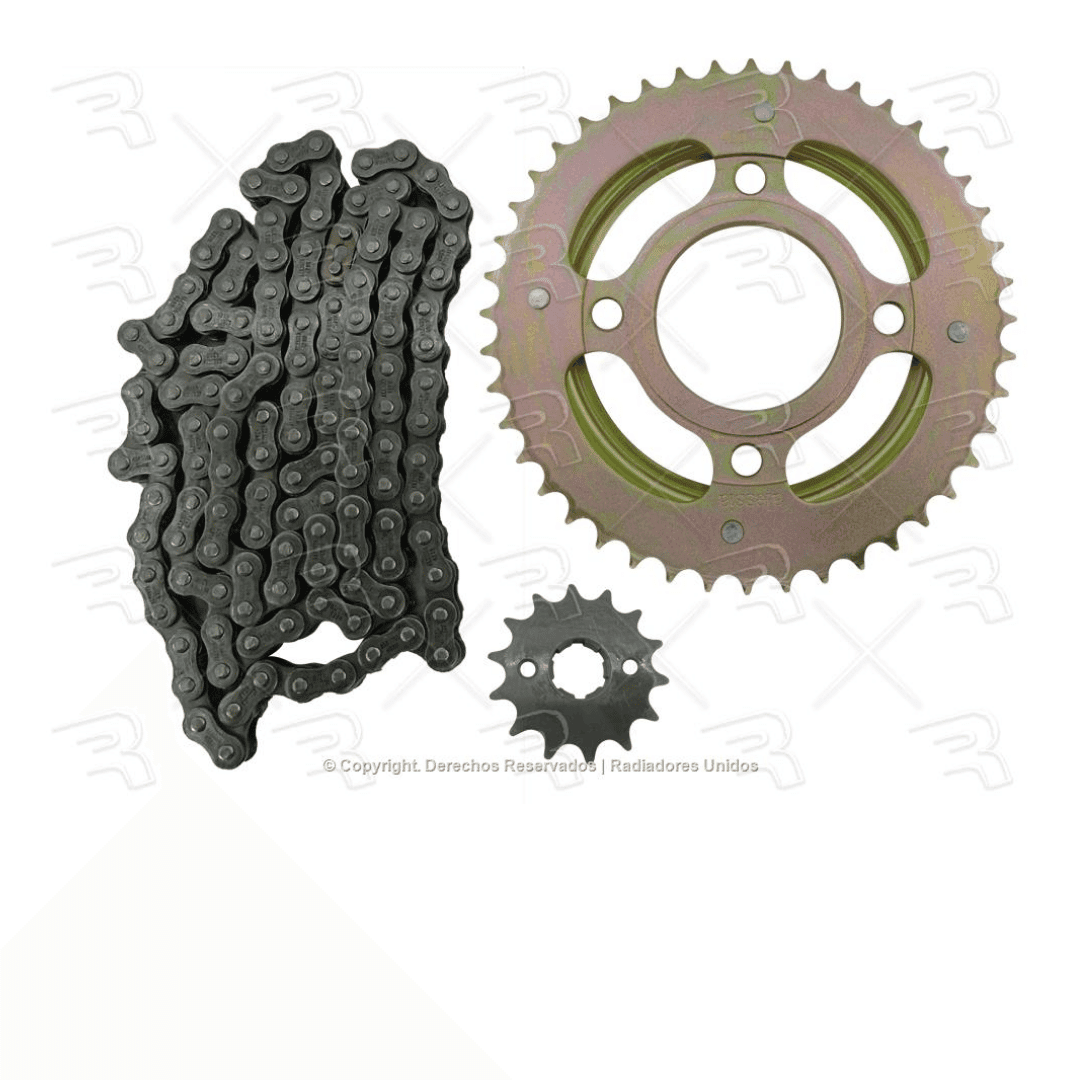
Operating Principles: Engagement vs. Friction
The fundamental difference between the two systems is the power transmission mechanism. The chain and sprocket system transmits power through positive engagement: the sprocket teeth mesh with the chain rollers, preventing slippage. The transmission ratio remains exact and constant at all times. The belt and pulley system transmits power through friction: belt tension creates a contact force against the pulley surface which, combined with the friction coefficient between the materials, generates the driving force. If the load exceeds the system’s friction capacity, the belt slips on the pulley. In timing belts (toothed belts), slippage is eliminated and the operating principle becomes closer to positive engagement.
Advantages of Chain and Sprocket Systems
No-slip transmission: The transmission ratio remains exact regardless of load, within the chain’s capacity limits. Higher load capacity in the same space: A medium-pitch chain can transmit more power than a belt of equivalent size. Predictable service life: Chain wear is gradual and measurable through elongation, allowing planned preventive replacement. Operation in harsh environments: Chains handle extreme temperatures, oil exposure, and contaminants better than most belts. No high installation tension required: Chains operate with moderate tension, reducing loads on shaft bearings.
Disadvantages of Chain and Sprocket Systems
Requires periodic lubrication: Without proper lubrication, wear increases significantly. Higher noise and vibration levels: The impact of each roller against the sprocket tooth generates noise that may be unacceptable in certain environments. Requires precise sprocket alignment: Misalignment causes lateral chain wear and reduces service life. Higher installation cost: Sprockets are generally more expensive than equivalent-sized pulleys.

Advantages of Belt and Pulley Systems
Advantages of Belt and Pulley Systems Quiet operation: The belt absorbs vibrations and operates with lower noise levels than a chain system. No lubrication required (V-belts): The system is cleaner and suitable for environments where oil contamination is unacceptable. Shock absorption: Controlled belt slip protects the motor and load during overload conditions, acting as a mechanical fuse. Lower initial cost: V-belt pulleys are generally more economical than equivalent-sized sprockets. Large center distances: Belts can operate efficiently with shaft center distances of several meters.
Disadvantages of Belt and Pulley Systems
Possible slippage: V-belts can slip under overload conditions, causing loss of synchronization and heat generation. Higher installation tension: Belts require higher initial tension than chains, which increases loads on shaft bearings. Temperature sensitivity: V-belts lose flexibility at low temperatures and degrade faster at high temperatures. Less predictable service life: Belt wear is less uniform and more difficult to measure compared with chain elongation.