

Shaft Mounted Reducer (Torque Arm): What It Is and When to Use It
Dodge invented the concept of mounting a reducer directly on the driven equipment shaft in 1949. This is the logic behind this design and when it is recommended to use it.
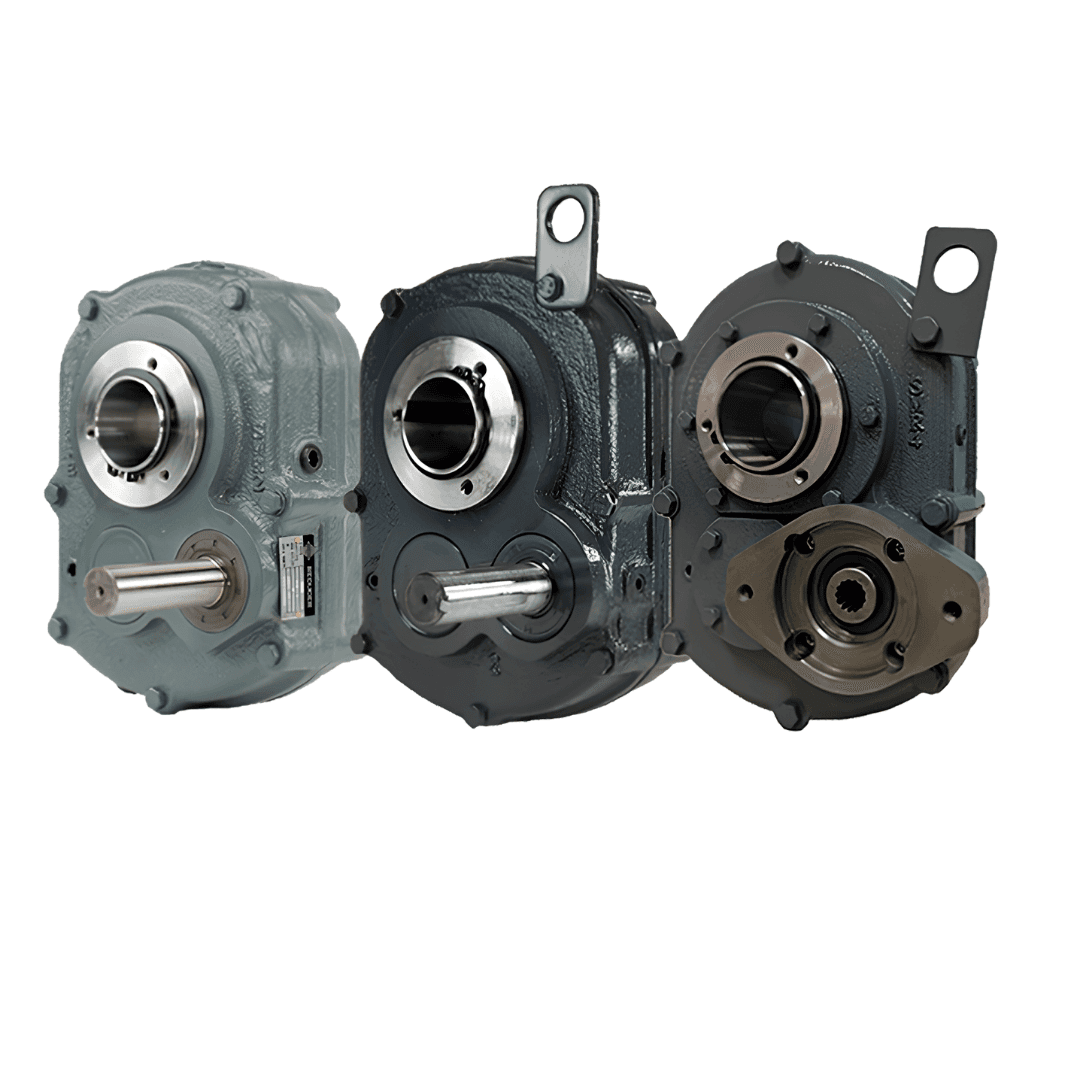
What Is a Shaft-Mounted Reducer?
A shaft-mounted reducer, also known as a shaft mount or torque arm reducer, is installed directly on the driven equipment shaft, without requiring its own mounting base. A torque arm connects the reducer to the machine structure to prevent it from rotating with the shaft, transmitting only the reaction torque to the structure.
Advantages Compared to a Foot-Mounted Reducer
Smaller installation footprint: Does not require a separate base or additional coupling between the reducer and the equipment shaft. Simpler installation: Since it mounts directly on the shaft, it eliminates the need to align a coupling between two separate shafts. Fewer failure points: By removing the intermediate coupling, one additional component that would otherwise require its own maintenance is eliminated.
Dodge TXT Taper Bushing System
The Dodge TXT series uses a patented double-tapered bushing system, which simplifies both installation and removal of the reducer from the shaft, without the need to heat or force the components. This provides a practical advantage during field maintenance.
Typical Applications
This type of reducer is the industry standard for conveyor systems, where it is mounted directly onto the drive pulley shaft. It is also used in tank-mounted agitators and material handling applications where simplified installation reduces maintenance downtime.