

Flange Mounted Reducer vs Torque Arm Reducer: Which One Is Better?
The way a reducer is attached to the machine completely changes the required space and type of installation. These are the two most common configurations.
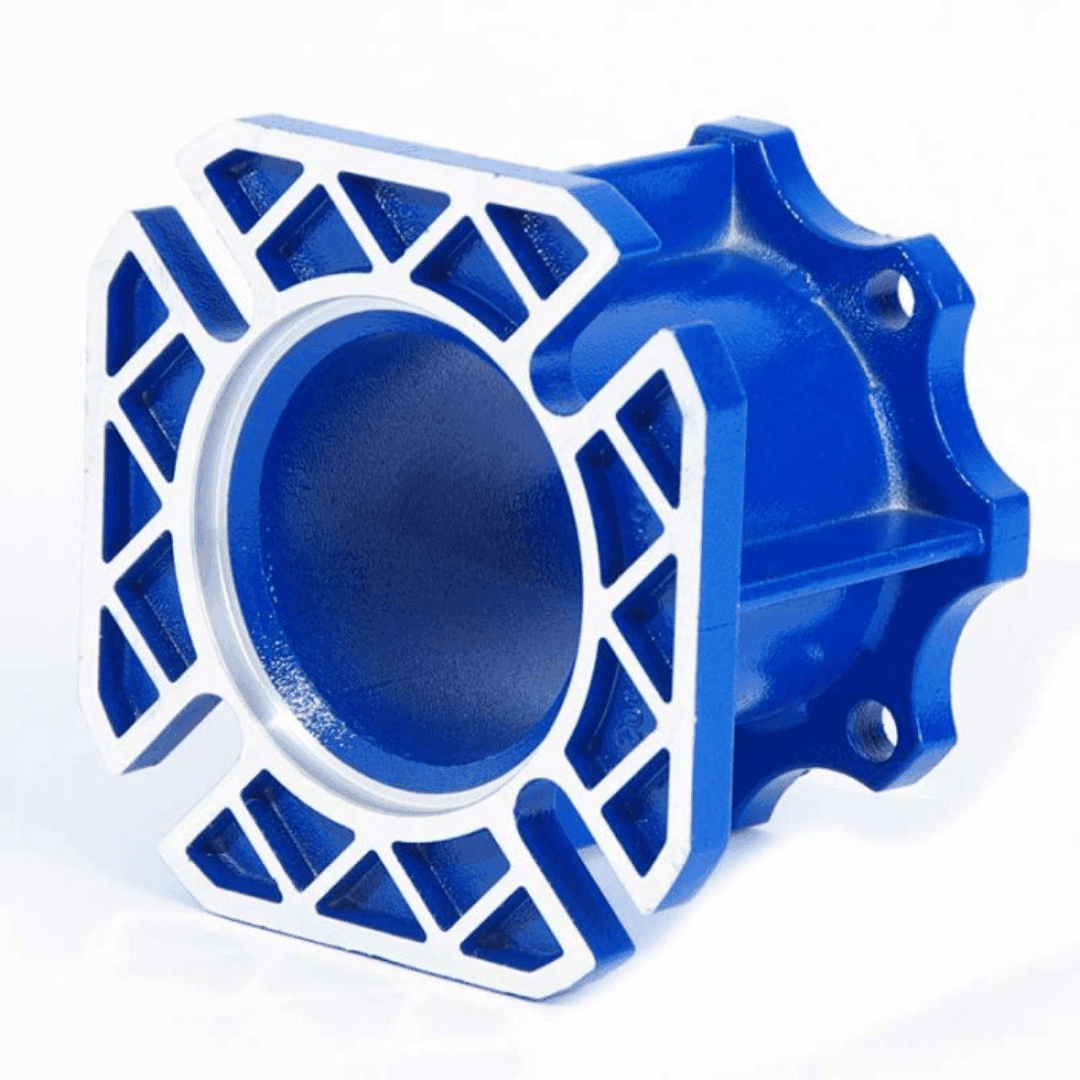
Flange Mounting
In flange mounting, the reducer is attached directly to the machine housing or a flat base using bolts, with the output shaft extending to connect to a coupling or directly to the driven equipment. This configuration requires the reducer position to be precisely defined and aligned with the driven shaft.
Torque Arm Mounting
In torque arm mounting, the reducer is installed directly on the driven equipment shaft, without its own base, and an arm connected to the machine structure absorbs the reaction torque without allowing the reducer to rotate with the shaft. This system is the industry standard for conveyor applications.
When to Use Each Configuration
Use flange mounting: When the reducer requires a fixed and precise position, such as in process machinery, mixers, or equipment where the output shaft connects through a coupling to another component. Use torque arm mounting: When the goal is to simplify installation by mounting the reducer directly on the driven equipment shaft, such as conveyor drive pulleys, reducing space requirements and alignment points. At BIOSA, we offer both configurations through SEW, Rossi, Sumitomo, and GABB IP for flange mounting, and the Dodge TXT series as a specific reference for torque arm mounting.