

What Are Industrial Couplings and What Are They Used For?
Industrial couplings, also known as shaft couplings, connect two rotating shafts to transmit power and motion between them. Learn what they are, the different types available, and how to choose the right coupling for your power transmission system.
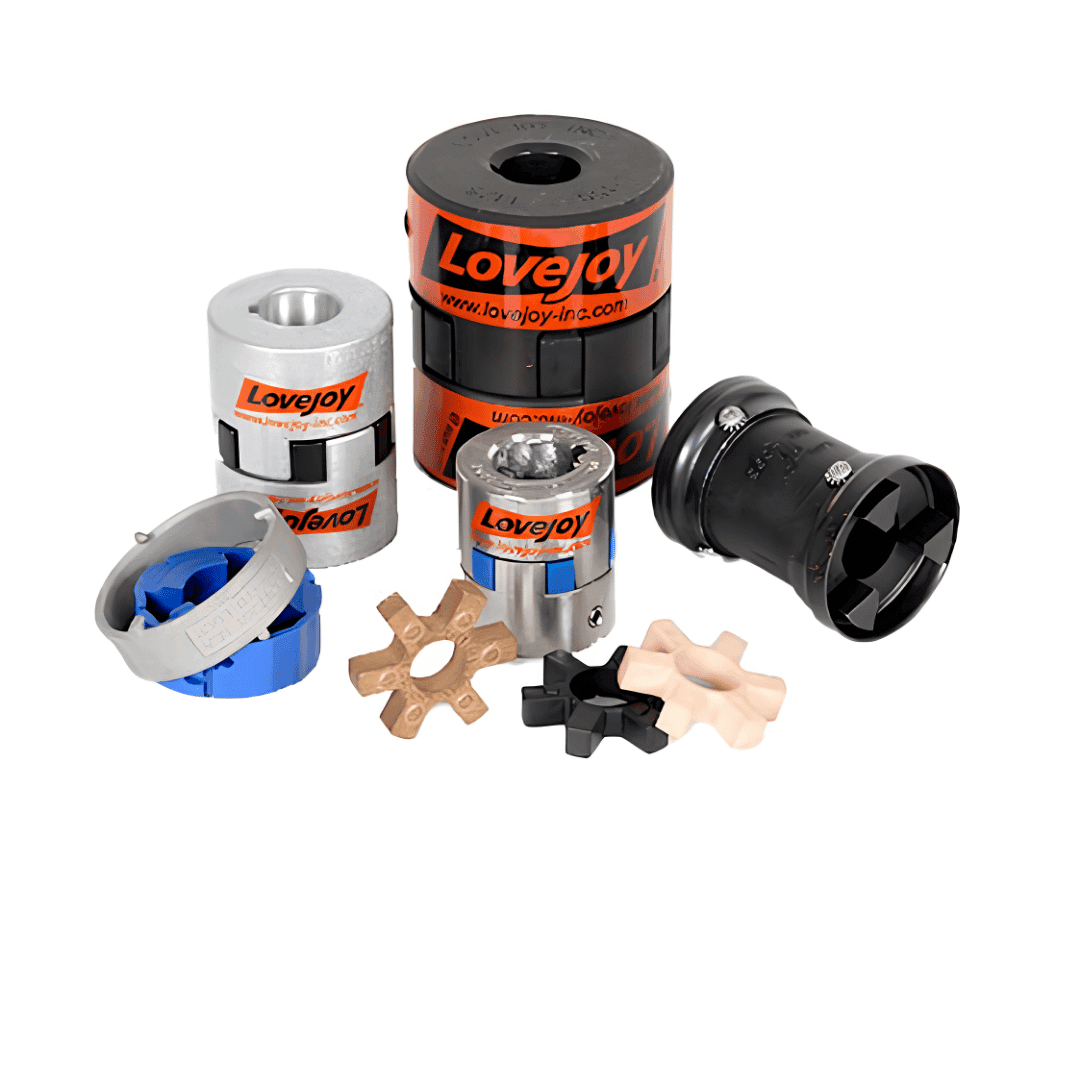
What Is an Industrial Coupling?
An industrial coupling, also known as a shaft coupling, connects two shafts that, in practice, are rarely perfectly aligned. Installation tolerances, thermal expansion, and the natural wear of machinery create slight deviations between the driving shaft and the driven shaft. The right coupling compensates for this misalignment without transferring unnecessary loads to the bearings or the mounted bearing unit. Unlike a belt drive or chain drive, a coupling connects the shafts directly, without intermediate components. Its primary function is to transmit torque from the driving shaft to the driven shaft while keeping the machine operating continuously and in synchronization. It is important not to confuse an industrial power transmission coupling with a pipe coupling used in plumbing. Although they share the same name in everyday language, they serve completely different purposes. An industrial coupling transmits torque between rotating shafts, whereas a pipe coupling is simply used to join sections of pipe.
Rigid Coupling vs. Flexible Coupling
There are two main categories of couplings, based on their ability to compensate for shaft misalignment: Rigid coupling: Connects two shafts as a single solid unit, with no tolerance for misalignment. It is used when the shafts are perfectly aligned and the system operates with minimal or no vibration. Flexible coupling: Incorporates an intermediate element—such as a jaw coupling with an elastomer insert, disc pack, grid, or gear—that allows for a certain degree of angular, parallel, or axial misalignment without damaging the equipment. Most industrial applications use flexible couplings because no real-world installation can maintain perfect shaft alignment over its entire service life.
Types of Industrial Couplings
The most common types of flexible couplings used in industrial applications include: Jaw coupling: Consists of two hubs with interlocking jaws connected by a central elastomer insert (spider). It is the most widely used coupling for electric motors, pumps, and fans due to its low cost and easy maintenance. Grid coupling: Uses a flexible metal grid instead of an elastomer insert. It offers higher torque capacity and temperature resistance than a jaw coupling, making it ideal for mining and heavy industrial applications. Disc coupling: Transmits torque through a pack of thin metallic discs. It requires no lubrication, provides excellent precision, and is commonly used in high-speed equipment and critical applications. Gear coupling: Features two hubs with gear teeth that accommodate shaft misalignment while transmitting high torque. It is commonly found in heavy-duty continuous process equipment. Aluminum coupling: Lightweight and maintenance-free, requiring no lubrication. The GABB IP aluminum coupling line is a cost-effective solution for gearmotors, pumps, and automation equipment. Zero-backlash coupling: Designed for servo motors and motion control systems, where high positioning accuracy and the elimination of backlash are essential.
How to Choose the Right Coupling
Selecting the right industrial coupling depends on five key technical factors: Torque to be transmitted (Nm or lb-in): Determines the minimum required coupling size. Operating speed (RPM): The higher the rotational speed, the more important dynamic balancing becomes. Expected shaft misalignment: Consider whether the system will experience angular, parallel, or axial misalignment, and ensure the selected coupling can accommodate it. Shaft diameter (bore size): The hub bore must match the diameter of both the driving and driven shafts. Operating conditions: Take into account factors such as temperature, chemical exposure, moisture, and whether the application requires sanitary-grade certification. When any of these parameters falls outside the standard operating range, it is recommended to consult the BIOSA technical team before making a purchase. An undersized coupling can fail from fatigue within weeks, while an oversized coupling increases costs without providing any real performance benefit to the system.