

What Happens When You Change the Number of Sprocket Teeth: Effect on Speed and Torque
Changing the number of teeth on one of the sprockets in an existing transmission directly modifies the output speed and the available torque on the driven shaft. It is one of the most common adjustments for changing industrial machine speed without replacing the motor or gearbox, only by modifying the sprockets and adjusting the chain length.
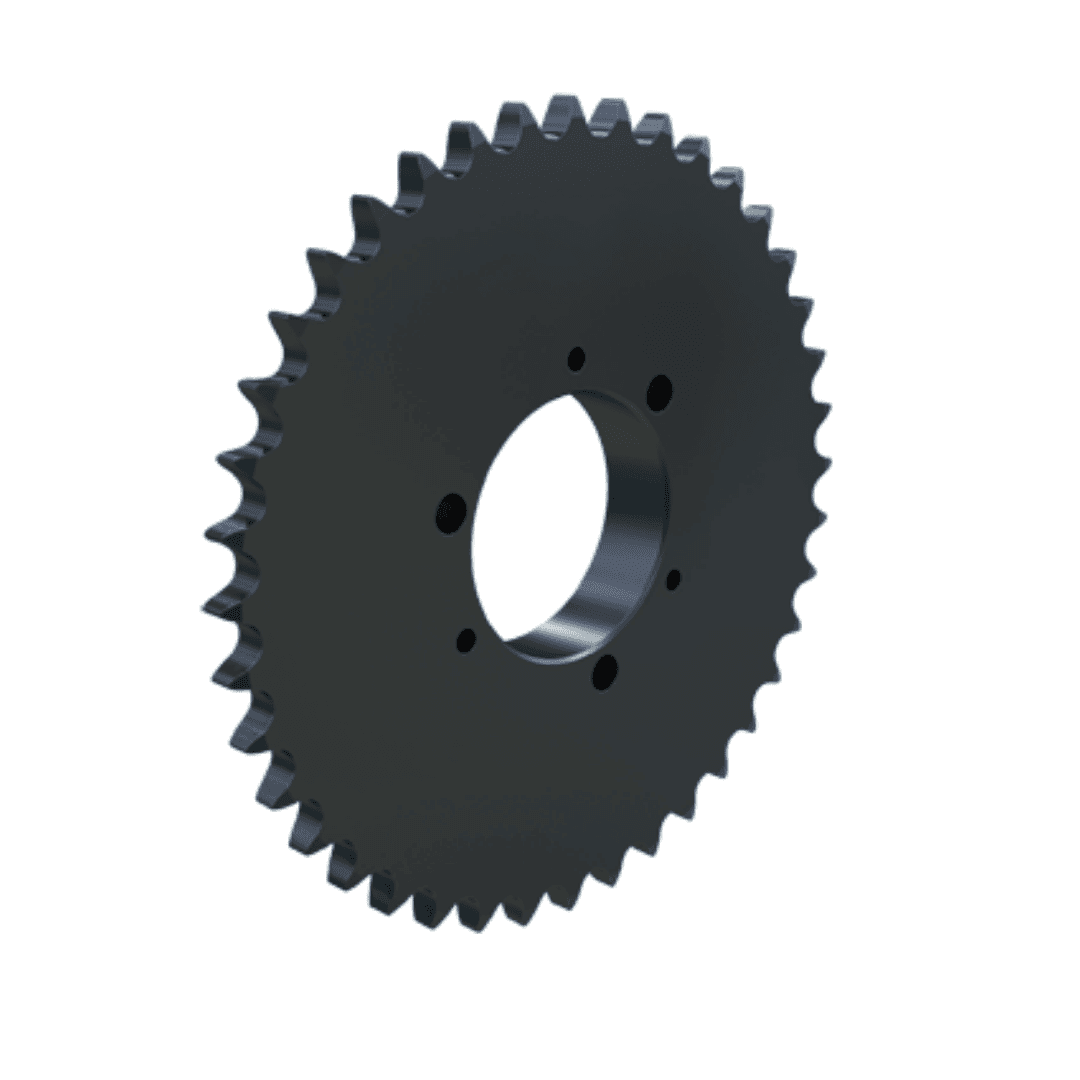
The Basic Rule: More Teeth Means Less Speed and More Torque
The relationship between the number of teeth and speed is inverse: increasing the number of teeth on the driven sprocket (the load side) reduces the driven shaft speed and increases the available torque. Decreasing the number of teeth on the driven sprocket increases speed and reduces torque. The reason is simple: the chain linear speed is the same on both sprockets (both are connected by the same chain). If the driven sprocket has more teeth, it travels a greater circumference per revolution at the same chain speed, so it rotates at fewer revolutions per minute.
Calculating the Effect of Changing a Sprocket
The formula is straightforward: Output RPM = Input RPM × (input sprocket teeth / output sprocket teeth) Practical example: A motor rotates at 960 RPM. The driving sprocket has 19 teeth and the driven sprocket has 57 teeth. The current output speed is: 960 × (19/57) = 320 RPM If the driven sprocket is changed from 57 to 38 teeth (maintaining the same pitch and driving sprocket): New output speed = 960 × (19/38) = 480 RPM The speed increased by 50% by reducing the driven sprocket teeth to two-thirds of the original value. The output shaft torque changes inversely with speed (excluding friction losses): by increasing speed by 50%, the available torque decreases by approximately 33%.
What Other Parameters Change When a Sprocket Is Modified
Chain Length Changing the number of teeth on a sprocket changes its diameter, which modifies the required chain length. A larger sprocket requires a longer chain for the same center distance. If the center distance is not adjustable, it may be necessary to add or remove chain links. Chain Linear Speed Chain linear speed depends on the driving sprocket: Linear speed = pitch × driving sprocket teeth × driving sprocket RPM If the driving sprocket is changed, the chain linear speed changes, affecting the required lubrication system and chain service life. Dynamic Load on the Chain Increasing transmitted torque (by reducing output speed with a larger driven sprocket) also increases chain tension. If the chain was already operating near its working load limit, a sprocket change that increases torque may exceed that limit and require a higher-capacity chain.
Change Limit: Maximum Transmission Ratio
When changing sprockets to modify speed, the resulting transmission ratio should not exceed 7:1 in a single stage. If the required speed adjustment involves a higher ratio, it is necessary to design a two-stage transmission or incorporate a mechanical gearbox into the system.