

What Is a Bearing and What Is It Used For? A Comprehensive Technical Guide for the Industry
What Is a Bearing, How It Works Internally, Its Actual Functions, and the Applications Where It Is Indispensable. A Technical Guide with Examples by Industrial Sector in Mexico
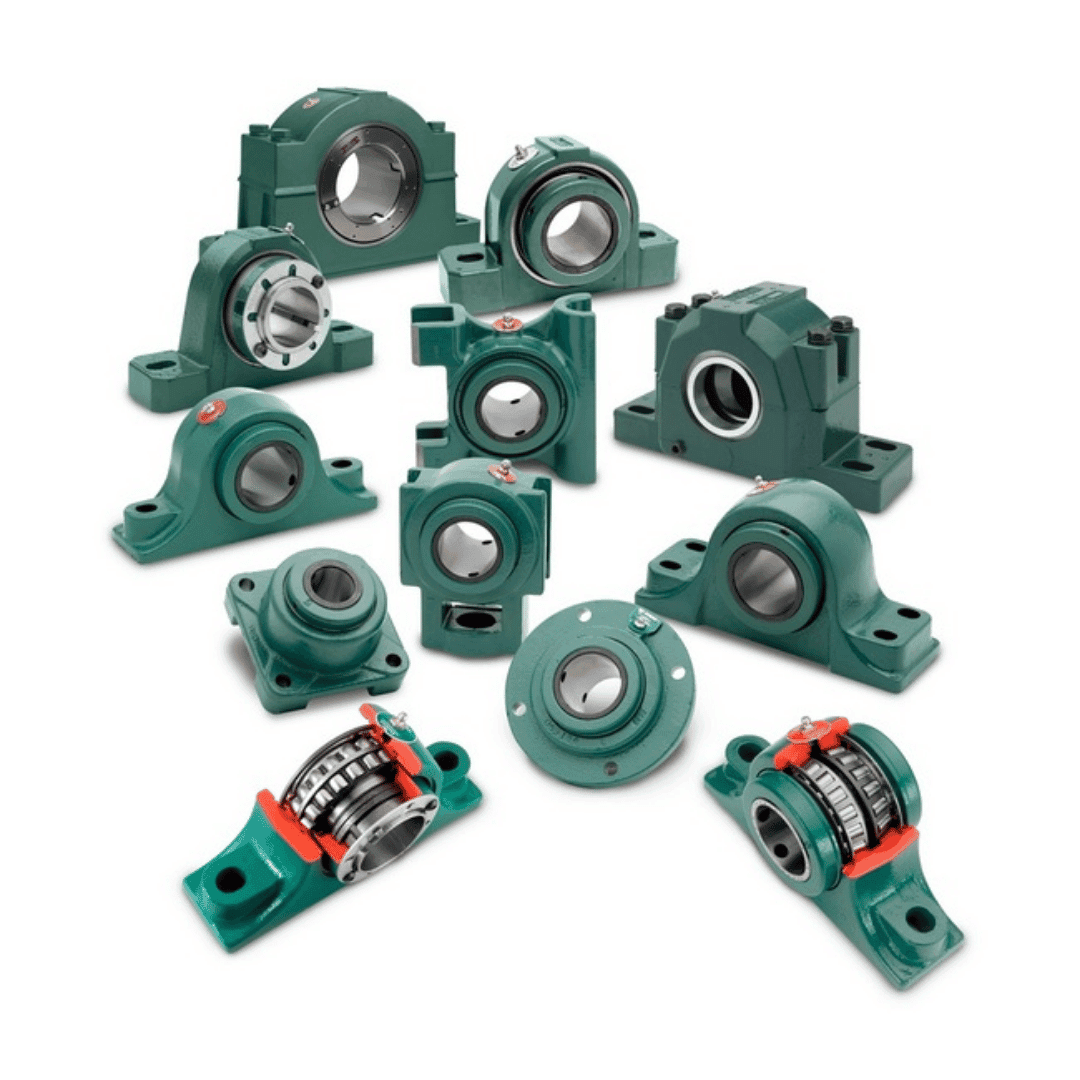
There are components that keep the entire plant running but almost never get the credit they deserve. The bearing housing is one of them. It’s found in conveyor belts, fans, agitators, mixers, and transmission systems, and it’s the most widely used shaft support in Mexican industry—and also one of the most poorly maintained. If you’ve ever wondered exactly what a bearing housing is, how it differs from a bearing, and when it’s best to use one, we’ll answer those questions here with technical precision and concrete examples. This is the starting point for the BIOSA MOTION TECHNOLOGIES bearing housing cluster.
What is a mounted bearing?
A bearing housing also known as a bearing unit, or, in spanish, a CHUMACERA is a prefabricated system that integrates three elements into a single unit that are normally purchased and assembled separately: the bearing, the housing that holds it, and the fasteners for securing it to the structure. To put it more simply: it is a bearing already assembled inside its housing, ready to be bolted onto a surface without the need to machine a custom housing. That integration is precisely what makes it so popular: it simplifies the design, installation, and maintenance of the shaft support.
How does it work on the inside?
A mounted bearing operates thanks to two systems that work together: the inner ring and the housing that holds it.
El rodamiento interior (inserto)
The housed bearing is almost always a ball insert with a spherical outer ring (UC type) or, in large units, a spherical roller bearing. The key to its design is its self-aligning capability: the spherical outer ring fits into the spherical seat of the housing and allows for the compensation of minor structural misalignments. Here, it is worth noting an important technical detail that many sources overlook: in UC-type units, this self-alignment is static, intended to absorb the initial mounting error (on the order of ±2° according to manufacturers such as Sealmaster). It is not designed for continuous oscillating or tilting motion during operation. Even so, it is invaluable in industrial practice: mounting surfaces are never perfectly parallel, and long shafts flex under load.
The casing
It is the outer housing, typically made of gray cast iron, steel, or polymeric material. It houses the bearing, protects it from the environment, and transfers loads to the structure. It features an internal spherical seat (which enables self-alignment), external mounting surfaces (flat base or flange with threaded holes), a lubrication port (Zerk nipple) for relubrication without disassembly, and side seals that retain the lubricant and keep contaminants out.