

What is a pedestal bearing, and when is it the right solution for your application?
Learn what a pedestal bearing is, how it differs from compact bearings, when it is the right solution, and how to select the proper size. Technical guide for high-load industrial applications.
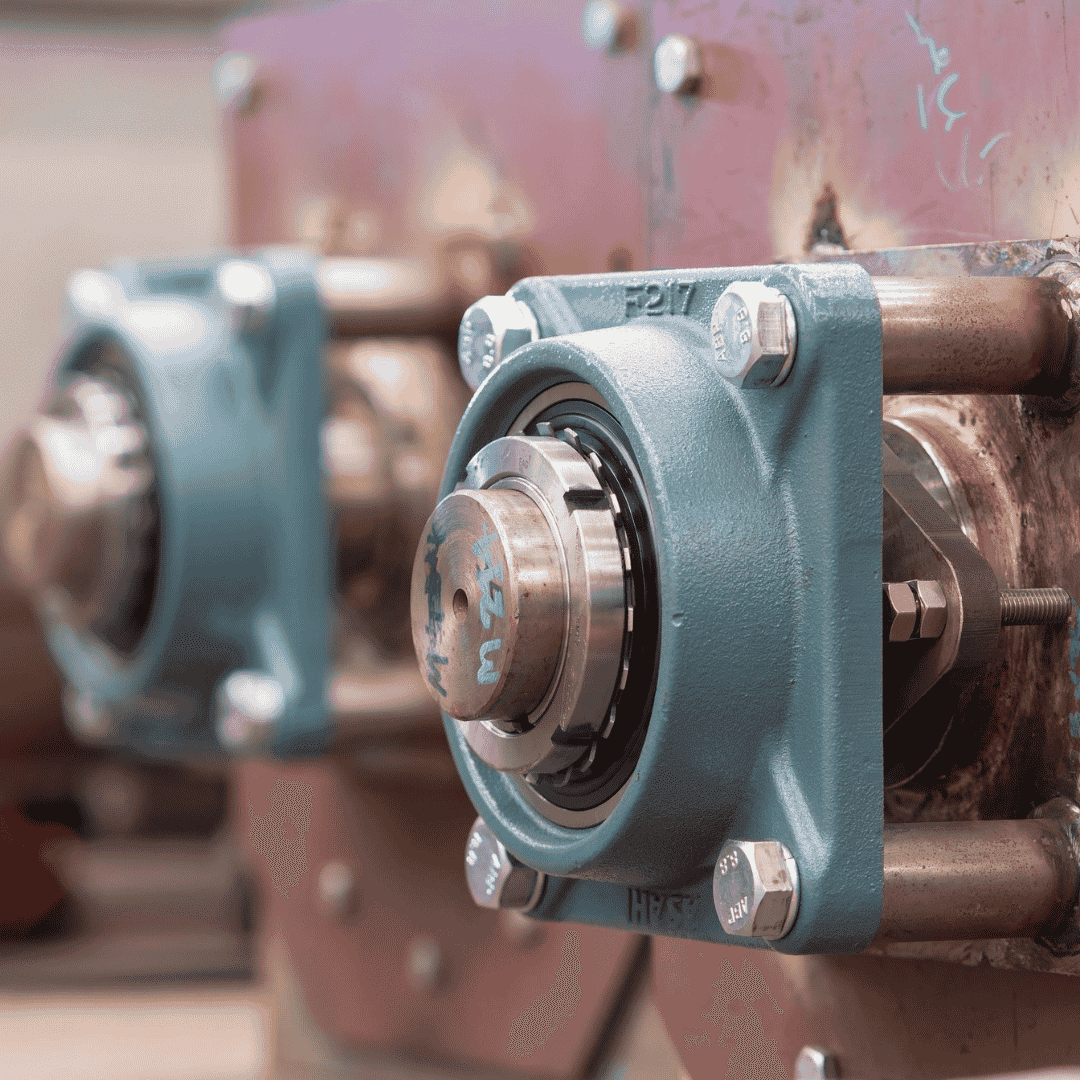
When bore diameters exceed 60–80 mm and the loads become too heavy for compact foot-mounted or flange-mounted bearings, the industry turns to a type of bearing that is completely different in both design and size: the pedestal bearing, also known as a plummer block or split bearing. It is not simply a larger version of UCP/UCF bearings. The pedestal bearing features a two-part housing design—base and cover—that gives it a fundamental advantage no other type of bearing has: you can install and remove the bearing without disassembling the shaft. For heavy shafts several meters long and weighing hundreds of kilograms, that advantage can mean the difference between a two-hour maintenance job and a two-day one.
What exactly is a pedestal bearing?
A pedestal bearing assembly is a shaft support system consisting of: 1. A base (housing base): the lower body that is mounted on the machine bed or structure, with mounting holes on its surface. 2. A housing cap: the upper component that seals the bearing housing over the bearing. It is secured to the base with high-strength screws. 3. A large spherical roller or tapered roller bearing: housed in the cavity formed by the base and cap. 4. Side seals: sealing rings that protect the bearing on both sides. 5. Lubrication components: Zerk nipples, oil level indicators, or connections for centralized lubrication, depending on the design. The base-cap division is what gives it its alternative name of split housing. This design feature defines all its advantages and determines its typical applications.
Specific Advantages of the Pedestal Bearing Housing
Advantage 1: Maintenance Without Removing the Shaft This is the most important advantage in heavy-duty industrial applications. When the bearing in a 500-kW industrial fan or a large-volume agitator needs to be replaced, removing the shaft can involve hours of crane work, the risk of damaging other components, and a prolonged production shutdown. With the pedestal housing, the cover bolts are loosened, the cover is removed, the bearing is extracted, and the new one is installed—all with the shaft remaining in place. Replacement time can be reduced from a full day to just a few hours. Advantage 2: Capacity for large bearings Pedestal housings are designed to accommodate large-size double-row spherical roller bearings, which are the bearings with the highest combined load capacity (radial + axial) available on the industrial market. This combination of a robust housing and a high-capacity bearing makes it possible to support shafts in the most demanding industrial applications. Advantage 3: Circulating oil lubrication Large pedestal housings offer the option of circulating oil lubrication instead of grease, complete with a level indicator, drain plug, and inlet and outlet connections for centralized lubrication systems. Oil lubrication is more effective than grease at high speeds or elevated temperatures because oil dissipates heat more effectively and replaces degraded lubricant more quickly. Advantage 4: On-site Clearance Adjustment Pedestal bearings typically use bearings mounted on an adapter sleeve, which allows the bearing preload to be adjusted on-site during installation. This adjustment optimizes the system’s stiffness for each specific application, something that is not possible with the fixed inserts in compact bearings.
When is a pedestal bearing the right solution?
A pedestal bearing is the right solution when one or more of the following criteria are met: • The shaft bore exceeds 60–80 mm: Compact bearings of that size have insufficient load capacity for most heavy-duty applications. • The load on the shaft exceeds the maximum capacity of available compact bearings: refer to the dynamic and static load catalog. • The bearing must be replaceable without removing the shaft due to time, space, or safety constraints. • Oil lubrication is preferred over grease due to temperature or speed conditions. • The application is critical and requires the highest possible level of reliability and service life.
Typical Applications in Mexico
• High-power industrial process fans (> 75 kW). • Large-volume mixers and agitators for the chemical and food industries. • Press rolls and mills in the paper industry. • Main drive shafts in mining conveyor belts. • Process compressors in petrochemical and gas plants. • Grinding equipment in cement and mining plants.
The pedestal bearing is not just a large bearing: it is an entirely different system designed for the most demanding industrial applications. Its split housing, compatibility with large-diameter bearings, oil lubrication capability, and the ability to perform maintenance without removing the shaft make it the indispensable solution for large-diameter shafts under heavy loads in industries such as paper, mining, steel, and industrial processing.