

What Is a Bearing and What Is It Used For? A Comprehensive Technical Guide for the Industry
What is a bearing, how does it work, what are its actual functions in a machine, what is its structure, and what distinguishes a high-quality bearing? Technical overview of BIOSA’s bearing cluster.
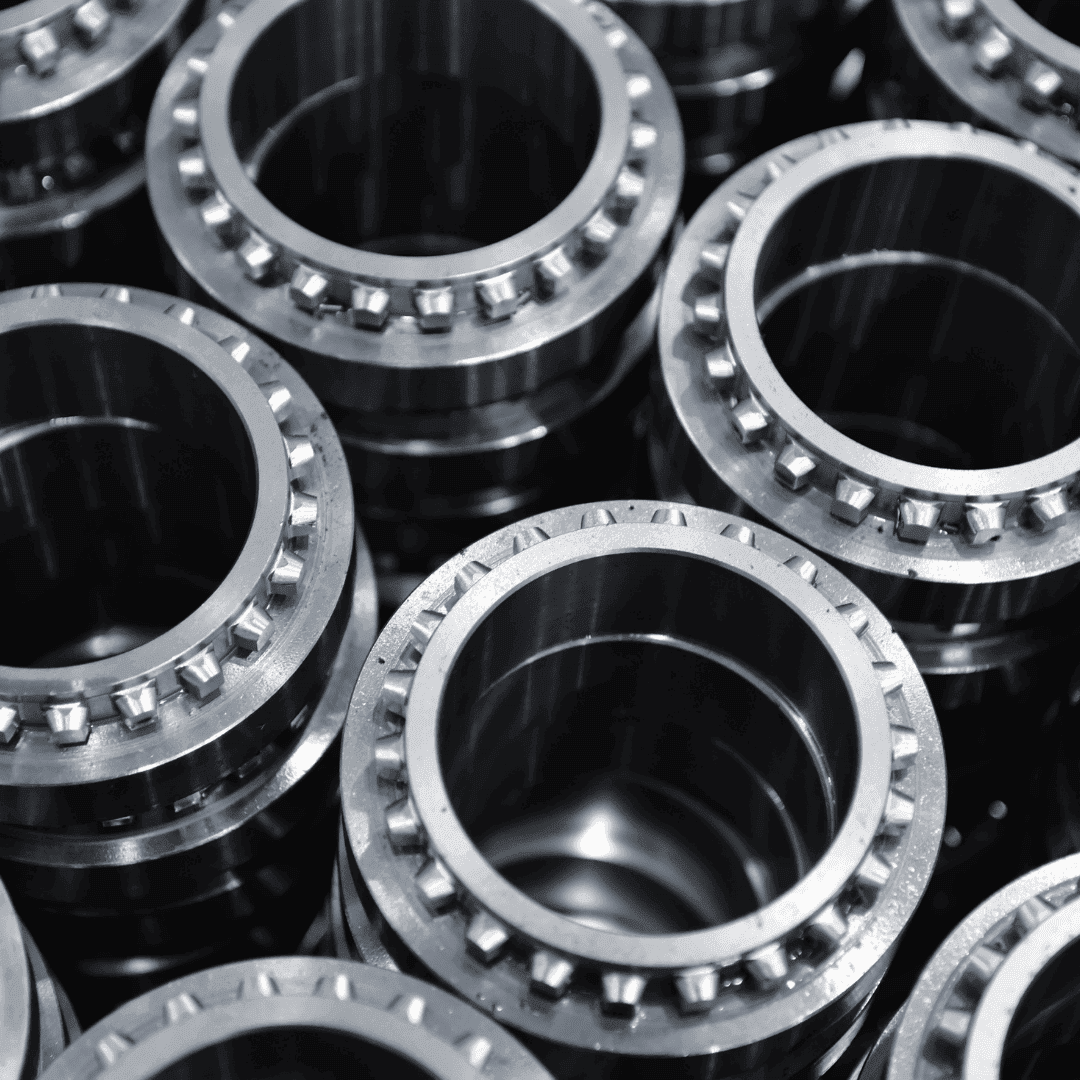
There are components that make almost everything that moves in a plant possible, yet they rarely receive attention until they fail. The bearing is one of them: it’s found in motors, gearboxes, pumps, fans, compressors, and drive shafts, and it’s both one of the most widely used components and one of the most likely to fail when selected improperly or neglected. Here we explain what a bearing is, how it works, its practical applications, its composition, and what distinguishes a high-quality bearing from one that will fail prematurely. It forms the foundation of BIOSA MOTION TECHNOLOGIES’ entire bearing product line.
What is a bearing?
A bearing is a precision mechanical component designed to reduce friction between two surfaces in relative motion typically a rotating shaft and its fixed housing by interposing rolling elements (balls, rollers, or needles) between them. Without a bearing, a shaft rotating within a housing would generate direct metal-to-metal sliding friction, resulting in excessive heat, accelerated wear, and significant energy loss. The bearing replaces this sliding with rolling, drastically reducing friction and allowing the shaft to rotate efficiently for thousands of hours. In Mexico, the term “balero” is a popular synonym for “bearing.” Technically, in the strict sense, “balero” refers to a ball bearing; in shop talk, it is used for any type of bearing.
How does it work internally?
The principle is based on a physical fact: rolling friction is much lower than sliding friction. When a ball or roller rolls instead of sliding, the contact area is minimal, and the energy dissipated as heat is a fraction of that lost during direct sliding. A bearing has four fundamental components.
The Four Fundamental Elements
Inner ring. It is mounted on the shaft and rotates with it; its outer surface features the inner raceway, which is precision-machined. Outer ring. It is housed in the support or housing and normally remains stationary; its inner surface features the outer raceway. Rolling elements. Balls, rollers, needles, or tapered rollers that roll between the rings and transmit the load; their type, size, and number define the load capacity and speed. Cage or separator. Keeps the rolling elements evenly spaced so they do not collide; it is manufactured from stamped steel, machined brass, polyamide, or PTFE depending on speed and temperature.
The 4 core functions in the industry
Support the shaft under load. They bear the weight of the shaft and the mounted components (pulleys, gears, impellers) and transmit those forces to the structure. Reduce friction and energy loss. In a motor, high-quality bearings keep friction losses to a minimal fraction of the rated power, which in a plant with dozens of motors running 24/7 represents real energy savings. Control the axial position of the shaft. Certain types (angular contact, tapered roller, thrust) restrict axial displacement, maintaining the alignment of the drive train. Absorb dynamic loads. In gearboxes, crushers, presses, and agitators, the bearing absorbs and distributes variable loads and impacts without transmitting them directly to the structure.
What sets a high-quality bearing apart?
Even if two bearings appear identical, the differences lie in manufacturing details that determine their actual service life: Dimensional tolerances controlled to the micrometer (a cheap bearing with large variations causes vibration and uneven load distribution); Mirror-like surface finish on the raceways (very low Ra) versus rough surfaces that wear out within the first few days; Uniform material and heat treatment: SAE 52100 steel hardened to a typical hardness of 58–64 HRC on the raceways, where a soft zone fails due to premature fatigue; And ball or roller geometry with sphericity controlled to tenths of a micrometer.
Bearing Brands at BIOSA
At BIOSA MOTION TECHNOLOGIES, we distribute well-known brands, selected for their quality, availability, and technical support: Timken (a global leader in tapered rollers for heavy-duty and automotive transmissions), NACHI (Japanese precision for high speed and low vibration), Fersa (with its NKE Fersa brand for industrial precision, PFI Fersa, and Fersa HD for commercial and industrial vehicles, specializing in technologies such as electrically insulated bearings and condition monitoring), and RBC, IBC, and ITA as technical alternatives with an extensive product catalog.
A bearing is much more than just a circular steel component: it is the element that enables every shaft, motor, gearbox, and pump in your plant to operate efficiently, precisely, and reliably. Proper selection, installation, and maintenance are the three pillars that determine whether it will last as long as it was designed to. At BIOSA MOTION TECHNOLOGIES, we are the technical partner for industrial plants in Mexico for everything related to bearings: selection, supply, installation consulting, and after-sales support.
Contact us on WhatsApp
Do you need bearings for your plant that are available immediately? Our engineers will help you select the right ones at no cost. We carry Timken, NACHI, Fersa, RBC, IBC, and ITA bearings in Mexico.
1. Timken — Roller Bearings (sitio oficial) https://www.timken.com/es/product-category/roller-bearings-2/ 2. Timken — Ball Bearings (sitio oficial) https://www.timken.com/es/product-category/timken-ball-bearings/ 3. Timken — Rodamientos EnviroSpexx de alta eficiencia (sitio oficial) https://www.timken.com/es/products/rodamientos-envirospexx-de-alta-eficiencia-energetica/ 4. NACHI — Rodamientos (sitio oficial) https://nachi.com.mx/rodamientos/ 5. Fersa — NKE Fersa, rodamientos industriales de precisión (sitio oficial) https://www.fersa.com/marcas/nke-fersa/ 6. Fersa HD — Rodamientos para vehículo comercial e industrial (sitio oficial) https://www.fersa.com/marcas/fersa-hd/ 7. RBC Bearings — Precision Roller Bearings (sitio oficial) https://www.rbcbearings.com/ 8. IBC Wälzlager (sitio oficial) https://www.ibc-waelzlager.com/en/