

What Is a Mechanical Coupling and How Does It Work?
A mechanical coupling, also known as a shaft coupling, is the component that connects two rotating shafts to transmit torque between them. Here's how it works, step by step.
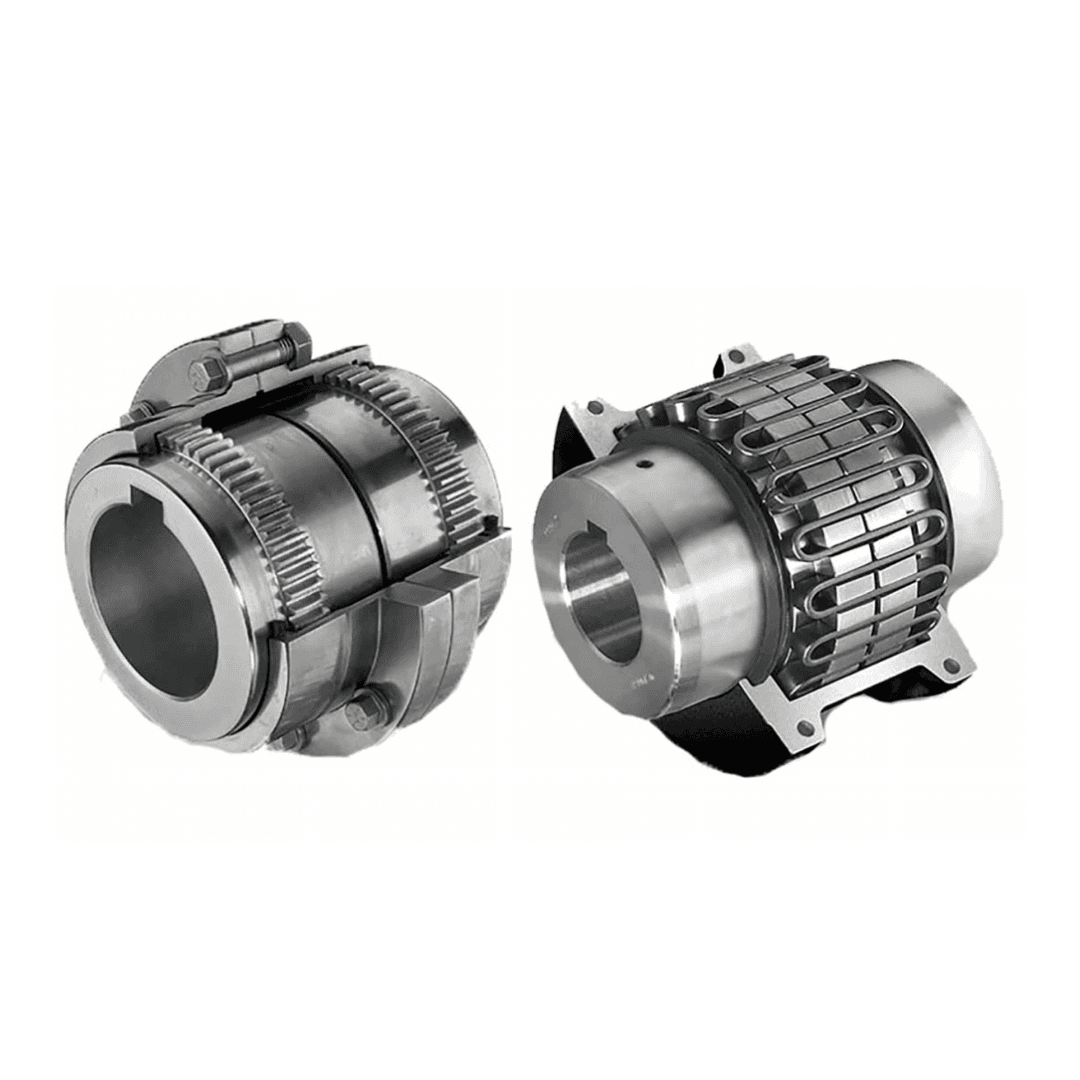
Basic Operation of a Mechanical Coupling
A mechanical coupling acts as a bridge between two shafts: the driving shaft, which rotates through an electric motor or internal combustion engine, and the driven shaft, which receives that rotation to power a pump, fan, conveyor belt, or any other piece of equipment. The coupling transmits the torque generated by the motor without requiring the shafts to be manufactured as a single continuous piece. A coupling performs three key functions within a power transmission system. First, it transmits torque from one shaft to another consistently and efficiently. Second, it compensates for the natural misalignment between the driving and driven shafts, whether it is angular, parallel, or axial. Third, in the case of flexible couplings, it absorbs vibrations and startup shocks that would otherwise be transmitted directly to the motor and driven equipment bearings.
Why Is a Mechanical Coupling More Than Just a Connecting Component?
It is a common misconception that a coupling simply connects two shafts physically. In reality, a mechanical coupling is engineered with specific tolerances, materials, and geometries to operate within a defined range of torque, speed, and misalignment. A poorly selected coupling can lead to excessive vibration, bearing overheating, and even premature motor failure—even if it appears to be performing its basic function of connecting the shafts.
Components That Make a Mechanical Coupling Work
Hubs: Mounted directly onto each shaft using a keyway or set screw. Flexible or rigid element: A jaw with an elastomer insert, metallic disc, grid, or gear, depending on the type of coupling. Fastening system: Keyways, bores, and screws that prevent slipping between the hub and the shaft.