

Industrial Coupling Maintenance: Complete Guide
A simple preventive maintenance program can double the service life of an industrial coupling. This guide outlines what to inspect and how often to help prevent unexpected downtime, reduce wear, and ensure reliable power transmission.
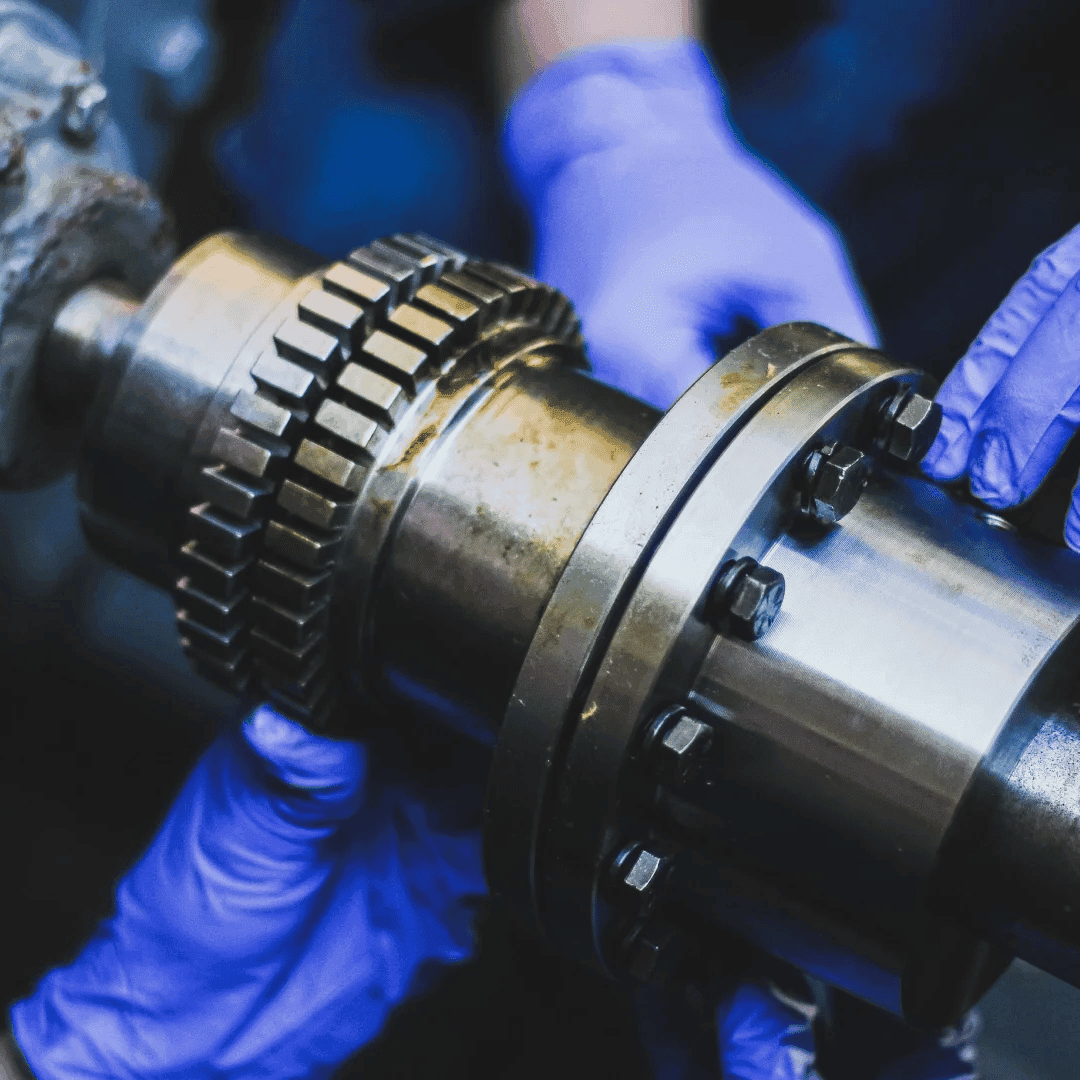
Periodic Visual Inspection
Under normal operating conditions, perform a visual inspection every three to six months, or monthly for critical or high-speed equipment. Inspect the coupling for cracks in the elastomer, loose or broken material, corrosion on the hubs, and excessive play between components by manually rotating the shaft with the equipment shut down.
Lubrication by Coupling Type
Not all couplings require lubrication. Jaw couplings with elastomer spiders and aluminum couplings are maintenance-free and do not require lubrication during normal operation. In contrast, grid couplings and gear couplings require periodic lubrication of their metal components, typically using a high-performance grease formulated to resist centrifugal forces. Lubrication should be performed at the intervals recommended by the manufacturer, or sooner if inspection reveals deteriorated, contaminated, or depleted grease inside the coupling.
Alignment Verification
Although a flexible coupling can accommodate a certain amount of shaft misalignment, it is not designed to compensate for misalignment indefinitely. During scheduled maintenance, verify shaft alignment using a dial indicator or laser alignment system, especially if previous inspections have revealed increasing vibration or abnormal noise. Maintaining proper alignment helps reduce bearing loads, coupling wear, and energy losses, while extending the service life of the entire drive system.
Service Life Tracking
Keeping a simple record of when each coupling was installed or replaced makes it possible to schedule replacement before failure occurs. Components such as elastomer spiders and metal grids have an estimated service life that depends on operating hours, ambient temperature, and system load. Replacing these wear components preventively is typically far more cost-effective than dealing with an unplanned production shutdown caused by an unexpected coupling failure.