

Linear Guides for the Pharmaceutical Industry: Validation and Cleanrooms
Linear guides for the pharmaceutical industry: requirements for stainless steel, cleanrooms, low particle shedding, special lubricants, and validation. How to choose the right ones.
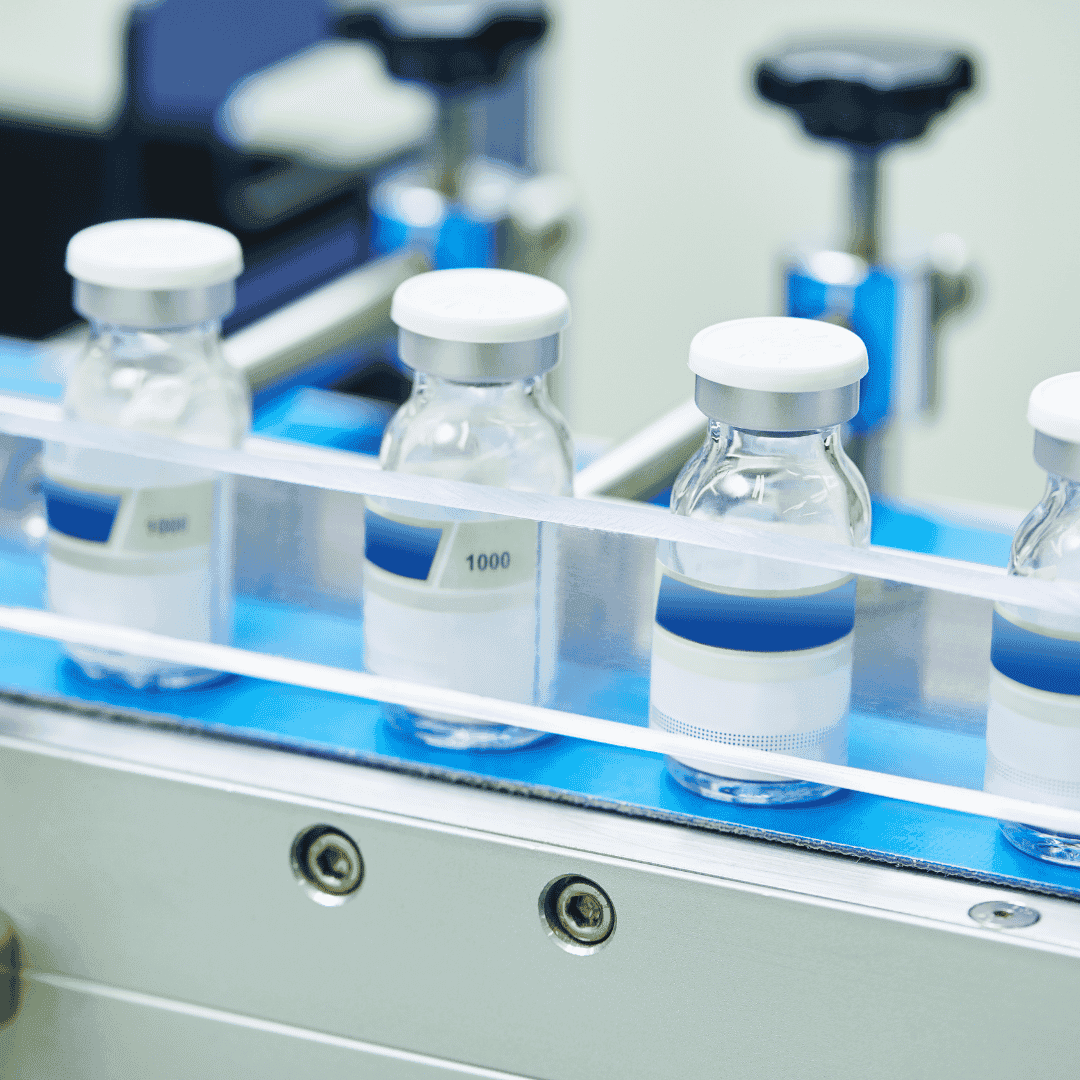
The pharmaceutical industry takes hygiene requirements a step further than the food industry: in addition to corrosion resistance and hygiene, it also requires cleanroom operation, low particle shedding, traceability, and process validation. A linear guide used in this environment must meet criteria that do not exist in general manufacturing. Here, we explain what the pharmaceutical sector requires of its linear guides and how to choose the right one.
What Sets the Pharmaceutical Industry Apart?
In addition to food safety, the pharmaceutical industry requires: particle control (in a cleanroom, any particulate matter contaminates the product or the classified environment); validation and documentation (materials and processes must be validatable and traceable); resistance to aggressive cleaning and sterilization agents (CIP/SIP); and, often, compatibility with vacuum or controlled environments. These requirements are in addition to those for corrosion resistance.
Requisito 1: material inoxidable y validable
As with food products, stainless steel is the material of choice due to its corrosion resistance and hygienic surface. HIWIN’s MG series, which is factory-stainless, meets this requirement. The advantage of factory-stainless steel over a coating is that there is no layer that can flake off, which is important where particle control is critical.
Requirement 2: Low particle shedding (cleanroom)
In a cleanroom, the guide must not generate particles that contaminate the classified environment. This requires special low-evaporation, low-shedding lubricants; seals that contain the lubricant and its residues; and, in some cases, guides with specific treatments or coatings designed for vacuum or cleanroom environments. The required level depends on the cleanroom class (ISO 14644).
Requirement 3: Special lubricants
In the pharmaceutical industry, lubricants serve a dual purpose: to protect the guide and to prevent contamination. Depending on the application, NSF H1 food-grade lubricants, low-evaporation lubricants for cleanrooms, or sterilization-compatible lubricants are used. The choice depends on the specific process and the classification of the area.
Requirement 4: Resistance to cleaning and sterilization
CIP/SIP (clean-in-place and sterilize-in-place) processes repeatedly expose components to hot water, steam, and harsh chemicals. The guide and its seal must withstand these cycles without corroding or degrading. Stainless steel and a reinforced seal are essential for withstanding repeated sterilization.
Typical Applications
Linear guides in the pharmaceutical industry are used in: precision filling and dosing equipment (syringes, vials, ampoules), inspection and vision systems, cartoning and serialization, robotic handling in classified environments, and laboratory and analytical equipment. In all these applications, the combination of mechanical precision and compliance with sanitary standards is what determines the choice of guide.
The pharmaceutical industry requires guides that combine precision with validatable stainless steel, low particle shedding, special lubricants, and resistance to sterilization. HIWIN’s MG stainless steel series is the foundation for these environments, featuring the appropriate lubricant based on the area classification. At BIOSA MOTION TECHNOLOGIES, we can help you select linear guides that meet the requirements of your pharmaceutical process. For general sanitary requirements, see also our article on linear guides for the food industry.