

Glossary of Gear Reducers and Gearmotors: 20 Key Terms
These are the 20 most commonly used technical terms when discussing industrial gear reducers and gearmotors, explained in clear and simple language.
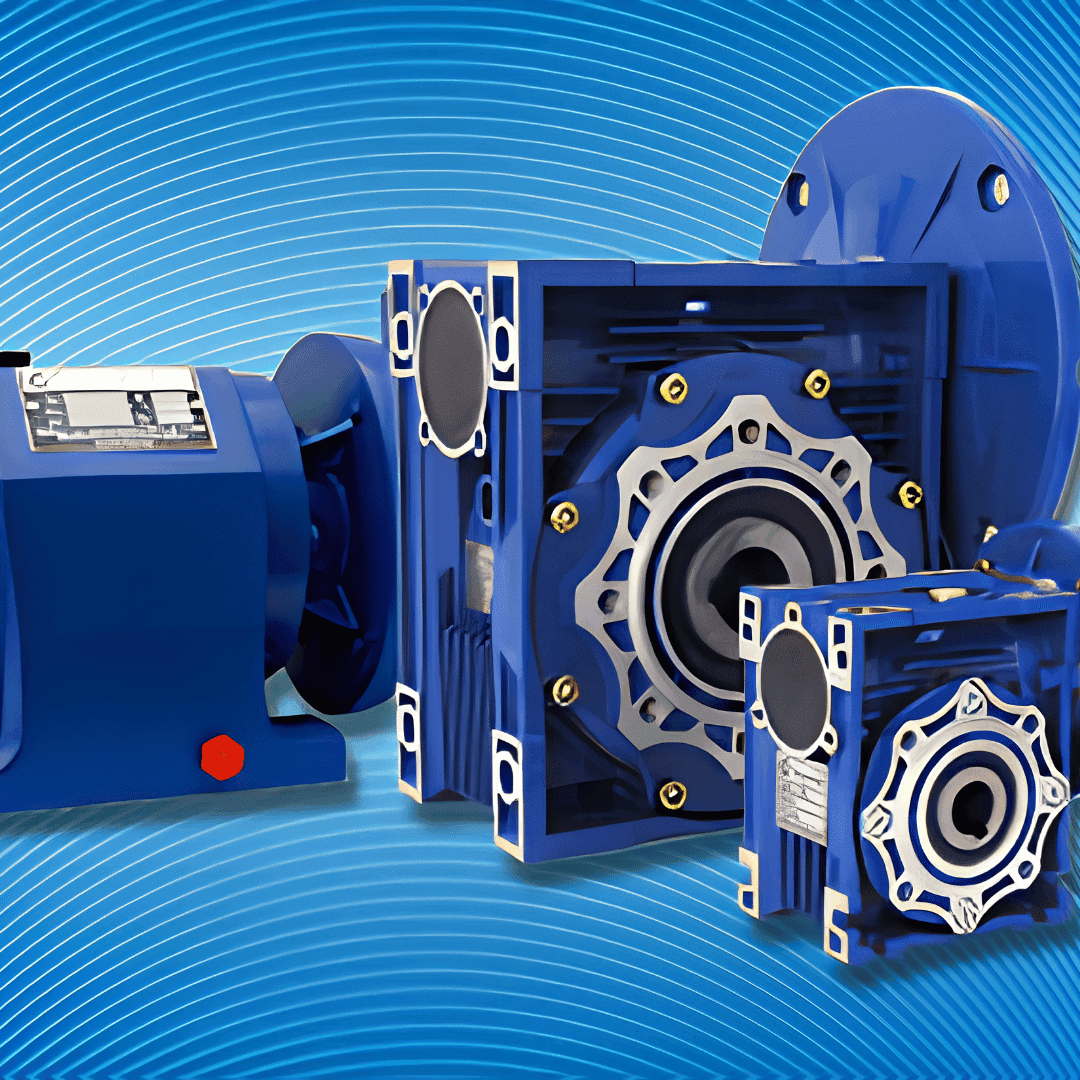
Basic Terms
Gear reducer: A set of gears that reduces speed and increases torque between an input shaft and an output shaft. Gearmotor: A motor and gear reducer integrated into a single factory-coupled assembly. Reduction ratio (i): The relationship between the input speed and the output speed of the gear reducer. Output torque: The twisting force available at the reducer's output shaft. Output RPM: The rotational speed of the driven shaft, resulting from applying the reduction ratio to the motor speed. Dynamic efficiency: The percentage of input power that is actually transmitted to the output shaft during operation.
Gear Reducer Type Terms
NMRV: Right-angle worm gear reducer with a compact and economical design, commonly used in low- to medium-power applications. Torque arm: A support arm used to install a shaft-mounted reducer directly onto the driven equipment shaft. Parallel shaft reducer: A reducer where the input and output shafts are positioned parallel to each other, using spur or helical gears. Inline (coaxial) reducer: A reducer where the input and output shafts share the same centerline, providing a direct transmission arrangement.
Selection and Operation Terms
Service factor (SF): Safety multiplier applied according to the load type and the frequency of starts in the application. Irreversibility: Property of a reducer that prevents the output shaft from driving the input shaft, commonly found in worm gear reducers. Input flange: Component where the motor is coupled to the reducer, available according to NEMA or IEC standards. NEMA standard: North American standard for the dimensions and mounting specifications of electric motors. IEC standard: International standard for electric motor dimensions, mainly used outside North America. Mounting position: Spatial orientation of the reducer, which affects lubrication requirements and oil level. Load type: Classification of the application load as A (uniform), B (moderate shock), or C (heavy shock) according to the operating behavior of the driven machine. Backstop or anti-reverse brake: Mechanism that prevents reverse rotation of the output shaft under certain load conditions. Taper bushing: Mounting system used in shaft-mounted reducers, such as the Dodge TXT series, to simplify installation and removal. Encoder: Sensor that measures shaft position or speed, used in applications requiring precise motion monitoring.