

Common Mistakes When Installing a Gearmotor
Many premature gearmotor failures are not caused by incorrect selection, but by installation errors. These are the most common ones in industrial plants.
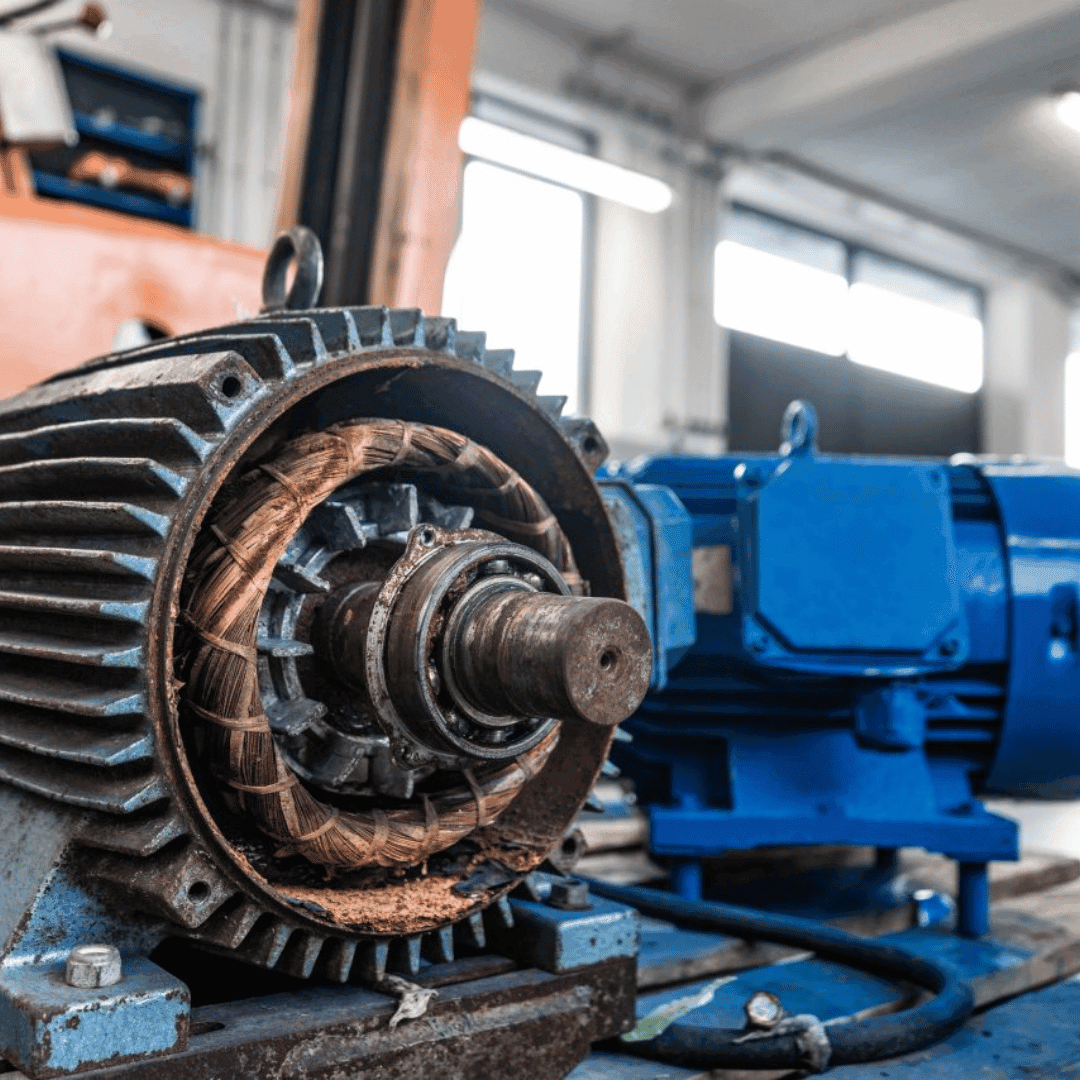
Common Gearmotor Installation Mistakes
Not verifying the rotation direction before mounting: Installing the gearmotor and later discovering that it rotates in the opposite direction, requiring the assembly to be removed or the motor electrical connections to be reversed. Leaving the transportation blind plug instead of installing the breather: This creates internal pressure buildup inside the housing during operation, forcing oil toward the seals and causing premature leaks. Not adjusting the oil level according to the final mounting position: The correct oil level changes depending on the reducer orientation, and using the standard quantity without considering this can leave gears with insufficient lubrication. Unstable mounting on the machine: A loose base or torque arm generates additional vibration that accelerates wear on bearings and internal gears. Mixing flange standards without the proper adapter: Forcing the coupling of a NEMA motor to an IEC flange reducer, or vice versa, without the corresponding adapter. Skipping the no-load test run: Energizing the equipment directly under full load without first verifying that there is no abnormal vibration or noise during no-load operation.
How to Avoid These Mistakes
Most of these mistakes can be prevented by following the step-by-step installation procedure and checking the specific data sheet for the gearmotor size and mounting position before energizing the equipment, rather than assuming that all gearmotors are installed the same way regardless of their final orientation.