

What Are the Dimensions of Pillow Block Bearings? How to Identify the Size and Read the Dimensions
Here we explain the relevant dimensions, how to measure them, and how to use them to determine the standard code and place the correct order, with tables of the most common sizes in the Mexican market.
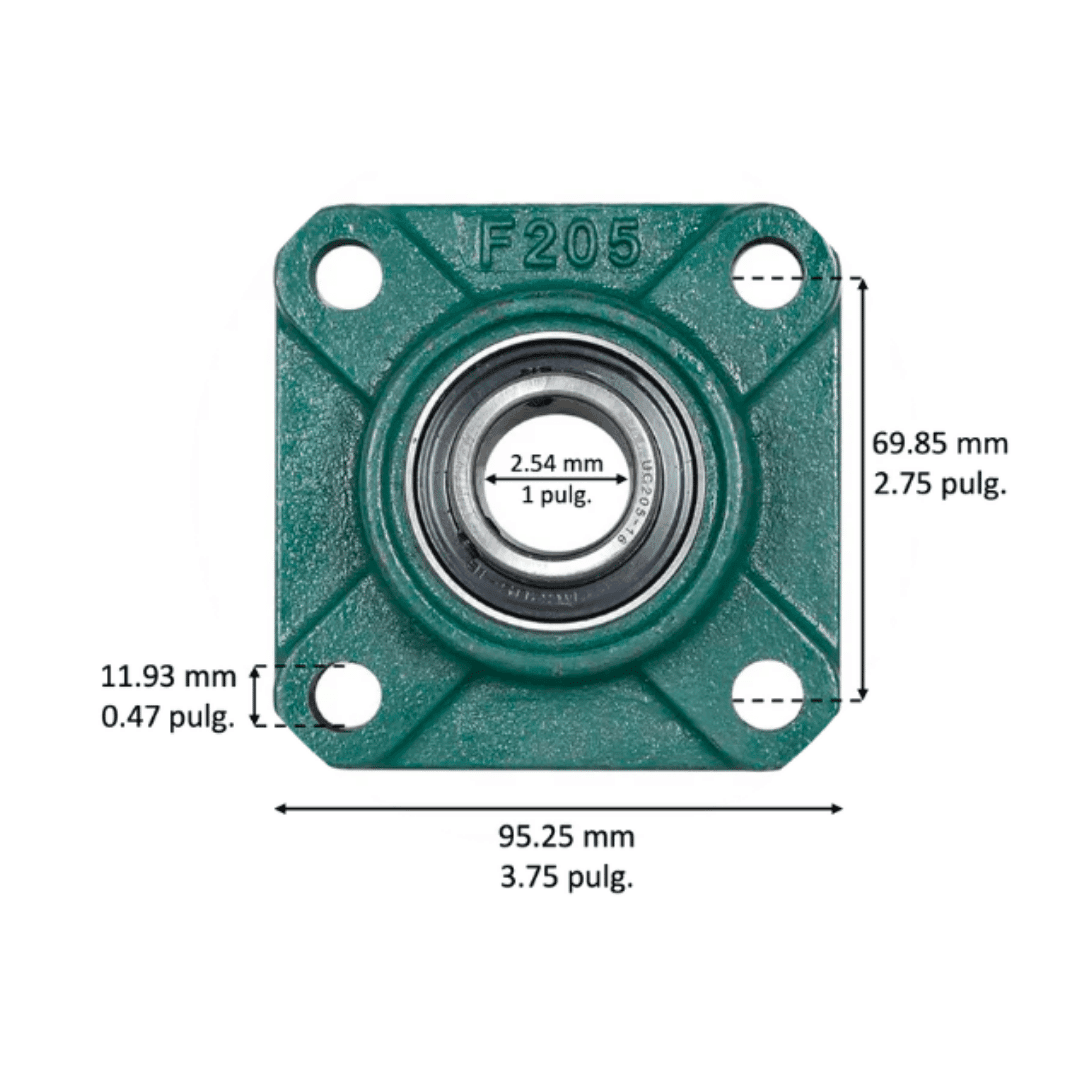
The Most Important Dimension: The Bore
The bore (inner diameter of the insert) must match the shaft diameter exactly. It is the dimension that defines the part number. If the bore is not accessible, measure the shaft diameter with an outside micrometer in an area adjacent to the bearing seat, in two positions at 90° to detect ovality. Bores follow the same ISO table as bearings.
Most Common Bores in Mexico
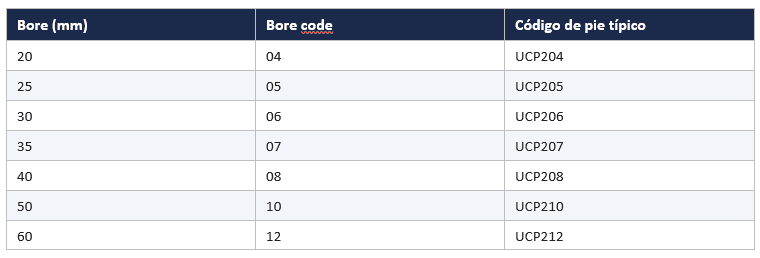
From smallest to largest, the standard bores (mm) are: 12, 15, 17, 20, 25, 30, 35, 40, 45, 50, 55, 60, 65, 70, 75, 80, 85, 90, 95, 100. Non-standard bores (22, 28 mm) require special series that are not always available in stock. For bores of 20 mm and above, the bore code is the bore divided by 5.
The Other Two Key Dimensions (Pillow Block Bearing)
When the code is not legible, in addition to the bore, it is useful to measure two housing dimensions to confirm: the shaft center height (from the base to the center of the bore, sometimes called H or A) and the distance between mounting hole centers (J). These two dimensions, together with the bore, identify the pillow block bearing unambiguously against the catalog.
Flange Dimensions
In flange pillow block bearings, the mounting hole pattern must be known: number of holes (2 for UCFL, 4 for UCF/UCFC), the center-to-center distance (bolt circle diameter for round flanges, or X and Y distances for square flanges), and the hole diameter. Dimensions are nominal according to ISO and may vary slightly between manufacturers; for accuracy, confirm with the manufacturer’s catalog.
Are They Interchangeable Between Brands?
In most cases, yes. Standard pillow block bearing series (UCP, UCF, UCFC, UCFL) follow ISO standardized dimensions, so a UCP205 from one brand has the same housing and bore as a UCP205 from another, and the mounting hole pattern on the base does not change. The exceptions are proprietary series that do not exactly follow ISO standards, or very low-cost brands with ±1–2 mm variations that can complicate direct replacement. When in doubt, verify the manufacturer’s catalog before ordering.
How to Determine the Code Without a Label
If you only have the bore: measure the shaft diameter → calculate the bore code (bore ÷ 5 for 20 mm and above) → the probable pillow block code is UCP2 + bore code (example: 40 mm shaft → code 08 → UCP208). Confirm it with the shaft center height and the mounting hole spacing against the catalog. If it is a flange bearing, first identify the type by the mounting hole pattern (UCF square 4 holes, UCFC round 4 holes, UCFL oval 2 holes).
Identifying a pillow block bearing by its dimensions requires three measurements: bore (the most important), shaft center height, and mounting hole spacing. With the bore, you can determine the series; with the other two, you confirm the exact model. Standard series are interchangeable between brands because they follow ISO dimensions. At BIOSA MOTION TECHNOLOGIES, we help you identify the correct code from your measurements and have the complete catalog of Dodge, Timken, Regal Rexnord, and GABB IP.