

What's the Difference Between a Bearing and a Bearing Housing? The Definitive Guide for the Mexican Industry
Learn once and for all the difference between a ball bearing and a plain bearing: what each one is, what they’re used for, when to use them, and why they aren’t interchangeable. The clearest and most straightforward guide on the Mexican industrial market.
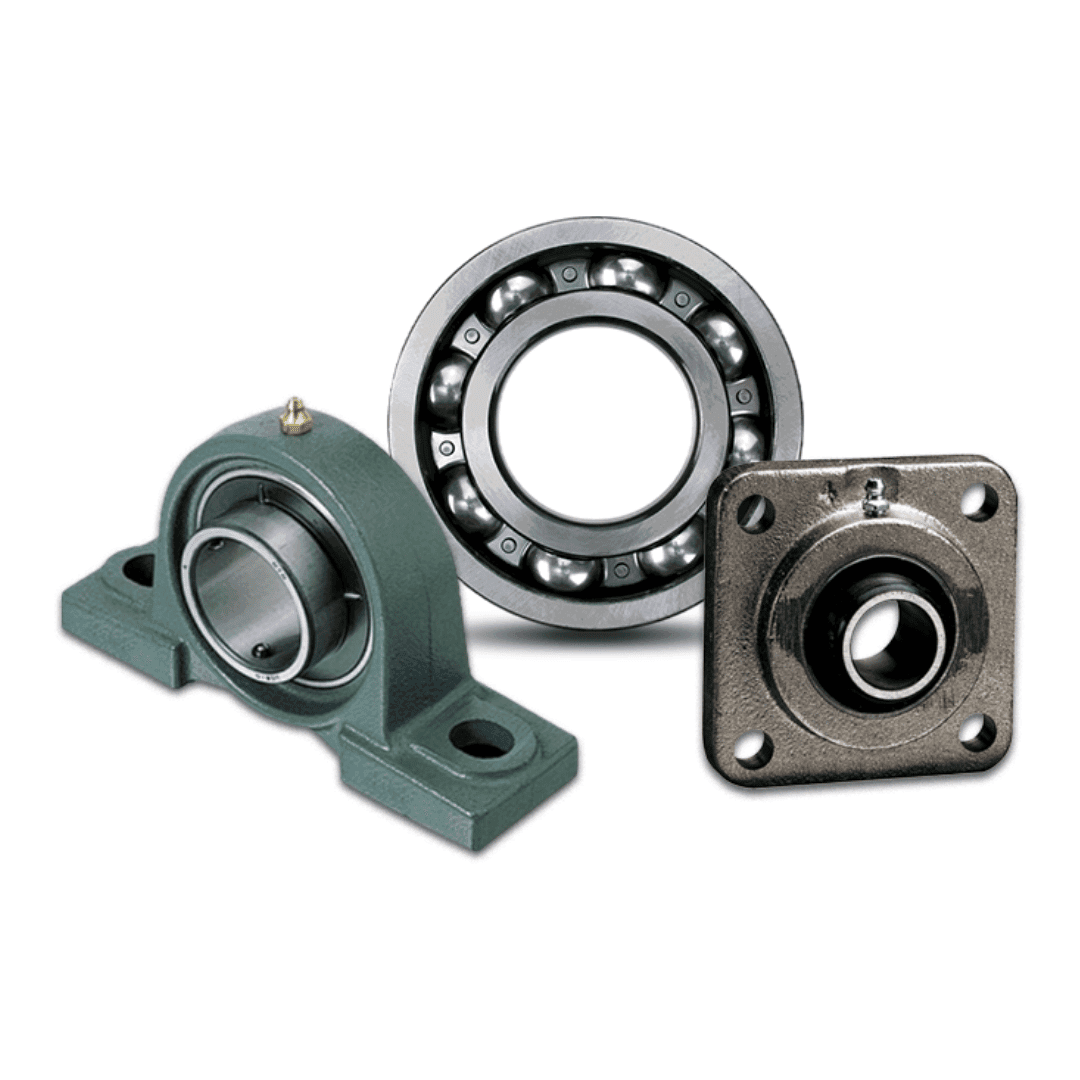
In the spare parts warehouse of virtually any Mexican industrial plant, two types of inventory cards coexist that cause constant confusion: “bearings” and “bearing housings.” Many technicians use them interchangeably. Others know they are different but aren’t sure exactly how. And some order them interchangeably, assuming the supplier will understand what they need. This confusion is understandable because the two components share the same operating principle—reducing friction through rolling motion—and one contains the other. But they are not the same, and understanding exactly what distinguishes a bearing from a bushing has direct practical implications for how you specify, install, and maintain them.
The relationship between a bearing and a bearing housing: one contains the other
The first thing that must be made clear is the hierarchical relationship between these two components: a bearing assembly contains a bearing. They are not parallel or alternative components; they are components at different levels of the assembly. • A bearing is the precision component that reduces friction: rings, rolling elements (balls or rollers), a cage, and seals. • A bearing housing is the complete shaft support system: it includes the bearing (referred to as an “insert” in this context) plus the housing that accommodates it, the external seals, the mechanism for securing it to the shaft, and the mounting elements for attaching it to the structure. To put it simply: you can have a bearing without a bearing assembly (mounted directly in a machined housing on the machine). But you cannot have a bearing assembly without a bearing—the bearing is an integral part of the system.
What Is a Bearing? A Quick Reminder
A bearing is a precision mechanical component that allows a shaft to rotate with minimal friction. Its parts include the inner ring (mounted on the shaft), the outer ring (housed in the housing or bearing insert), the rolling elements (balls, rollers, or needles), and the separator cage. A bearing by itself does NOT have a mounting housing, does NOT have a mechanism for securing it to the shaft beyond the press fit of its rings, and does NOT compensate for misalignment (unless it is self-aligning). To use it, you need a housing machined to the correct tolerances, or a bearing housing.
What is a bearing? The complete system
A bearing assembly is a complete, ready-to-install shaft support system. When you purchase a bearing assembly, you receive: the bearing insert (either a self-aligning ball bearing or a spherical roller bearing), the cast or steel housing that houses it, the side seals that protect the bearing, the shaft-mounting mechanism (set screw, eccentric collar, or sleeve), and the lubrication port (Zerk nipple). The bearing assembly mounts directly onto any flat surface using standard screws, without the need for special machining. This ease of integration and simplicity of installation is its main advantage over bearings mounted in machined housings.
When should you use a ball bearing, and when should you use a plain bearing?
Use a bearing (without a bearing housing) when: • The machine has a housing specifically designed for the bearing: electric motors, gear reducers, centrifugal pumps, compressors. In this equipment, the machine housing serves as the bearing housing. • High shaft positioning accuracy is required: angular contact bearings in CNC spindles, where the machined housing defines the bearing’s position with micrometer-level tolerances. • Available space is very limited: bearing housings are larger than the bearing itself simply because of the additional housing. • Very high speeds: Standard bearings mounted in machined housings, without the additional friction of the outer seal, allow for higher speeds.
Use a bearing housing when: • The equipment does not have an integrated bearing housing: conveyor belts, auxiliary drive shafts, low-cost fans. • The alignment of the shaft supports cannot be precisely guaranteed: flexible structures, long shafts that deflect under load. • Quick installation without machining is required: the bearing housing is mounted using a drill and standard screws. • The shaft may need to be repositioned in the future: with a take-up bearing housing, the shaft can be moved to adjust belt tension. • Simple bearing replacement is preferred: in many designs, the bearing housing insert can be replaced without removing the shaft.
The bearing insert: the “special” bearing in the bearing housing
Inside the bearing housing is a bearing that is technically called a bearing insert. It is not a standard bearing: its outer ring has a convex spherical surface (to fit into the spherical housing) and it comes with a mechanism for securing it to the shaft that is integrated into the inner ring. This is another important practical difference: if you need to replace only the bearing in a bearing housing (because the housing is still in good condition), you cannot use a standard bearing you need the correct insert for that specific bearing housing. The UC205 insert, for example, is the component that fits inside the P205 housing to form the complete UCP205 bearing assembly.