

How Steel Chains Are Classified: Pitch, Strength, and ANSI/ISO Standards
Steel chains are primarily classified by their pitch, breaking strength, and the dimensional standard they follow. Understanding this classification is essential for correctly specifying a replacement or designing a new system without errors that could compromise equipment safety, performance, and service life.
Classification by Standard: ANSI and ISO
The two primary standards governing the manufacture of steel power transmission chains in the industrial market are: ANSI Standard (American National Standards Institute) ANSI is the dominant standard in Mexico, the United States, and Canada. Chains are identified by a two- or three-digit number, where the first one or two digits indicate the pitch in eighths of an inch, and the last digit identifies the chain series. The most common ANSI chain sizes used in industry include: ANSI 25: 6.35 mm (1/4 in.) pitch — Light-duty applications ANSI 35: 9.525 mm (3/8 in.) pitch — Light machinery and laboratory equipment ANSI 40: 12.7 mm (1/2 in.) pitch — One of the most common sizes for general manufacturing ANSI 50: 15.875 mm (5/8 in.) pitch — Medium-duty power transmission ANSI 60: 19.05 mm (3/4 in.) pitch — Industrial motors and gear reducers ANSI 80: 25.4 mm (1 in.) pitch — High-power transmission systems ANSI 100: 31.75 mm (1-1/4 in.) pitch — Heavy-duty equipment ANSI 120 and 140: Larger pitches for extremely high-load applications ISO Standard (International Organization for Standardization) The ISO standard is widely used in Europe and by Japanese manufacturers, such as SENQCIA. ISO chains are designated using their standard series, such as ISO 10B. For example, an ISO 10B chain has the same 15.875 mm (5/8 in.) pitch as an ANSI 50 chain. However, differences in roller diameter and inner link width mean the two chains are not interchangeable with the same sprocket. A practical rule is simple: if the existing sprocket was designed for an ANSI chain, replace it with an ANSI chain; if it was designed for an ISO chain, use an ISO replacement. Mixing ANSI and ISO components in the same drive system can cause premature wear, improper engagement, and even chain failure due to skipping or jumping on the sprocket.
Classification by Number of Strands: Simplex, Duplex, and Triplex
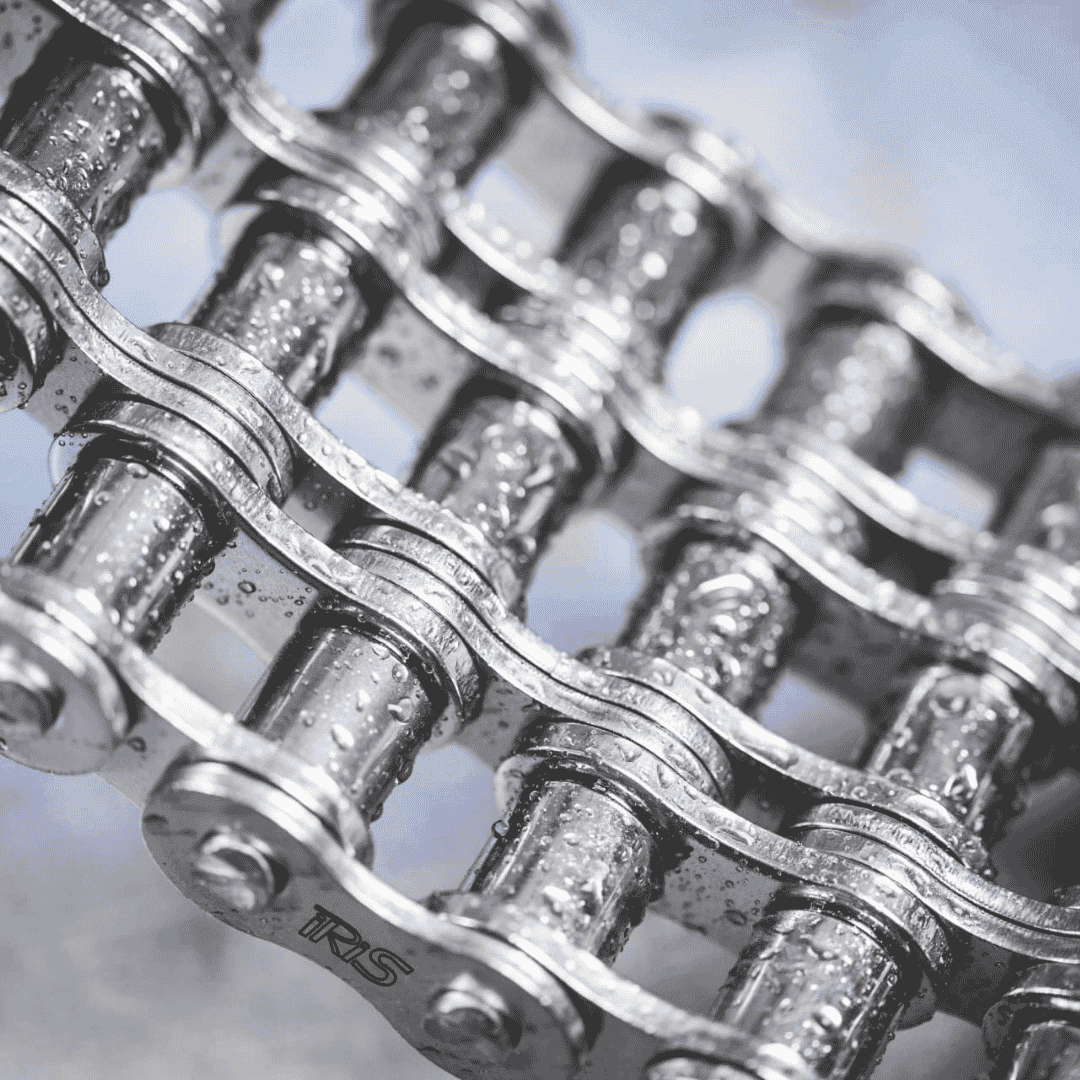
A steel chain can be manufactured with one, two, or three parallel rows of plates and rollers. Increasing the number of strands increases the chain's load-carrying capacity while maintaining the same pitch. Simplex (Single Strand): The standard configuration used in most industrial power transmission applications. Duplex (Double Strand): Used when the required power exceeds the capacity of a simplex chain of the same pitch, offering a higher load capacity without increasing chain size. Triplex (Triple Strand): Designed for very high-load applications where lateral space is limited and using a larger pitch chain is not practical. Adding additional strands is an effective alternative to increasing the chain pitch when the existing sprockets and available installation space do not allow for a larger chain.
Classification by Link Type: Roller, Rollerless, and Silent Chains
Within steel chain designs, the link type determines how the chain engages with the sprocket and directly influences its performance characteristics: Roller Chain: The most common design. The roller rotates over the sprocket tooth, reducing friction and wear while allowing for moderate to high operating speeds. It is the standard choice for most industrial power transmission applications. Rollerless Chain (Bush Chain): This design eliminates the outer roller, allowing the bushing to engage directly with the sprocket. It is typically used in high-speed applications where reducing the rotating mass of the rollers helps improve efficiency and minimize energy losses. Silent Chain (Inverted Tooth Chain): Uses toothed link plates that mesh directly with the sprocket instead of rollers. This design provides quieter operation, smoother engagement, and reduced vibration, although it comes at a higher manufacturing cost than conventional roller chains.
Classification by Material
Although carbon steel is the standard material for industrial chains, several alternatives are available for specialized operating conditions: Heat-Treated Carbon Steel: The industry standard for most power transmission applications, offering an excellent balance of strength, wear resistance, and cost-effectiveness. Stainless Steel (AISI 304 or 316): Recommended for high-moisture environments, frequent washdowns, or applications involving indirect food contact. It provides superior corrosion resistance but generally has lower mechanical strength than carbon steel of the same chain size. Nickel-Plated Steel: Suitable for environments with elevated temperatures or moderate exposure to oxidizing agents, offering improved corrosion resistance over standard carbon steel. Engineered Plastic: Designed for applications involving aggressive chemicals or environments where metal contamination must be completely avoided. These chains are commonly used in certain food processing, pharmaceutical, and chemical handling applications.
How to Read the Nomenclature of a Steel Chain
A standard steel chain is identified by a nomenclature that includes the standard (ANSI or ISO), chain size (pitch), number of strands (if duplex or triplex), and overall length, typically expressed in the number of links or feet. For example: ANSI 60-2 × 10 ft: ANSI chain, No. 60 pitch, duplex (double strand), 10 feet in length. ISO 12B-1: ISO chain, 12B size (19.05 mm pitch), simplex (single strand). Whenever you order a replacement chain, provide the complete part number shown on the packaging or the machine's nameplate. If this information is unavailable, an authorized distributor can determine the correct specification by measuring the pitch and other critical dimensions of the existing chain.