

How to Read a Lovejoy or Martin Coupling Part Number (With Example)
The part number stamped on a Lovejoy or Martin coupling contains all the technical information needed to order the correct replacement component. Here's how to read and interpret it.
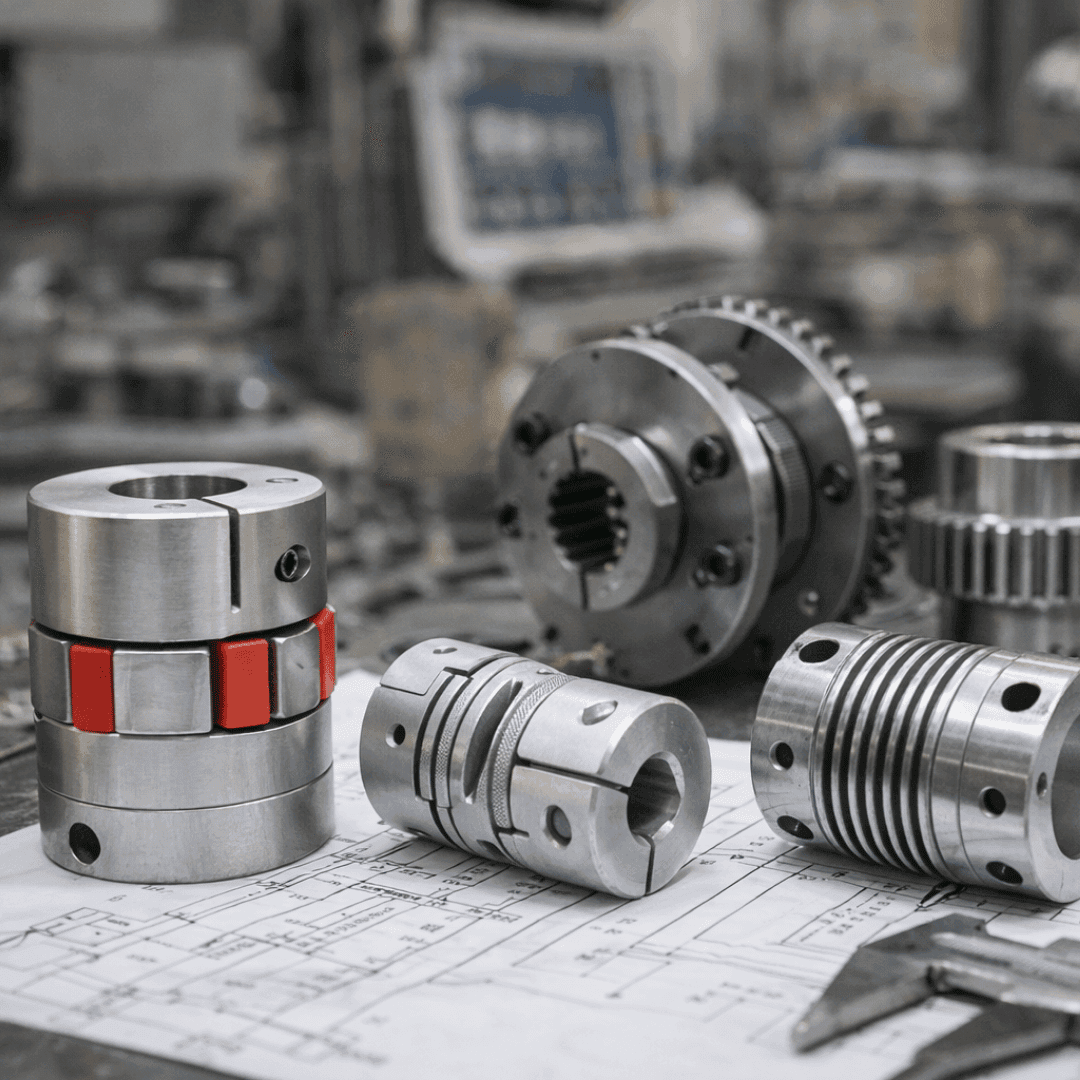
Real Example: Lovejoy Jaw Coupling Part Number
Take the L070-1/2-NKW part number as an example of a Lovejoy jaw coupling. Each section of the code has a specific meaning: L: Indicates an L-Series hub, Lovejoy's standard line of jaw couplings. 070: The coupling size, which determines the hub's outside diameter and its rated torque capacity. In general, the larger the size number, the higher the torque capacity. 1/2: The bore diameter, in inches. In this case, 1/2 inch, matching the shaft diameter on which the hub will be mounted. NKW: Stands for No Keyway, meaning the hub is supplied without a keyway. If the hub includes a keyway, this suffix is typically omitted or replaced with the appropriate keyway specification. The elastomer insert (spider) is ordered separately using its own part number. For example, L070-SOX refers to an NBR (nitrile rubber) spider, while L070-Hytrel designates a Hytrel® spider, which provides higher torque capacity and better temperature resistance.
Martin Coupling Part Number Nomenclature
Martin Coupling Part Number Nomenclature Martin Sprocket follows a similar naming convention for its couplings. The part number typically combines the coupling type (such as jaw, grid, or disc), the size number, which corresponds to the coupling's torque capacity, and the required bore diameter. The dimensional compatibility between many coupling brands is one advantage of this standardized system. However, it is generally recommended to use the same manufacturer for both the hub and the elastomer insert (spider) to ensure proper fit, performance, and long-term reliability.
Why This Part Number Is Essential When Ordering Replacement Parts
When reporting a failure or ordering a replacement part, providing only the shaft diameter is not enough. The BIOSA technical team needs the complete coupling part number, or at least the coupling size and spider type, to ensure the replacement component is fully compatible with the rest of the installed system.