

Bearing Units for the Food and Beverage Industry: Hygiene, Certification, and Selection
Using a standard bearing unit in a product-contact area can lead to contamination, washdown corrosion, and regulatory non-compliance. Here's what you need to consider when selecting the right one.
Why Standard Bearing Units Are Not Suitable for Product Zones
Conventional cast iron bearing units with standard grease are designed for general manufacturing. They are not intended for high-pressure hot water washdowns (CIP/COP), aggressive detergents and disinfectants, continuous moisture, or requirements that prevent substances from migrating into the product. Cast iron corrodes under frequent washdowns, the paint begins to peel, and standard grease is not suitable for incidental food contact.
Applicable Standards and Regulations
FDA (United States): Regulates materials used in food-contact applications, including 300-series stainless steels (304/316L) and H1-category lubricants (approved for incidental food contact). NSF International: Certifies materials and lubricants. H1 lubricants are approved for incidental food contact, while H2 lubricants are intended for areas where no food contact is possible. EHEDG (Europe): Certifies hygienic equipment design, including crevice-free geometry and easy-to-clean surfaces. COFEPRIS / NOM-251-SSA1-2009 (Mexico): Establishes hygiene practices for food and beverage processing, including sanitary design principles applicable throughout the production line.
Recommended Materials
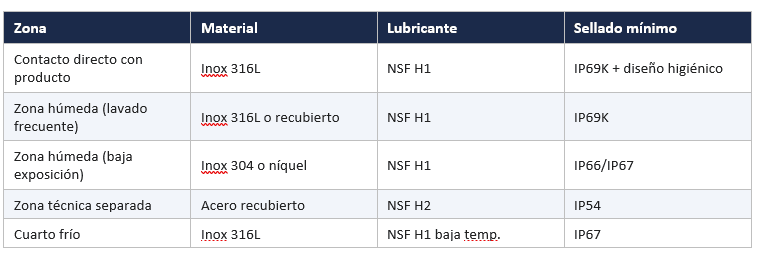
316L Stainless Steel: The preferred choice for product-contact zones in wet environments or applications with aggressive washdowns. It offers excellent resistance to chlorides and a hygienic, easy-to-clean surface. 304 Stainless Steel: A more cost-effective option for moderately humid environments without prolonged exposure to chlorides. Certified Coatings: Steel with high-phosphorus electroless nickel plating or fluoropolymer coatings (such as Xylan) can be used where the risk of product contact is low. This is the approach used in product lines such as Sealmaster PN Gold, which combines a coated bearing insert with a stainless steel or composite housing. Thermoplastic / Composite Materials: Ideal for metal-detectable applications or environments where metal components are not acceptable.
Food-Grade Lubrication (NSF H1)
Standard EP lithium grease is not approved for food-contact applications. The recommended solution is an NSF H1 food-grade lubricant, formulated with base oils and thickeners approved for incidental food contact. These lubricants typically use USP white mineral oil or synthetic base oils, contain no heavy metals, and are often light-colored to facilitate visual contamination detection. In areas where physical contact with the product is impossible, NSF H2 lubricants may be used. However, when in doubt, NSF H1 is always the safer choice. Manufacturers such as Sealmaster supply their washdown bearing units pre-lubricated with food-grade grease, such as GoldPlex FG H1, directly from the factory.
Sealing and IP69K Certification
In intensive washdown environments, sealing is critical. The highest standard is IP69K, which certifies protection against dust ingress and high-pressure, high-temperature water jets. Premium washdown bearing units—such as Sealmaster PN Gold/SS Gold and Dodge FoodSafe, Ultra Kleen, and E-Z Kleen product lines—are IP69K-rated and feature multi-lip seals and flingers specifically engineered to withstand the rigorous cleaning cycles of the food and beverage industry.
Selection by Plant Area
Selection Guidelines by Plant Area:
Typical Applications
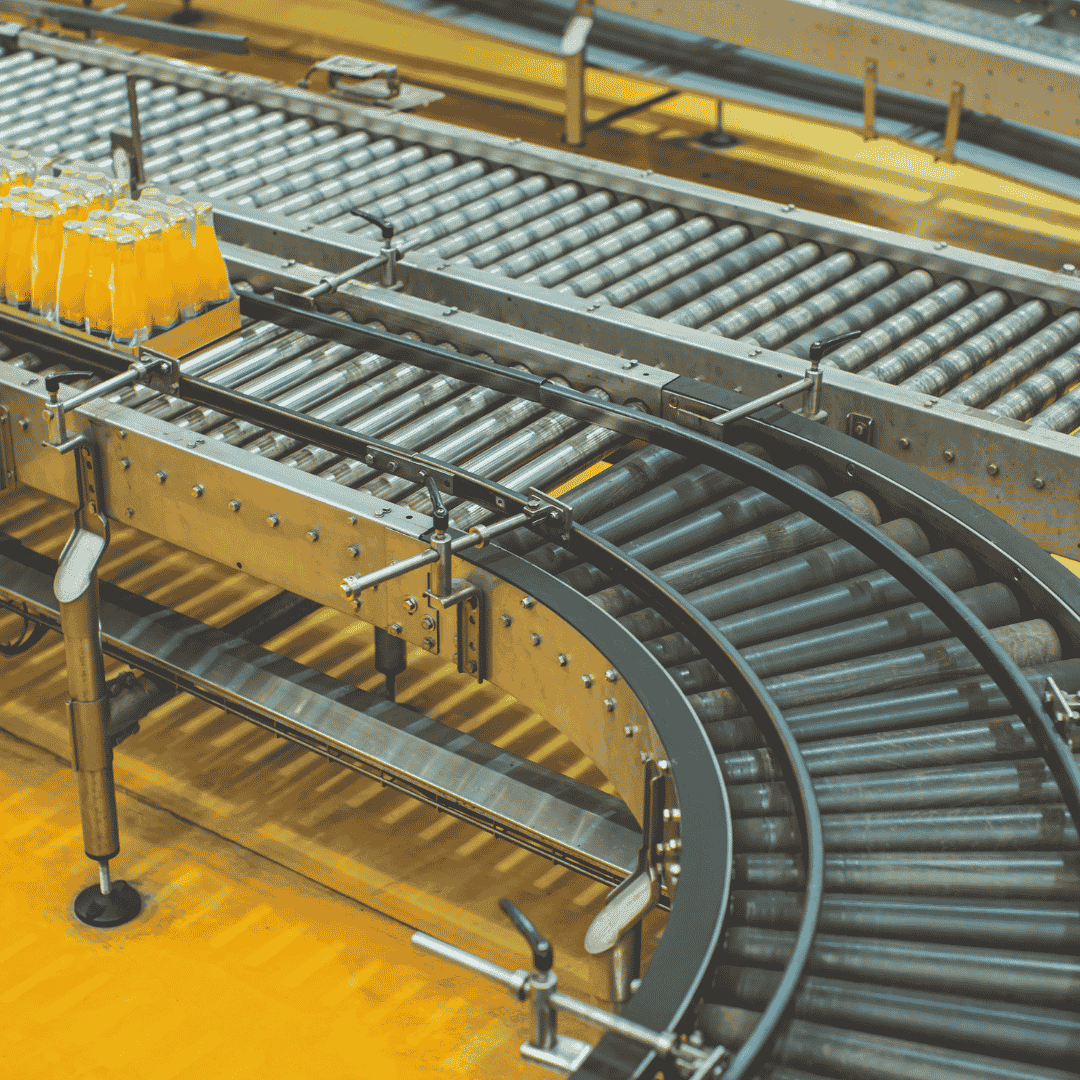
Typical applications include product conveyors (stainless steel pillow block bearing units), filling and dosing shafts (stainless steel flange-mounted bearing units), packaging and wrapping equipment, palletizing systems, and inspection and rejection stations. In all of these applications, the right combination of material, lubricant, and sealing helps protect both consumer safety and production line reliability.