

Technical Characteristics of a Steel Chain: Load, Speed, and Temperature
The technical characteristics of a steel chain are the parameters that define the limits within which it can operate reliably and efficiently over its intended service life. Understanding these characteristics is essential for selecting the appropriate chain, properly designing the power transmission system, and establishing an effective maintenance program.
Breaking Load and Working Load
The Minimum Ultimate Tensile Strength (MUTS) is the primary reference value listed in any chain manufacturer's catalog. It represents the maximum static tensile force that a chain can withstand before experiencing structural failure. This value is typically expressed in kilonewtons (kN), kilogram-force (kgf), or pounds-force (lbf). For dynamic applications, the more relevant parameter is the maximum working load, which takes the application's service factor into account. The service factor adjusts the calculated system load by applying a coefficient based on operating conditions, including: Load type: Uniform load (SF = 1.0), light shock loads (SF = 1.3–1.5), or severe shock loads (SF = 1.7–2.0). Drive type: Electric motor (base service factor), internal combustion engine with four or more cylinders (SF +0.2), or internal combustion engine with fewer than four cylinders (SF +0.4). Number of teeth on the smaller sprocket: Sprockets with fewer teeth produce greater impact during chain engagement, increasing operating stresses. The selected chain should have a minimum ultimate tensile strength at least equal to the maximum working load multiplied by the appropriate service factor, ensuring reliable operation under the expected operating conditions.
Maximum Operating Speed
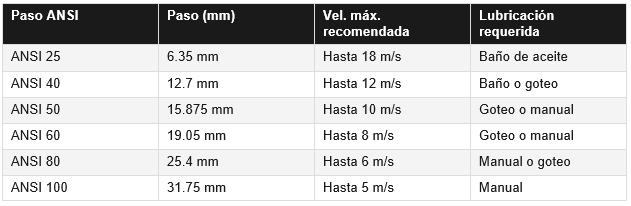
The maximum operating speed of a chain is expressed in meters per second (m/s) or feet per minute (fpm) and depends primarily on the chain pitch. As the pitch increases, each link becomes heavier, reducing the maximum permissible operating speed before problems such as vibration, dynamic loading, and impact wear begin to occur.
Operating Temperature
The recommended operating temperature range for a carbon steel chain with conventional lubrication is typically -10°C to 150°C (14°F to 302°F). Outside this range, chains manufactured from special materials or using specialized lubricants are required: Low temperatures (below -10°C / 14°F): Carbon steel may lose ductility, increasing the risk of brittle failure. Steels with a higher nickel content or austenitic stainless steel chains are recommended. Moderate temperatures (150°C to 300°C / 302°F to 572°F): High-temperature lubricants are required, typically complex lithium greases or dry lubricants such as PTFE or graphite. Lubrication intervals must also be significantly shortened. High temperatures (above 300°C / 572°F): Stainless steel chains or special alloy chains should be used in combination with ceramic- or graphite-based lubricants. At these temperatures, the allowable working load must be reduced because steel gradually loses hardness and mechanical strength as temperature increases.
Allowable Chain Elongation
Every steel chain gradually elongates throughout its service life due to wear at the pin–bushing interface. Chain elongation is measured as the percentage increase in length compared to the chain's nominal length. For most power transmission chains, the standard replacement limit is 2% elongation. For conveyor chains, the allowable elongation may be more restrictive—typically 1%—when maintaining the precise position of transported products is critical to the process. In contrast, engineering chains used in applications where positioning accuracy is not essential may tolerate greater elongation before replacement is required. Measuring chain elongation in the field is straightforward: count 10 chain pitches, measure the center-to-center distance between the first and last pin, and compare the measurement with the nominal length of 10 pitches listed in the manufacturer's catalog. If the measured length exceeds the nominal value by more than 2%, the chain should be replaced.
Lubrication Interval: The Most Overlooked Parameter
Lubrication frequency is not an optional maintenance recommendation for an industrial chain—it is a technical parameter just as critical as load or operating speed. Manufacturers specify lubrication intervals based on the chain's operating speed, temperature, and the type of lubricant being used. Under normal operating temperatures and moderate loads, a medium-pitch roller chain typically requires oil lubrication every 8 to 40 operating hours, depending on the lubrication method. An automatic drip lubrication system can extend this interval by providing continuous lubricant coverage, ensuring consistent protection of the chain's critical wear surfaces.