

Couplings for Servo Motors and Motion Control
Servo motors require a different type of coupling than most industrial applications: positioning accuracy takes priority over maximum torque capacity.
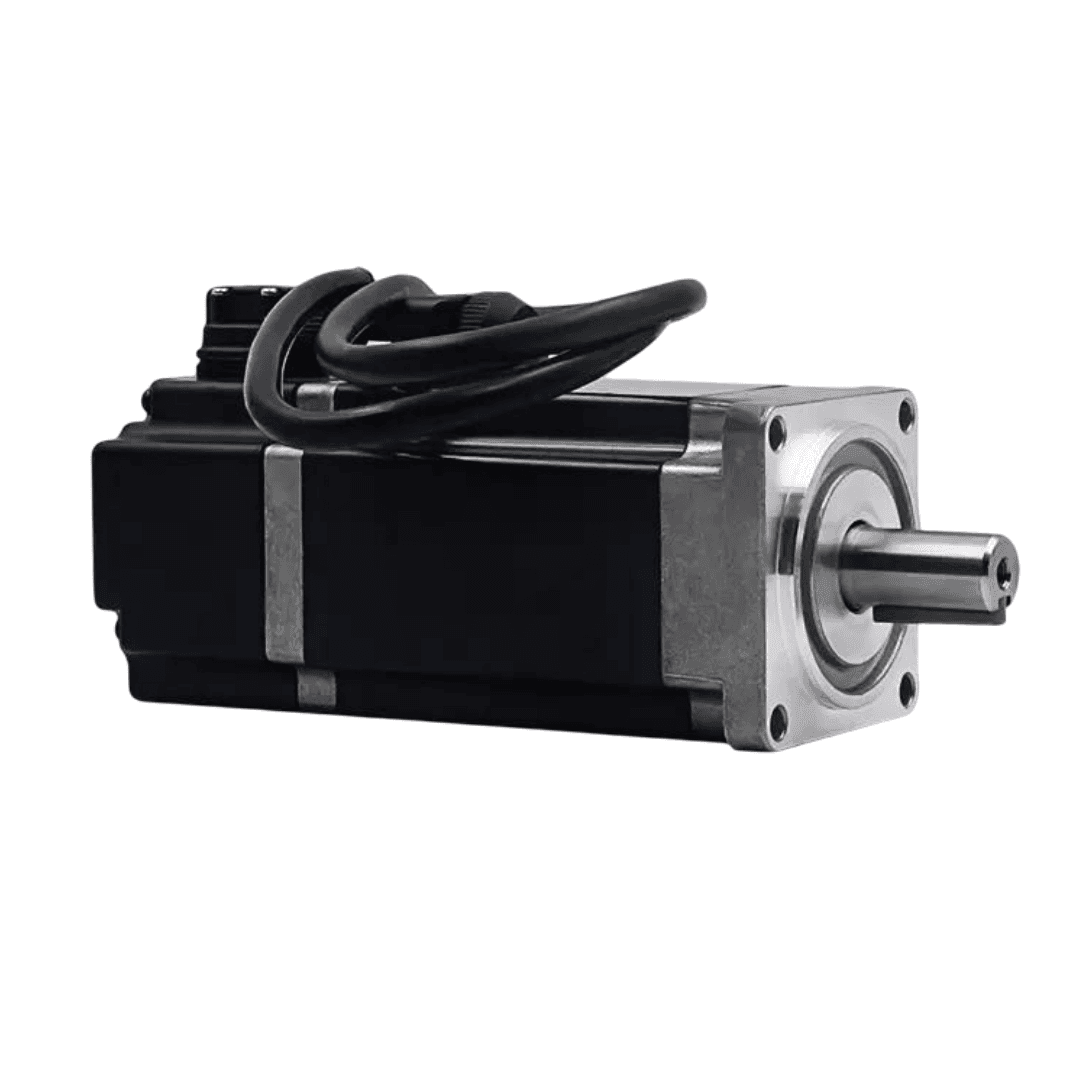
What Characteristics Are Prioritized in a Servo Motor Coupling?
Zero or minimal backlash: Any angular backlash translates directly into positioning error at the driven shaft. Low inertia: The coupling should add as little rotating mass as possible to avoid affecting the dynamic response of the servo motor during rapid acceleration and deceleration. High torsional stiffness: The coupling must transmit motion without torsional deformation, ensuring that the position commanded by the controller matches the actual position of the driven shaft. Moderate misalignment tolerance: Although precision is the priority, the coupling must still accommodate minor shaft misalignment without placing excessive stress on the servo motor shaft, which is typically more delicate than that of a standard industrial motor.
Coupling Types Used with Servo Motors
The most common designs for this application are metal bellows couplings and precision disc couplings, both offering zero backlash and low inertia. Although traditional jaw couplings are economical, they are generally not recommended for servo motor applications because the elastomer introduces a degree of torsional compliance that can affect the dynamic response of the system.
Typical Applications
CNC machine axes, industrial robots, precision dosing systems, and high-speed packaging equipment are typical applications where this type of coupling is essential, as any positioning error translates directly into a product that falls outside specification.