

Aluminum Couplings: Advantages and When to Use Them
An aluminum coupling is a lightweight and cost-effective option within the family of flexible couplings. Here are its key advantages, along with the practical limitations you should consider before selecting it for your application.
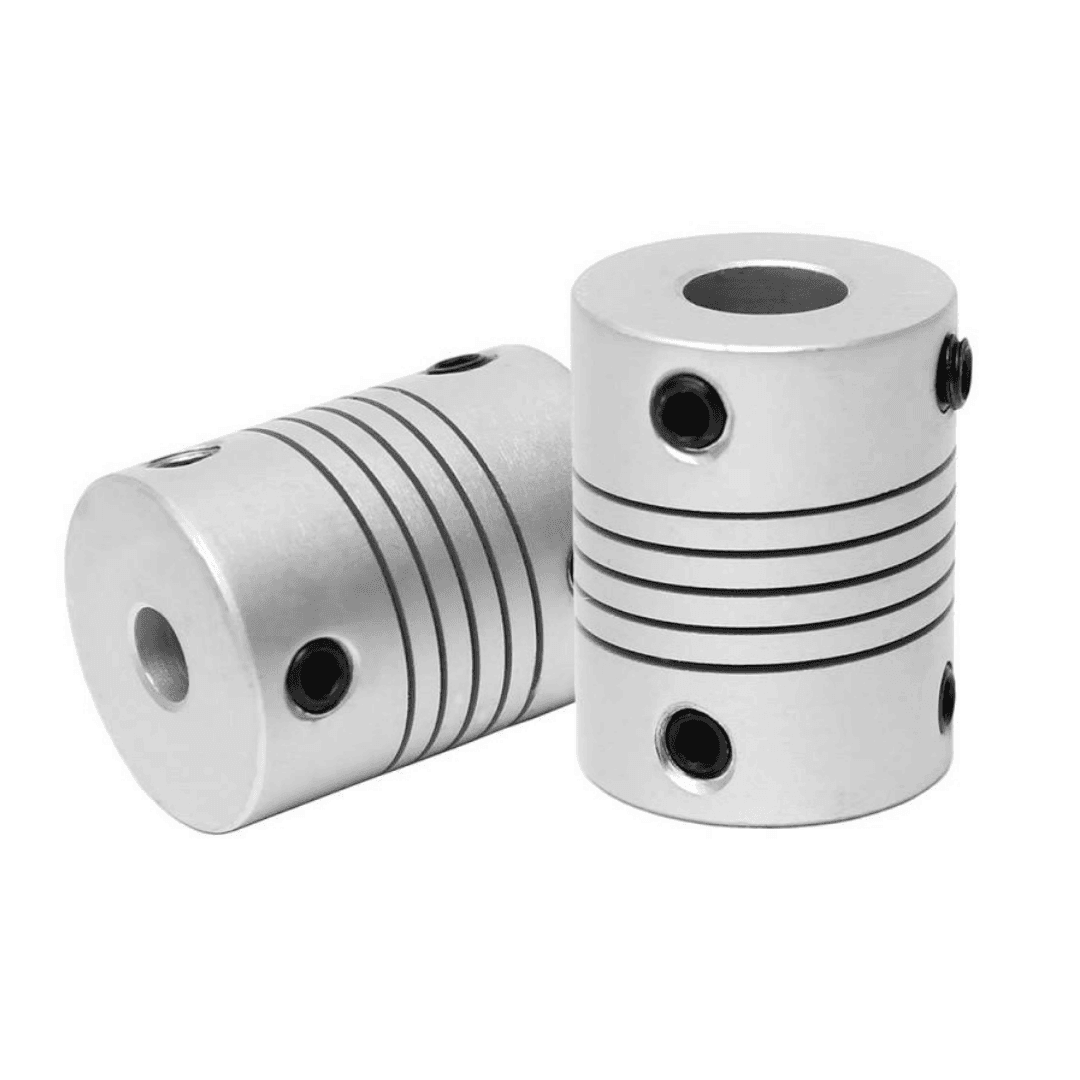
Advantages of Aluminum Couplings
Lightweight: Aluminum weighs approximately one-third as much as steel, reducing the load on motor bearings, particularly in high-speed applications. Corrosion resistance: Unlike carbon steel, aluminum naturally resists normal atmospheric moisture and typically does not require additional protective coatings. Easy installation and maintenance: Its modular design allows for quick installation and removal without specialized tools, and it requires no lubrication during normal operation. Cost-effective: For comparable sizes, an aluminum coupling is generally less expensive than an equivalent steel or stainless steel coupling with similar torque capacity.
When to Use an Aluminum Coupling
An aluminum coupling is an excellent choice for low- to medium-power gearmotors, small centrifugal pumps, fans, and automation equipment such as desktop CNC machines and 3D printers. Its excellent strength-to-weight ratio makes it ideal for applications where minimizing the load on the shaft and bearings is an important design consideration.