

Coupling vs. Belt and Pulley: Which Is the Better Choice?
A direct coupling is not always the best solution. In many applications, a belt and pulley drive provides advantages such as speed reduction, greater installation flexibility, and shock load absorption. This comparison will help you determine whether a direct-drive coupling or a belt and pulley system is the better choice for your application.
Direct Drive with a Coupling
A coupling connects the motor shaft directly to the driven shaft, with no change in speed ratio. This configuration transmits torque more efficiently than a belt drive, resulting in lower power losses and a more compact machine design. A direct-drive coupling requires the motor to operate at the exact speed needed by the driven equipment, since there is no speed reduction or speed increase as there is in a belt and pulley system with pulleys of different diameters.
Belt and Pulley Drive
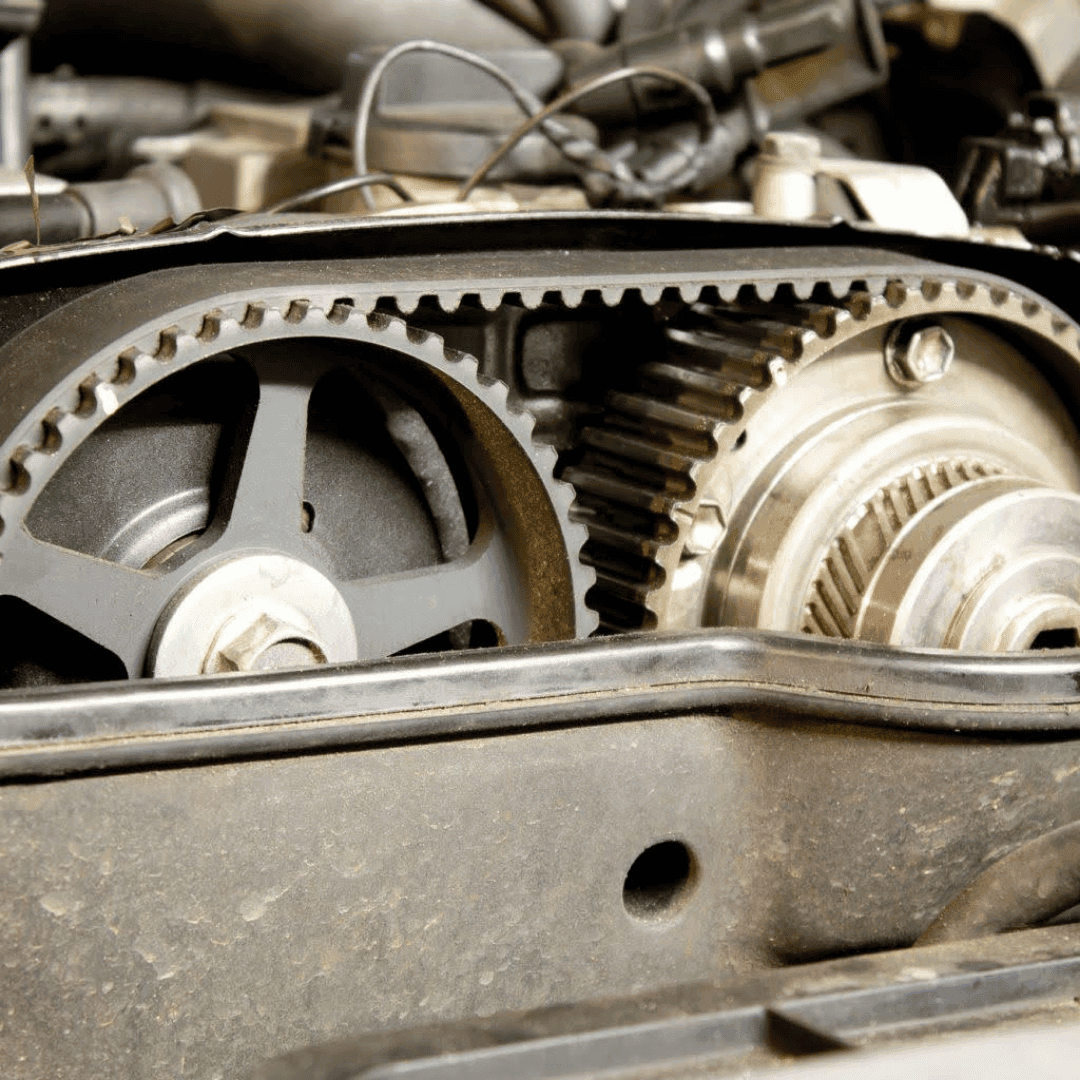
A belt and pulley system allows the speed ratio between the motor and the driven equipment to be changed simply by varying the pulley diameters, eliminating the need for a gear reducer in many applications. It also absorbs vibration and startup shock loads naturally, while allowing for a greater distance between the motor and the driven shaft. Compared with a direct-drive coupling, its main disadvantages are lower transmission efficiency due to belt slip and friction losses, as well as the fact that the belt is a wear component that requires periodic replacement and regular tension adjustment.
How to Choose Between a Coupling and a Belt & Pulley Drive
Choose a direct-drive coupling when the motor already operates at the required speed for the driven equipment and maximum power transmission efficiency is the primary objective. Choose a belt and pulley drive when you need to adjust the operating speed without changing the motor, or when the distance between the motor and the driven shaft makes a direct connection impractical.