

Rigid Coupling vs. Flexible Coupling: Key Differences
Choosing between a rigid coupling and a flexible coupling depends on the actual alignment of your shafts and the level of vibration your system can tolerate.
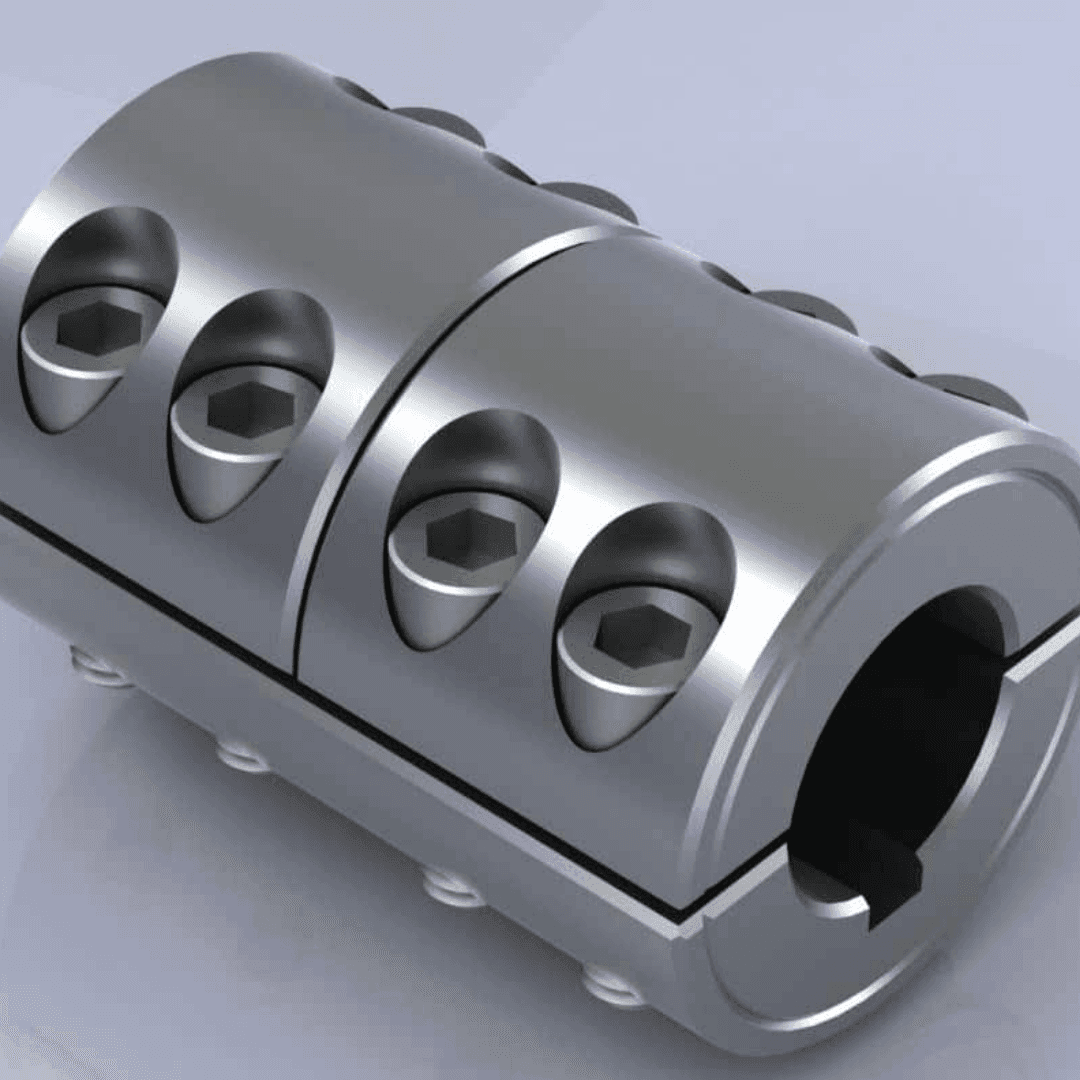
What Is a Rigid Coupling?
A rigid coupling connects two shafts into a single power transmission line without any element that absorbs movement between them. It is manufactured as a one-piece or two-piece solid steel assembly and is mounted to each shaft using a keyway or set screws. Its primary advantage is precision—there is no backlash or loss of torque during power transmission. A rigid coupling performs properly only when the shafts are aligned within a very tight tolerance, typically less than 0.05 mm. Even the slightest misalignment causes the coupling to transmit those forces directly to the motor and driven equipment bearings, accelerating bearing wear and reducing equipment life.
Que es un acoplamiento flexible
A flexible coupling incorporates an intermediate element—such as an elastomer, metal grid, or disc pack—that allows for a certain degree of angular, parallel, or axial misalignment without transmitting those forces to the bearings. It is the most widely used type of coupling in industry because it compensates for the normal alignment deviations found in real-world installations.
When to Use Each Type
Use a rigid coupling: In high-precision shaft applications, such as machine tool spindles, where shaft alignment is carefully measured and adjusted using precision alignment instruments. Use a flexible coupling: In most industrial applications—including pumps, fans, gearmotors, and conveyor systems—where maintaining perfect alignment over time is difficult, and some degree of misalignment compensation is required.