

Couplings for Conveyor Systems
Conveyor systems frequently start under load, requiring a coupling capable of absorbing the resulting torque peaks without transmitting them directly to the gearmotor.
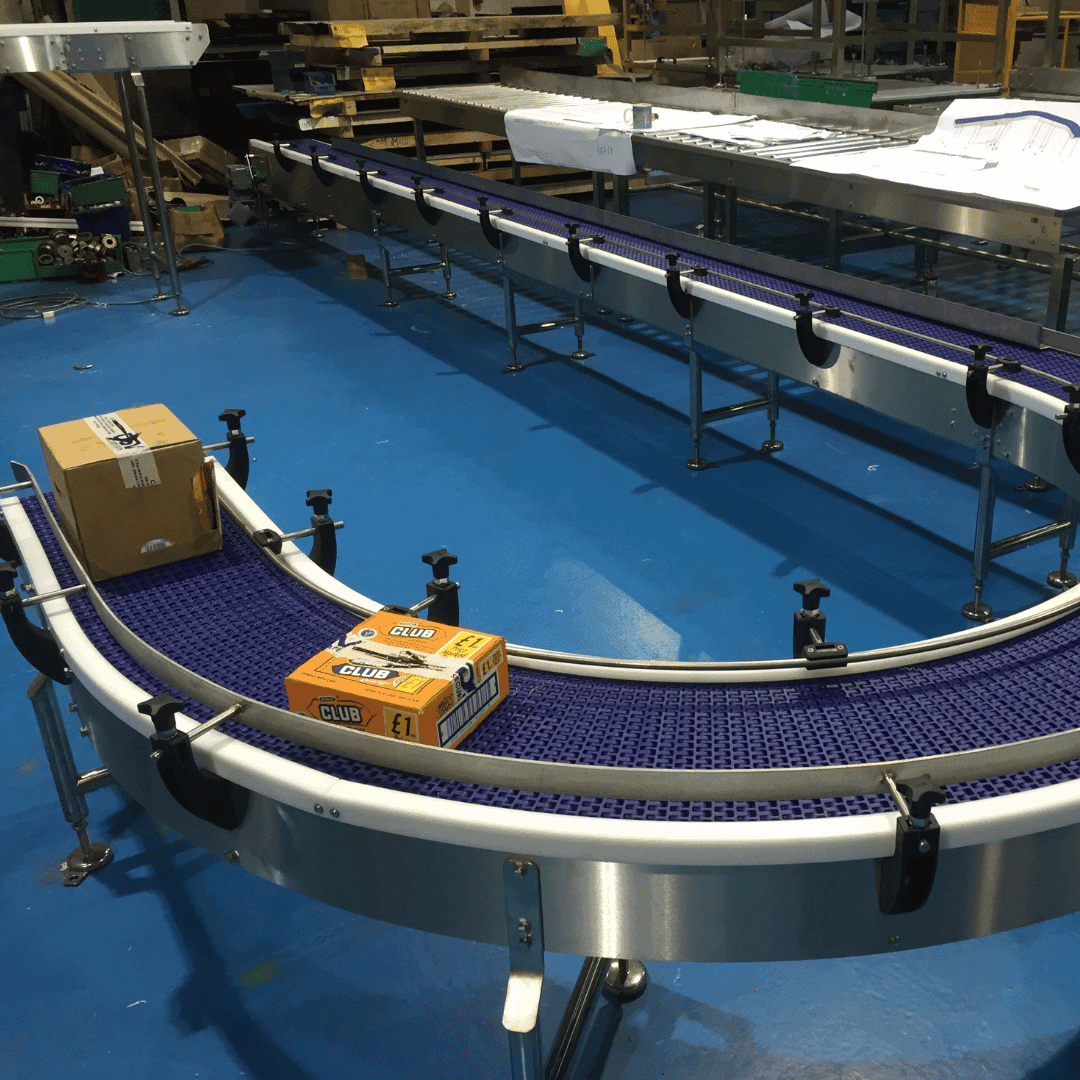
Technical Requirements of a Conveyor System
Unlike a centrifugal pump with a constant load, a conveyor system often starts with material already on the belt, creating a torque peak that is significantly higher than the continuous operating torque. The coupling between the gearmotor and the drive pulley must withstand these repeated torque peaks without experiencing fatigue.
Recommended Coupling Type
Light- to medium-duty conveyor systems: Jaw couplings with a Hytrel elastomer, offering better fatigue resistance than NBR in applications with frequent start-up cycles. Heavy-duty conveyors or mining applications: Grid couplings or gear couplings, with a higher service factor to absorb start-up shock loads without premature wear. Variable frequency drive (VFD) systems: Can use couplings with a lower service factor, since the soft start reduces the torque peak transmitted to the system.
Additional Consideration: Shaft Distance
In some conveyor system designs, the gearmotor is positioned farther from the drive pulley than a standard coupling can accommodate. In these cases, a spacer coupling is used to maintain a direct connection without the need for an additional intermediate shaft.